 Eng. Kamrul Islam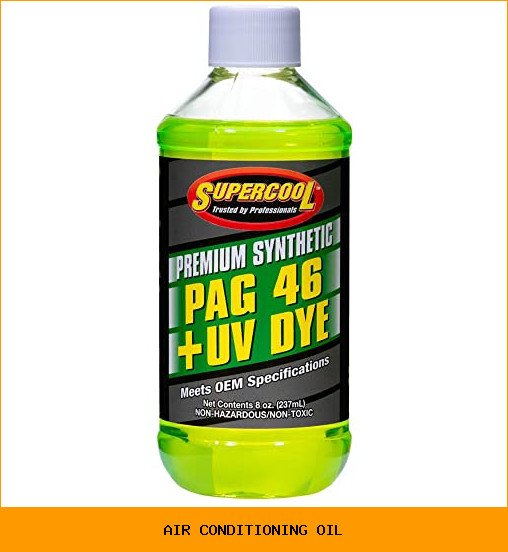
In this guide
Your car’s AC starts blowing warm air on the highway. Maybe it’s a slow leak, maybe the compressor is grinding. You check the pressure, add some refrigerant, and it’s cold again – for a week. Then the warm air returns. Chances are the problem isn’t the refrigerant. It’s the air conditioning oil. Compressors live on oil. Without the right type, at the right viscosity, in the right amount, they die fast.
This article walks you through what AC oil does, which type your system needs, how to pick a decent product, and one practical way to spot a leak early. You’ll know exactly what to look for and what to avoid. No fluff.

TSI Supercool
TSI Supercool P46-8D PAG Oil 46 Viscosity with UV Dye 8oz 1-Pack
Meets OEM performance specifications
Buy on AmazonIf your system uses R134a refrigerant – that’s most cars from the mid-1990s through about 2026 – the oil you need is almost certainly PAG 46. That number refers to viscosity, and getting it wrong can cost you a compressor.
(After the introduction, weave in the product.) One product that checks all the practical boxes is the TSI Supercool P46-8D PAG Oil 46 Viscosity with UV Dye 8oz 1-Pack. It meets OEM specs, contains anti-wear agents to extend compressor life, and the built-in UV dye lets you find leaks with a simple UV light. It’s a straightforward choice for a DIY recharge or a shop top-off.
What AC Oil Actually Does (And Why Compressors Die Without It)
Inside an AC compressor, two things move: the refrigerant and the oil. The refrigerant carries heat. The oil lubricates every moving part – pistons, bearings, vanes, the shaft seal. Without oil, metal contacts metal. In minutes, debris forms. That debris circulates through the system, clogging the expansion valve and the condenser. Then the whole loop fails.
Oil also helps the compressor’s seals stay pliable. A shaft seal that dries out leaks refrigerant slowly. Over months, you lose enough charge that the system stops cooling. That’s the most common slow leak – and it’s caused by the wrong oil or no oil at all.
PAG oil (polyalkylene glycol) is the standard for R134a systems. It absorbs moisture aggressively, so you want a sealed container. Once opened, use it right away. The viscosity rating – 46, 100, 150 – depends on the compressor design. Most cars with R134a use PAG 46. Some larger compressors or systems with longer lines spec PAG 100 or 150. Check your underhood sticker or service manual. Guessing is expensive.
How Much Oil Does Your System Need? (It’s Less Than You Think)
Total system oil capacity varies. A typical compact car holds about 4 to 6 ounces. A full-size sedan or SUV might hold 8 to 10 ounces. Overfilling is almost as bad as underfilling. Too much oil coats the condenser coils, reduces heat transfer, and raises high-side pressure. Your AC runs harder and cools worse.
If you replace a compressor, the new one often comes pre-filled with oil. But the amount inside might cover only the compressor itself. The rest of the system – condenser, evaporator, hoses – still holds old oil. You need to drain the old oil, measure it, and add back only the difference. A common mistake: dumping the entire bottle in. That kills performance.
Here’s a rough guide based on component replacement:
| Part Replaced | Typical Oil to Add (ounces) |
|---|---|
| Compressor (new, pre-filled) | 0 – 2 (only if draining old system reveals low oil) |
| Condenser | 1 – 2 |
| Evaporator | 1 – 2 |
| Accumulator (receiver-drier) | 1 – 2 |
| Full system clean/flush | OEM spec (usually 4 – 8) |
Those numbers assume you’ve drained the old oil from the removed part. If you don’t know the history, pull the compressor and tip it upside down. Measure what comes out. Match that amount with fresh air conditioning oil of the same viscosity.
PAG 46 vs PAG 100 vs PAG 150 – Does Viscosity Really Matter?
Yes. Seriously. Compressor manufacturers design clearances around a specific oil thickness. PAG 46 flows like a light motor oil at room temperature. PAG 150 is thick like honey. Using 150 in a system designed for 46 makes the compressor work harder. The oil doesn’t circulate well, returns slowly to the compressor, and starves the bearings. Over time, it wears out the internal parts.
Using 46 in a system that needs 100 can be worse – the oil is too thin to maintain a film between the piston and cylinder wall. Metal-to-metal contact happens. The compressor seizes.
Most domestic and Asian vehicles from the late ’90s through early 2010s use PAG 46. European cars often use PAG 46 as well, but some (like older Saabs or certain Mercedes) spec a different viscosity. Always verify. The sticker under the hood, the service manual for your car, or a dealership parts website will tell you. Don’t trust a generic parts store list – they’re sometimes wrong.
If you absolutely can’t find the spec, and you’re working on a typical car with R134a, PAG 46 is the safest bet. It’s the dominant viscosity. Buying a product like the TSI Supercool P46-8D that clearly states 46 viscosity removes the guesswork.
UV Dye – The Smartest Bag of Tricks in AC Service
Leaks are the number one killer of AC performance. You can’t fix a leak you can’t find. Electronic leak detectors work, but they need practice and sometimes false-alarm on old refrigerant residue. Soap bubbles work on big leaks, not on small ones. UV dye is the practical solution.
A small amount of dye mixed into the air conditioning oil circulates through the whole system. When it hits a leak, the oil carries the dye to the outside of the fitting, hose, or seal. Shine a UV light in the engine bay at night. You’ll see a glowing green or yellow spot. Done.
The TSI Supercool P46-8D includes the dye already blended in. That saves a step. You don’t need a separate dye injector or worry about it being compatible with the oil. It’s all in one bottle.
One caveat: some people worry that dye can clog the expansion valve or the orifice tube. In practice, the amounts used are tiny – around 1/4 ounce per system at most. I’ve used dyed oils for years and never had a clog from the dye itself. The bigger risk is injecting too much oil. Stick to the system’s total capacity.
If you find a leak with UV dye, fix it properly. Replace the O-ring or hose, add the correct amount of oil back, and evacuate the system before recharging. Dye is for diagnosis, not a permanent repair.
Five Common Questions About Air Conditioning Oil
Can I mix different brands of PAG oil?
Mixing brands of the same viscosity is generally fine. PAG oil from different manufacturers uses the same base chemistry. That said, some brands add different anti-wear packages or antioxidants. For a low-risk mix, keep the viscosity the same and don’t exceed total system capacity. If you’re topping off after a small repair, it’s fine. If you’re filling a new compressor, use one brand for the whole fill.
How do I know if my AC has too much oil?
Signs are high high-side pressure, poor cooling, and a compressor that sounds labored. A proper diagnosis requires pulling the charge, measuring the oil that drains from each component, and comparing to spec. The most DIY-friendly check: after running the system, feel the lines. The low-side line should be cold and sweating. The high-side line should be hot but not burning. If both are hot, oil may be your problem.
Does PAG oil expire?
Yes. PAG absorbs water from the air. Moisture turns it into acid, which eats compressor internals. A sealed bottle lasts years. An opened bottle – use it within a few weeks or discard. If the oil looks cloudy or smells like stale paint thinner, toss it. That’s moisture contamination.
What happens if I use the wrong viscosity oil?
Too thick: the compressor drags, oil return is poor, low pressures act wrong. Too thin: metal parts wear fast, compressor noise increases, early failure. The compressor won’t fail instantly in most cases, but it will lose efficiency over a season or two. Then it quits. You get to replace it plus flush the system. That’s a $500+ job on many cars.
Can I use conventional PAG oil in a system that originally came with POE oil?
Never. POE (polyol ester) oil is used in some R134a systems, particularly after a retrofit from R12. POE and PAG are chemically incompatible. They separate and form sludge that clogs the orifice tube. If your system’s compressor tag says POE, use POE. If it says PAG, use PAG. Mixing them is a fast way to ruin the compressor.
What You Should Actually Do Next
- Check the underhood sticker for the specified air conditioning oil type and viscosity. Write it down.
- If the system is low on refrigerant, add oil only if it was low due to a component replacement. A simple recharge doesn’t need extra oil.
- When replacing any AC component, drain the old oil from the removed part and measure it. Add the same amount of fresh oil of the correct type.
- Buy a PAG 46 oil with UV dye pre-mixed, like the TSI Supercool P46-8D, if you’re working on a typical R134a car. It simplifies leak detection.
- Never open a bottle of PAG oil until you’re ready to inject it. Cap it immediately after use. Discard any oil left over after a few weeks.
- Use a UV light and glasses in a dark area to check for leaks. Do this after the system has been running for at least ten minutes.
- If you’re not sure, pay a shop to evacuate, measure the oil, and recharge. A $150 service is cheaper than a $1,200 compressor replacement.

Eng. Kamrul Islam
Founder and product researcher
Engineer with more than 10 years of experience researching and selling products on Amazon, including his own brand on Amazon Australia. He compares specs, standards, sellers and owner feedback.
All guides by Eng. Kamrul IslamMore in ac & compressor oils
All 193 guides Guide
GuideSlomin’s Home Heating Oil and Air Conditioning: A Complete Service Guide
You walk into your living room on a cold January morning and the thermostat reads 58 degrees. The…
How Much Ac Compressor Oil Do I Need
When servicing or replacing an air conditioning compressor, one of the most critical questions that arise is, how…
 Capacity
2005 Honda Air Conditioning Oil Capacity: Accord, Civic, and How to Refill
You roll down the highway on a July afternoon and the air coming out of the vents is…