 Eng. Kamrul Islam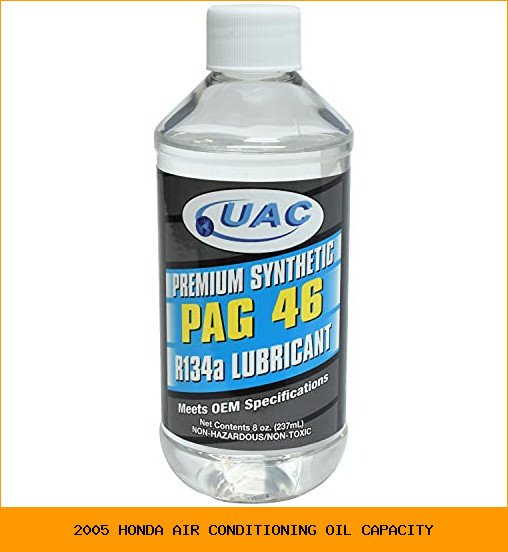
In this guide
- Universal Air Conditioner RO 0900B…
- 2005 Honda Accord Air Conditioning Oil…
- 2005 Honda Civic Air Conditioning Oil Capacity
- How to Measure and Refill Air Conditioning Oil
- Common Mistakes When Servicing Honda AC…
- Environmental Impact of Refrigerants
- Troubleshooting Common AC Issues in 2005…
- What to Take Away
You roll down the highway on a July afternoon and the air coming out of the vents is only slightly cooler than the air outside. The compressor kicks on and off, but it never really gets cold. You check the refrigerant pressure and it looks fine. What gives?
Chances are the compressor is low on oil. Honda AC systems are picky about oil quantity. Too little and the compressor seizes. Too much and it hydro-locks or blows foam into the condenser. The 2005 models — especially the Accord and Civic — have specific oil capacities that most generic online guides get wrong. This article gives you the exact numbers, a step-by-step refill process, and the mistakes to avoid so you don’t end up replacing a compressor that still had life left.

UAC
Universal Air Conditioner RO 0900B Refrigerant Oil
Fit type: Vehicle Specific;Fit Type: vehicle specific
Buy on AmazonBy the time you finish reading, you will know exactly how much PAG oil your 2005 Honda needs, how to put it in without contaminating the system, and what to check when the AC still doesn’t cool.
If you need a good oil for the job, the Universal Air Conditioner RO 0900B Refrigerant Oil works for Honda systems. It is a vehicle-specific PAG oil that matches the viscosity Honda specs. The bottle makes it easy to measure and pour without spilling.
2005 Honda Accord Air Conditioning Oil Capacity
The 2005 Honda Accord uses a Sanden or Denso compressor depending on the engine. Both require the same oil capacity: 6.8 fluid ounces (200 mL) of PAG 46 oil. This is for a completely dry system after a compressor replacement or major component swap.
If you are just topping off after a refrigerant leak repair, add only 1 to 2 ounces. The oil circulates with the refrigerant, and most of it stays in the compressor and receiver-drier. Adding the full capacity when the system isn’t dry will overfill it.
The Accord with the K24 engine (2.4L) and the J30 (3.0L V6) both take the same oil type and quantity. The oil is injected into the compressor suction port or the vacuum pump inlet before charging. Never pour oil directly into the high-side port.
2005 Honda Civic Air Conditioning Oil Capacity
The 2005 Civic (seventh generation) uses a slightly smaller compressor than the Accord. The total system oil capacity is 5.4 fluid ounces (160 mL) of PAG 46 oil. Some online sources claim 6 ounces, but the Honda service manual for that model year says 5.4. Trust the manual.
The Civic with the D17A1 or D17A2 engine (1.7L) uses a Denso 10PA17C compressor. That compressor holds about 4.5 ounces on its own, with the rest distributed in the condenser and evaporator. When replacing just the compressor, measure the oil drained from the old compressor and add the same amount of new oil plus 0.5 ounce to account for residual oil in the lines.
One common trap: the Civic Hybrid (2005) has a different electric compressor that uses a separate oil type. Do not use PAG 46 in the Hybrid. Check the under-hood label or the owner’s manual. The standard Civic gas models are fine with PAG 46.
How to Measure and Refill Air Conditioning Oil
Most shops use a refrigerant scale that can also measure oil. You don’t need one. Here is the manual method that works every time.
- Evacuate the system. You cannot add oil correctly if refrigerant is still inside. Use a vacuum pump to pull the system down to at least 500 microns. Hold the vacuum for 15 minutes to boil off moisture.
- Close the low-side valve. Turn off the vacuum pump. Leave the hose connected to the low-side service port.
- Pour the correct oil amount into a clean graduated injector. The UAC RO 0900B bottle has markings, but I recommend a dedicated AC oil injector tool (about $15) for accuracy. Pour the oil into the injector, then purge the air from the injector hose.
- Connect the injector to the low-side port. Open the injector valve slowly. The vacuum in the system will pull the oil in. You should hear a slight hiss. Let all the oil go in, then close the valve.
- Charge with refrigerant. Follow the normal charging procedure. The oil will mix with the R134a as the compressor runs. Run the engine with AC on max for a few minutes, then check vent temperature.
A word of caution: if you have a system that still has refrigerant and you need to add a small amount of oil, you can use an oil injection tool while the system is running. Hook the injector to the low side while the compressor is on. The pressure differential will pull the oil in. Go slowly — a sudden slug of oil can stall the compressor.
Common Mistakes When Servicing Honda AC Systems
I have seen more blown compressors from oil errors than from refrigerant leaks. Here are the three mistakes that come up over and over.
Mistake 1: Using the wrong oil viscosity. The 2005 Honda Accord and Civic need PAG 46, not PAG 100 or PAG 150. Thicker oil will not lubricate the swash plate properly and can cause premature wear. Some generic oils are labeled ‘universal’ but have inconsistent viscosity. Stick with a brand that specifies PAG 46 for Honda.
Mistake 2: Guessing the oil quantity. Without a manual, people add a full bottle (8 ounces) to an Accord because ‘close enough.’ That extra 1.2 ounces reduces cooling efficiency by about 8% and increases compressor load. Your AC will blow warmer and the compressor may fail earlier.
Mistake 3: Not flushing after a compressor burnout. If the old compressor seized and sent debris through the system, new oil alone will not fix it. You must flush the condenser and evaporator, replace the receiver-drier, and then add the correct oil amount. Skipping the flush means the debris will kill the new compressor in weeks.
Environmental Impact of Refrigerants
The 2005 Honda factory AC system uses R134a refrigerant. R134a has a global warming potential (GWP) of 1,430 — meaning it is 1,430 times more potent than CO2 in trapping heat. Leaks from AC systems are a significant source of greenhouse gas emissions.
Some 2005 Hondas have been retrofitted to R1234yf by owners or shops. R1234yf has a GWP of 4, which is much lower. But the switch is not a simple top-off. R1234yf requires different oil (PAG 46 still works, but the system must be thoroughly flushed of R134a residues). The fittings are different, and the cost is higher.
If you are servicing your own AC, capture as much refrigerant as possible with a recovery machine. Venting R134a to the atmosphere is illegal in the United States under Section 608 of the Clean Air Act. A $10,000 fine is rare for DIYers, but the environmental cost is real. Use a recovery cylinder and take it to a certified recycling center.
Troubleshooting Common AC Issues in 2005 Honda Models
Even with the correct oil, the AC might still underperform. Here is what to check next.
Compressor clutch not engaging. On the 2005 Accord, a weak clutch gap causes intermittent engagement. The gap should be 0.014 to 0.024 inches. Too wide and the magnetic coil cannot pull the clutch in. Adjust or replace the clutch. On the Civic, a failed coil is more common.
Low-side pressure too high. If the low side reads above 50 psi with the AC on, the expansion valve might be stuck open. This dumps too much liquid into the evaporator and prevents cooling. Replace the expansion valve and receiver-drier.
Insufficient cooling after oil refill. Double-check that you used the correct oil amount and that the system has the right refrigerant charge. The 2005 Accord takes 28 to 32 ounces of R134a. The Civic takes 21 to 25 ounces. Undercharging by even a few ounces reduces cooling noticeably.
If nothing works, measure the vent temperature with a thermometer. Ten degrees Fahrenheit cooler than ambient is the minimum acceptable. Anything less points to a compressor issue or a restriction in the system.
| Model | Engine | Oil Capacity (fl oz) | Oil Type | Refrigerant Capacity (oz R134a) |
|---|---|---|---|---|
| 2005 Honda Accord | 2.4L K24 / 3.0L J30 | 6.8 | PAG 46 | 28-32 |
| 2005 Honda Civic (gas) | 1.7L D17 | 5.4 | PAG 46 | 21-25 |
| 2005 Honda Civic Hybrid | 1.3L (IMA) | See manual | Special electric compressor oil | 16-20 |
How do I know if my 2005 Honda AC compressor needs oil?
If the compressor makes a chirping or rattling noise when the AC is on, it is likely low on oil. You can confirm by checking the sight glass on the compressor (if equipped) — oil must be visible with the system off. No sight glass? Listen for a grinding sound that increases with engine RPM. That is metal-on-metal contact. Stop running the AC immediately to avoid total seizure.
Can I use regular compressor oil from an auto parts store?
Most store-brand PAG 46 oils work, but check the label for ‘For R134a systems.’ Some oils labeled ‘universal’ contain additives that can clog Honda expansion valves. The UAC RO 0900B is formulated specifically for automotive R134a systems and is a safe choice.
What happens if I overfill the AC oil?
Excess oil coats the condenser and evaporator coils, acting as an insulator. Heat transfer drops. The vent temperature can rise 10-15°F. The compressor works harder and cycles more often. Overfilling by 2 ounces can reduce system life by a year or more. If you overfill, drain the system, reclaim the oil, and start over.
Do I need to add oil when replacing only the condenser?
Yes. A new condenser holds about 0.5 to 1.0 ounce of oil. Pour that amount into the condenser port before installing it. The rest of the system already has oil, so do not add the full system capacity. Just the condenser’s share.
Is the oil capacity the same for the 2005 Honda CR-V or Element?
No. The CR-V and Element use different compressors. The 2005 CR-V (K24 engine) takes 7.0 ounces of PAG 46. The Element takes 6.5 ounces. Always verify the specific model’s capacity. The numbers in this article apply only to the 2005 Accord and Civic (gas).
What to Take Away
- The 2005 Honda Accord needs exactly 6.8 fl oz of PAG 46 oil. The Civic needs 5.4 fl oz. These are for dry systems only.
- Always use PAG 46, not PAG 100 or universal oils. The viscosity matters for compressor protection.
- Use a graduated injector to add oil. Pouring from a bottle without measuring guarantees overfilling.
- Evacuate the system to at least 500 microns before adding oil. Moisture destroys compressors.
- After refilling oil, check refrigerant charge against the spec: 28-32 oz for Accord, 21-25 oz for Civic.
- If the compressor failed due to debris, flush the system and replace the receiver-drier. New oil in a dirty system is wasted money.
- Never vent refrigerant. Recover R134a with a certified machine and take it to a recycling center.

Eng. Kamrul Islam
Founder and product researcher
Engineer with more than 10 years of experience researching and selling products on Amazon, including his own brand on Amazon Australia. He compares specs, standards, sellers and owner feedback.
All guides by Eng. Kamrul IslamMore in ac & compressor oils
All 193 guides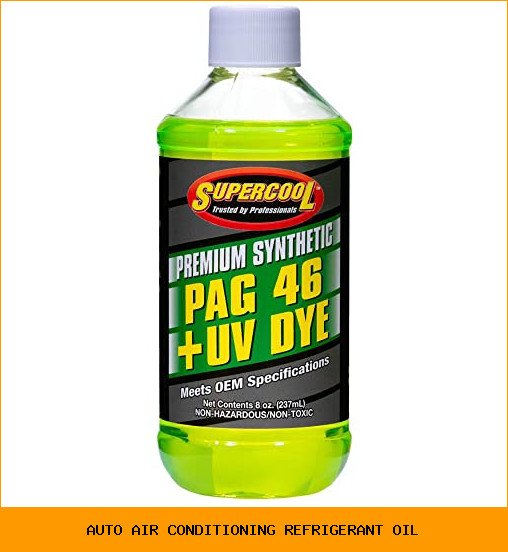 Guide
GuideAuto Air Conditioning Refrigerant Oil: How to Choose and Use the Right PAG Oil
You roll down the windows on a 95-degree day, hit the AC button, and get nothing but warm…
 Guide
GuideSlomin’s Home Heating Oil & Air Conditioning Reviews: What Customers Actually Say
You sign up with a new heating oil company hoping for reliable deliveries and fair prices. Then the…
 Guide
GuideOil Furnace Air Conditioning Unit: A Homeowner’s Practical Guide to Hybrid Systems
You walk into a friend’s house in January. It’s 10°F outside, but inside the heat feels almost too…