 Eng. Kamrul Islam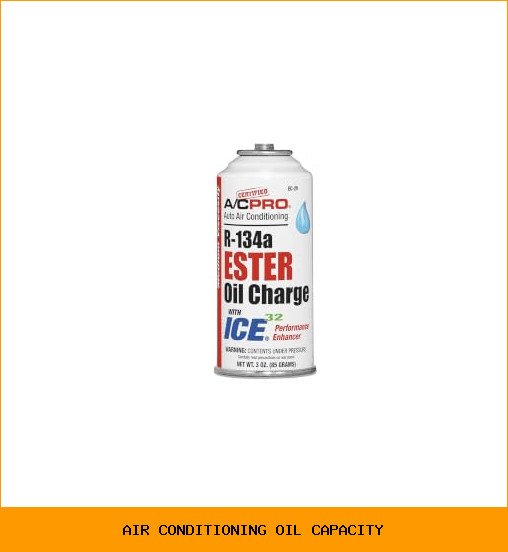
In this guide
You just replaced a compressor. Maybe a condenser too. Now you’re staring at the open ports wondering how much oil to put in. Get it wrong and the compressor locks up in six months. Get it right and the system runs cold for years.
This article walks you through finding the exact air conditioning oil capacity for your system, measuring oil correctly, and adding it without guesswork. I’ll cover why capacity matters, how to look it up, and the three mistakes that kill compressors. No fluff, no theory — just steps you can follow today.

InterDynamics
Ester Charge Air Conditioner Oil, 3 Oz.
Compatibility: R-134A auto AC systems
Buy on AmazonStick around for the FAQ at the end. Those five questions are the ones customers actually call about.
If you need a quick top-off in an R-134A system, the InterDynamics Ester Charge Air Conditioner Oil (3 oz) gives you a precise small dose with a flexible nozzle. It’s not meant for a full system charge, but it’s handy when you’ve lost a little during servicing and don’t want to drag out the heavy equipment. Keep a bottle in the toolbox for those “just in case” moments.
Why Air Conditioning Oil Capacity Matters More Than You Think
Oil in an AC system lubricates the compressor, plain and simple. Too little oil and metal grinds on metal. Too much oil and the refrigerant can’t absorb and release heat efficiently. Both scenarios kill performance and shorten component life.
Most passenger car AC systems hold between 4 and 8 ounces of oil total. That’s about a cup. Some larger trucks or systems with dual evaporators can hold up to 10 or 12 ounces. The tolerance is surprisingly tight. Being off by 1 ounce in a 5-ounce system is a 20% error. That’s a lot.
Compressor manufacturers design oil capacity to match the internal clearance and operating speed. Running low oil starves the bearings. Running high oil floods the compression chamber, causing slugging — the liquid oil can snap a valve reed in one cycle. I’ve seen it happen.
So the rule is simple: use the manufacturer’s spec, not a guess. Never assume.
How to Find the Correct Air Conditioning Oil Capacity for Your Vehicle
You have three reliable sources for capacity data.
1. Underhood Sticker or Compressor Label
Many vehicles have a sticker on the radiator support, hood underside, or near the service ports. It lists refrigerant type and oil type (PAG, POE, or mineral) and sometimes the oil charge in ounces or fluid ounces. On some compressors the label is right on the body. Check before you reach for a manual.
2. Factory Service Manual
The factory manual is the gold standard. It gives total system oil capacity for different configurations — standard AC, dual zone, rear AC. It also tells you how much oil to add when replacing individual components. For example, a new condenser might need 1 extra ounce, a new evaporator 1.5 ounces. Don’t rely on general internet forums for this data.
3. Online Spec Databases (With Caution)
Sites like the Sanden or Denso mobile lookup tools are useful if you have the compressor model number. Enter the number and you get capacity in cubic centimeters (cc) or ounces. Convert cc to ounces by dividing by 29.57. So 150 cc = about 5 ounces. But always cross-check with a second source. I’ve caught mistakes in public databases.
Pro tip: Write the oil capacity on the compressor housing with a sharpie after you verify it. Saves the next tech time.
Step-by-Step: Adding Oil to an AC System
Here is the procedure I use on every job. It works for R-134A and R-1234yf systems.
- Recover the refrigerant using a recovery machine. Oil leaves the system with the refrigerant vapor. Most recovery machines have an oil separator that captures it. Drain and measure that oil in a graduated cylinder.
- Note the amount of oil removed. Write it down. This is your baseline. If the system was working before, you can add the same amount back.
- Account for replaced components. A new compressor usually comes with oil already inside. Drain that oil, measure it, then add only the difference between the factory spec and what was in the new compressor. For example, if your system spec is 6 ounces and the new compressor holds 5 ounces, add 1 extra ounce. For a new condenser or evaporator, add 1 ounce for a condenser, 1.5 ounces for an evaporator (check the spec — some require more).
- Add oil using a syringe or oil injector. Pull vacuum on the system first if you’re adding through the low side port. A better method: inject oil directly into the suction line port using a charge hose with a shut-off valve. The InterDynamics Ester Charge 3 oz bottle fits that job perfectly — squeeze the tip into the port and let the vacuum pull it in.
- Pull vacuum for 30–45 minutes to boil off any moisture. Then charge with the specified refrigerant weight.
A hard rule: never add oil through the high side port. You’ll damage the compressor on start-up.
One more thing — if you flush the system, you must add the full oil capacity back because the flush solvent removes all oil. That’s usually 6–8 ounces for most cars.
Comparing Oil Addition Methods
| Scenario | Oil to Add | Accuracy | Best For |
|---|---|---|---|
| Compressor replacement (new with oil) | Drain new compressor, measure, add spec minus that amount + 1 oz for lines | High | All systems |
| Condenser replacement | 1–2 oz (check manual) | Medium | When no oil loss elsewhere |
| Evaporator replacement | 1.5–3 oz (check manual) | Medium | When compressor stays |
| Flush entire system | Full system oil charge per spec | High if spec is known | Contaminated systems |
| Top-off after minor leak repair | 0.5–1 oz per seal replaced | Low | Small repairs |
Use the table as a quick reference, but always confirm with the vehicle’s specific data. General numbers get you close; exact numbers keep you out of trouble.
Three Common Mistakes and How to Avoid Them
Mistake 1: Adding oil by sight glass. Sight glasses show refrigerant condition, not oil level. You cannot tell oil volume from a glass window. Don’t try.
Mistake 2: Mixing oil types. PAG oil absorbs water fast. Ester (POE) oil is more stable but incompatible with mineral oil. If you mix PAG and mineral in a retrofit, the foaming destroys lubrication. Never mix.
Mistake 3: Assuming the old compressor’s oil level was correct. If the compressor failed, it probably lost oil through the leak or burned it up. Never reuse the oil from a failed compressor. Drain it, discard it, and start with fresh oil per spec.
Frequently Asked Questions
What happens if I put too much oil in the AC system?
Too much oil reduces cooling capacity. The oil coats the condenser and evaporator surfaces, blocking heat transfer. You’ll see higher vent temperatures and longer cycle times. In extreme cases, the compressor can lock from hydraulic lock — liquid oil doesn’t compress.
Can I mix different types of AC oil?
Not if you want the system to last. PAG oil is hygroscopic (grabs water) and designed for R-134A. Mineral oil is for R-12. Ester oil (POE) is used for R-134A retrofits and some newer systems. Each has different chemical properties. Mixing them causes foaming, poor lubrication, and eventual compressor failure. Always use the oil type specified on the vehicle sticker.
Do I need to add oil when replacing a condenser?
Yes. The condenser traps a small amount of oil during normal operation. When you swap it, that oil is gone. Most manufacturers call for adding 1 to 2 ounces of oil for a new condenser. Check the service manual — some dual-zone systems require 1.5 ounces.
How do I know if my system has the right oil amount?
You can’t tell by looking or by pressure readings. The only reliable way is to recover the refrigerant, capture the oil in the recovery machine’s separator, and measure it. Compare that volume to the system’s specified capacity. If it’s close (within 0.5 oz), you’re fine. If it’s low, add the difference.
Can I use ester oil in a system designed for PAG?
It depends. Some manufacturers approved ester oil for R-134A systems in certain applications, especially for retrofits from R-12. But if your system was originally R-134A from the factory, PAG oil is almost always what it needs. Ester oil can cause sealing issues in some compressors. Stick with the oil type recommended — don’t experiment.
What to Do Next
- Always look up the air conditioning oil capacity before touching a system. Write it down.
- Measure oil removed from the recovery machine every time. Treat that number as gold.
- Use the correct oil type — PAG for factory R-134A, POE for retrofits, mineral for R-12 only.
- Add oil through the low side port with vacuum assist or a syringe. Never the high side.
- Don’t rely on sight glasses or pressure gauges to judge oil level. They don’t work.
- When in doubt, add less rather than more. You can always add a little more later. You can’t remove oil without recovering the entire charge.
- Keep a bottle of InterDynamics Ester Charge 3 oz in your kit for quick top-offs after seal repairs or hose replacements.
Get the oil right and the system will run cold for years. Get it wrong and you’ll be pulling that compressor again.

Eng. Kamrul Islam
Founder and product researcher
Engineer with more than 10 years of experience researching and selling products on Amazon, including his own brand on Amazon Australia. He compares specs, standards, sellers and owner feedback.
All guides by Eng. Kamrul IslamMore in ac & compressor oils
All 193 guides Guide
GuideForced Air Oil Furnace with Central Air Conditioning: A Complete Owner’s Guide
You walk into your living room on a sticky July afternoon. The thermostat reads 87°F. You flip the…
 Guide
GuideEverything You Need to Know About Oil in Air Conditioning Compressors
You turn on the AC, expecting cold air. Instead, you hear a clatter from under the hood or…
Air Con Oil Leak
When dealing with automotive or home air conditioning systems, one issue that can cause significant concern is an…