 Eng. Kamrul Islam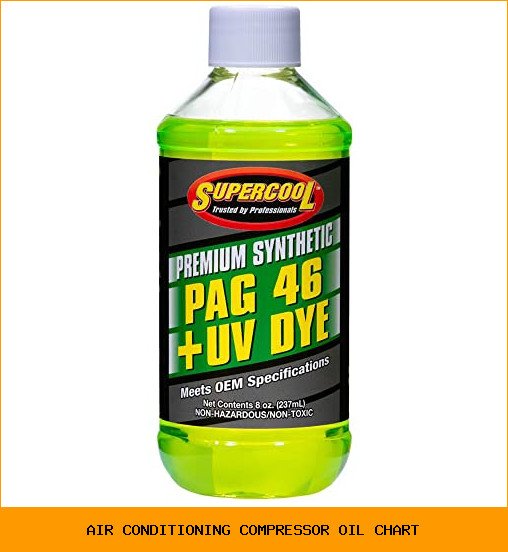
In this guide
You’re staring at a compressor that’s seized up, or maybe you just swapped out a blown one and need to add oil. Grab the bottle from the shelf — but is it the right stuff? Put the wrong oil in an AC system and you’re looking at poor cooling, a dead compressor in a few months, or worse, a contamination mess that requires flushing everything.
That’s where an air conditioning compressor oil chart comes in. Not a vague reference table, but a real guide you can use when a car rolls into the bay or you’re buttoning up your own project. I’ve been in that spot more times than I can count, and the wrong oil choice costs real time and money.

TSI Supercool
TSI Supercool P46-8D PAG Oil 46 Viscosity with UV Dye 8oz 1-Pack
Meets OEM performance specifications
Buy on AmazonThis article covers the three main oil types, what viscosity numbers actually mean, which oils work with which refrigerants, and a chart you’ll bookmark. No fluff, just the details that matter when you’re holding a quart of PAG, POE, or mineral oil.
If you’re working on an R134a system — and most cars from the mid-90s through the early 2010s are — you need a PAG oil that matches the compressor manufacturer’s viscosity spec. One option that meets OEM performance specs and includes UV dye for leak detection is the TSI Supercool P46-8D PAG Oil 46 Viscosity with UV Dye 8oz. It’s a high-quality synthetic PAG with anti-wear agents and anti-oxidants. Having UV dye already mixed in saves you a step during leak diagnosis.
What the Numbers on the Bottle Actually Mean — Viscosity and Oil Types
Every bottle of AC compressor oil has a number, like PAG 46 or POE 100. That number is the viscosity in centistokes at 40°C. Lower number, thinner oil. Higher number, thicker oil. Simple enough, but here’s where it gets tricky — different compressors need different viscosities because of bearing clearances and operating conditions.
I have seen people dump PAG 150 into a Honda Civic’s compressor because it’s what they had on the shelf. That engine’s compressor is designed for PAG 46. The thick oil doesn’t flow well through the small passages, starves the bearings, and the compressor locks up. Six months later, you’re replacing it again. So viscosity matters a lot.
Three main oil types dominate the automotive AC world:
- PAG (Polyalkylene Glycol): Used almost exclusively with R134a. Hygroscopic (absorbs water fast), so keep bottles sealed. PAG 46, PAG 100, and PAG 150 are the common grades.
- POE (Polyol Ester): Used with R1234yf systems and some retrofits. Also hygroscopic. Common viscosities: POE 46, POE 68, POE 100.
- Mineral Oil: For older R12 systems. Thicker, non-hygroscopic. Usually SAE 30 or 40 weight.
Mixing types is a bad idea. PAG and mineral oil do not mix, and POE will attack mineral oil seals in some cases. Stick to what the system calls for.
The Air Conditioning Compressor Oil Chart — By System Type
Here is a practical reference table. I built this from OEM service data and real-world experience over the years. It covers the most common applications, not every oddball. Always verify against the vehicle’s underhood sticker or service manual.
| System / Refrigerant | Common Oil Type | Typical Viscosity | Notes |
|---|---|---|---|
| R12 (pre-1994) | Mineral Oil | SAE 30 or 40 | Check system capacity; some cars used special blends. |
| R134a (1994–2010s) — Most cars | PAG | 46, 100, or 150 | Viscosity depends on compressor brand (Sanden, Denso, etc.) |
| R134a — Sanden compressors | PAG | 46 or 100 | Model-specific; SD7H15 often uses PAG 100 |
| R134a — Denso compressors | PAG | 46 | Most Denso units take PAG 46 unless noted |
| R134a — Delphi/Harrison | PAG | 100 or 150 | Check label; often 100 for rear AC equipped |
| R1234yf (2026+ cars) | POE | 46 or 68 | Very hygroscopic; use only special POE designed for R1234yf |
| R134a retrofit from R12 | PAG or POE | Varies | Must flush mineral oil first; use compatibly sealed system |
One thing I’d add — don’t trust the “universal” oils that claim to work in everything. They exist, but I’ve seen them cause foaming and poor lubrication in high-RPM compressors. Spend the extra few bucks on the correct viscosity.
How Much Oil Does Your Compressor Need? Getting the Quantity Right
Even with the right oil type and viscosity, too much or too little oil kills a compressor. Overfill can hydrolock the compressor or reduce cooling efficiency. Underfill starves bearings. The sweet spot is tight.
Most new compressors come pre-filled with oil. The charge varies, but common amounts are between 4 and 8 ounces. Some Sanden compressors hold 5.5 oz, while Denso units can be 4.2 oz. After that, the rest of the system holds additional oil — maybe 1–2 oz in the condenser, 1 oz in the evaporator, a tiny bit in the accumulator or receiver-drier. When replacing a compressor, you drain the old one, measure what came out, and put the same amount of new oil in. If the old compressor failed catastrophically and blew its oil elsewhere, you need to estimate the total system oil capacity and account for oil lost in the hoses and components.
Here’s a rough guideline per component for a typical R134a car:
- Compressor: 4–8 oz (check manufacturer spec)
- Condenser: 1–2 oz
- Evaporator: 1–2 oz
- Accumulator (orifice tube system): 0.5–1 oz
- Receiver-drier (expansion valve system): 0.5–1 oz
Total system oil is usually around 7–10 oz for a passenger car. Big trucks with rear AC can hold 12–14 oz. Always add oil in small increments and spin the compressor by hand to avoid hydrolock.
Common Mistakes With AC Compressor Oil That Kill Systems
I’ve seen the same handful of errors over and over. Avoid these:
- Using PAG 150 in a system designed for PAG 46. It happens more often than you’d think. The thick oil doesn’t flow well, it causes high discharge pressure, and the compressor labors until it seizes.
- Leaving the oil bottle open for a week. PAG and POE absorb moisture from the air. Water in the oil forms acids and sludge. Use it, seal it, don’t store opened bottles for months.
- Not flushing after a compressor burnout. If the compressor failed and dumped debris, new oil alone won’t fix it. Flush the whole system with an approved flush solvent, then add new oil.
- Mixing PAG and POE. They don’t play nice. If you’re converting a system, flush completely first.
- Trusting the ‘universal’ oil. As I said, they sometimes work but often don’t. Stick to what the vehicle manufacturer recommends.
Frequently Asked Questions About Compressor Oil
Can I use PAG oil in an R1234yf system?
No. R1234yf systems require POE oil specifically formulated for that refrigerant. PAG oil will not circulate properly and can damage the compressor. The two oils have different chemical properties — PAG is not compatible with the desiccants used in R1234yf accumulators.
What happens if I put mineral oil in an R134a system?
Bad things. Mineral oil won’t mix with R134a. It separates and sits in the low spots — the evaporator or accumulator — starving the compressor of lubrication. The system may cool for a few minutes, then the compressor seizes. Flush it out completely if this happens.
How do I know which viscosity my compressor needs?
Look at the compressor’s model number and check the manufacturer’s spec. For a Denso 10PA or 10S series, it’s almost always PAG 46. For a Sanden SD7H15, it’s often PAG 100. If you can’t find the spec, call the compressor supplier with the model number. Guessing is not worth the risk.
Does UV dye in the oil hurt the compressor?
Not if it’s a quality dye made for AC systems. Products like TSI Supercool’s P46-8D have the dye pre-mixed at the right concentration. Aftermarket dye you add yourself can be fine, but too much dye can clog the orifice tube. The pre-mixed option removes that risk.
Can I reuse oil drained from a failed compressor?
Never. That oil is contaminated with metal debris, acids, and moisture. Drain the old compressor, measure the amount for reference, and dispose of it. Put fresh oil in the new compressor.
Quick Rules to Keep Your AC Alive
- Always match the oil type to the refrigerant — PAG for R134a, POE for R1234yf, mineral for R12
- Get the viscosity right: PAG 46 for most Denso, PAG 100 for many Sanden, PAG 150 for some large trucks
- Use the right total oil quantity — check system capacity, don’t guess
- Keep PAG and POE bottles sealed until you pour — moisture kills oil
- After a compressor failure, flush the entire system before adding new oil
- UV dye is a smart move for leak hunting — a pre-mixed bottle saves the extra step
- When in doubt, double-check the vehicle’s AC decal or service manual

Eng. Kamrul Islam
Founder and product researcher
Engineer with more than 10 years of experience researching and selling products on Amazon, including his own brand on Amazon Australia. He compares specs, standards, sellers and owner feedback.
All guides by Eng. Kamrul IslamMore in ac & compressor oils
All 193 guides Guide
GuideOil Trap Air Conditioning: What It Is, Why You Need It, and How to Install It
You have a central AC that runs fine for ten years. Then one summer the compressor starts rattling,…
 Capacity
2008 Range Rover Sport Air Conditioning Oil Capacity: What You Need to Know Before Recharging
You have a 2008 Range Rover Sport, and the cabin air went from ice-cold to barely cool on…
What To Put In Ac To Make It Smell Good?
Having a comfortable and pleasant environment in your home or office is essential, especially during hot summer months…