 Eng. Kamrul Islam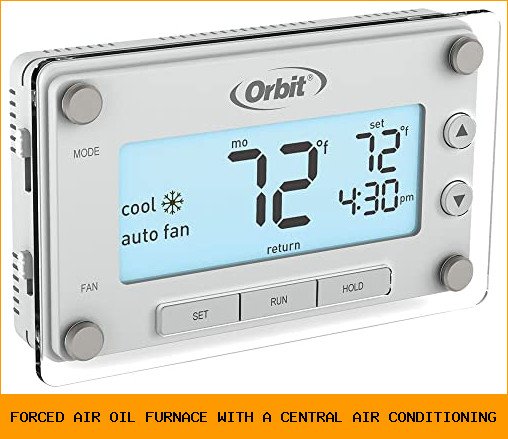
In this guide
- How a forced air oil furnace works with…
- Benefits of putting central AC on an oil…
- Key installation considerations
- Maintenance best practices for both systems
- Troubleshooting common issues
- Energy efficiency and cost savings
- Common myths about forced air oil furnaces…
- Comparison: Oil furnace vs. other heating…
- Five real questions people ask about forced…
- So what’s the bottom line on this setup?
You walk into your living room on a sticky July afternoon. The thermostat reads 87°F. You flip the switch to cool, and a few minutes later that familiar hum kicks in. But something’s off — the air barely feels cold. You start wondering if the whole system is working right, or if you’re about to drop serious cash on a repair.
That’s the moment most people realize they don’t really understand how their heating and cooling system works together. If you have a forced air oil furnace with a central air conditioning setup, you’re dealing with two separate machines that share the same ductwork. That shared system can be a blessing or a headache depending on how you maintain it. This article will walk you through exactly how these systems operate, what to watch for during installation, how to keep both sides running efficiently, and when to call a pro. No fluff.
I’ve spent years diagnosing these setups in real homes. I’ll give you the straight answers — including the numbers, trade-offs, and common traps homeowners fall into.
One tool that makes a noticeable difference in day-to-day comfort is a good programmable thermostat. The Orbit 83521 Clear Comfort Programmable Thermostat works well with standard forced air systems like yours. It offers 7-day scheduling, an easy-to-read backlit display, and an early start mode that gets the house to your target temperature by the time you wake up or come home. It’s not compatible with multi-stage or line voltage systems, but for a single-stage oil furnace paired with central AC, it’s a solid option. Check current pricing on Amazon.
How a forced air oil furnace works with central AC
Let’s get one thing straight: an oil furnace and a central air conditioner are separate machines that just happen to share the same blower and ductwork. The furnace sits inside — usually in a basement or utility closet. It burns heating oil in a combustion chamber to heat air, then the blower pushes that air through ducts into your rooms.
The central air conditioner lives outside. Its compressor pumps refrigerant through a coil mounted inside the furnace cabinet (the evaporator coil). When the thermostat calls for cooling, the blower moves air across that cold coil, and the refrigerant carries the heat outside. That’s it. They don’t help each other. They just take turns using the same fan and ducts.
This matters because the blower speed needed for heating is different from what you need for cooling. Heating needs slower air to feel warm; cooling needs faster air to wring out humidity. A good install will include a blower that adjusts automatically or a professional who sets two speeds.
Benefits of putting central AC on an oil furnace
Why combine them instead of buying a separate heat pump or window units? Three real reasons.
Space savings. The evaporator coil fits right into the furnace plenum. No extra indoor unit. No wall space eaten up. For a small mechanical room, that’s a big deal.
Lower upfront cost. Adding a cooling coil and condenser to an existing duct system costs less than installing a whole new ducted heat pump system. You’re basically buying only the outdoor unit and the coil. The furnace and ducts are already paid for.
Consistent air distribution. You already have ducts sized for the whole house. Window units can’t match that even airflow from room to room. Central AC on your forced air system gives you one thermostat controlling everything.
The trade-off? Oil furnaces are loud compared to gas or electric heat pumps. You’ll hear that burner rumble in winter. And oil prices swing wildly — you can’t control that.
Key installation considerations
Adding central AC to an existing forced air oil furnace isn’t a weekend DIY job. Here’s what the pros need to get right.
Ductwork compatibility
Your ducts were sized for heating airflow. Cooling needs about 400 cubic feet per minute per ton of AC. If your ducts are too small or badly designed, the AC won’t move enough air. The evaporator coil can freeze up. You’ll get insufficient cooling and high electric bills. A Manual D calculation (the standard for duct design) should be done before any equipment is ordered.
Matching the coil to the furnace
Oil furnaces run hotter than gas units — flue temps can hit 500°F. The evaporator coil has to sit downstream of the heat exchanger. If the coil blocks airflow, the furnace can overheat. A licensed installer will check the temperature rise across the furnace and pick a coil with low air resistance.
Refrigerant line routing
The lineset running from the outdoor condenser to the indoor coil needs to be insulated and properly sloped so oil (from the compressor) returns to the compressor. A kink or bad brazing joint kills efficiency. Most contractors use pre-insulated copper lines and pressure-test before charging.
Electrics and thermostat wiring
Your old oil furnace probably has just two wires for the thermostat (R and W). Central AC needs at least a Y wire for cooling and a C wire for common power. If you only have two wires, you’ll need to run new thermostat cable — or use a power-stealing thermostat like the Orbit 83521, which doesn’t require a C wire for basic operation (but check compatibility with your specific furnace). A pro will confirm the wiring before the install date.
Maintenance best practices for both systems
You’ve got two sets of maintenance needs. Ignore either one and you’ll pay for it.
Oil furnace side
- Replace the fuel filter every year or after each fill-up if you use low-grade oil.
- Have the burner nozzle and electrodes cleaned annually. Soot buildup kills efficiency fast.
- Check the flue pipe for cracks or corrosion. Carbon monoxide is no joke.
- Change the air filter every 1-3 months. A clogged filter makes the blower work harder and reduces airflow.
Central AC side
- Clean the outdoor condenser coils with a garden hose (gentle spray) every spring. Debris blocks heat rejection.
- Check the refrigerant lines for insulation damage. Exposed copper lines sweat and drip water.
- Run the system for 10 minutes before summer starts. See if the air gets cold and condensate drains freely.
- Keep shrubs and grass at least 18 inches away from the outdoor unit for airflow.
One tip: if you run the furnace fan continuously in summer (on a thermostat setting), you help mix the air and reduce temperature stratification. But it also pulls more dust through the filter. Change it monthly.
Troubleshooting common issues
Here are five problems homeowners encounter with a forced air oil furnace and central AC. I’ve included specific fixes you can try before calling a technician.
No heat
Check the reset button on the oil burner. If it tripped, press it once. If it trips again right away, you have a combustion problem — likely a clogged nozzle or bad ignition. Call a pro. Do not keep resetting it.
AC runs but no cold air
Make sure the outdoor condenser fan is spinning. If it’s not, the compressor overheats and trips a safety. Also check the thermostat setting — is it actually calling for cool? If the fan runs but the compressor doesn’t kick on, the capacitor may be dead. That’s a $20 part but requires electrical safety knowledge.
Uneven temperatures across rooms
This is almost always a duct balancing problem. Close dampers in rooms that cool fastest, open them in the hot rooms. If you have no dampers, consider motorized zone dampers — they cost about $200 per zone plus labor, but they solve the problem permanently.
Frequent cycling (short cycling)
The system turns on and off every few minutes. For a furnace, this usually means a dirty filter or a blocked flue. For AC, it often means a bad thermostat or low refrigerant. Check the filter first. If that’s clean, have a technician measure refrigerant pressures.
Oil smell during heating
A faint oil smell at startup is normal. A strong, persistent smell means the oil is not combusting fully. This can be caused by a clogged nozzle, improper air mixture, or a cracked heat exchanger. The last one is dangerous — shut off the furnace and call for service immediately.
Energy efficiency and cost savings
Your oil furnace efficiency is measured by AFUE (Annual Fuel Utilization Efficiency). Older oil furnaces run at 70-80% AFUE. New ones hit 85-95%. That 10-20% difference adds up fast. A 20-year-old furnace burning 800 gallons of oil per year at $3.50 per gallon costs about $2,800 annually. Upgrade to an 88% AFUE model and you’ll burn roughly 700 gallons — saving $350 per year. Not huge but meaningful over 10 years.
Central AC efficiency is measured by SEER (Seasonal Energy Efficiency Ratio). Current minimum is 14 SEER in most states. A 16 SEER unit uses about 12% less electricity than a 14 SEER unit. On a typical summer electric bill of $200, that’s $24 per month in savings.
Here’s where people get confused: a higher SEER AC doesn’t help your heating bill at all. And a higher AFUE furnace does nothing for cooling costs. You need to evaluate them separately. The one overlap is the blower motor. An ECM (electronically commutated) blower motor uses 40-60% less electricity than a standard PSC motor. If your furnace has an ECM, you save year-round.
Another often-overlooked saving: programmable thermostat. The Orbit 83521 can adjust temperatures automatically. Set it to 68°F in winter when you’re awake, 62°F at night or when you’re out. In summer, set it to 78°F during the day, 85°F when nobody’s home. According to Department of Energy estimates, each degree of setback saves 1-3% on heating and cooling costs. That adds up to $100-200 annually in most homes.
Common myths about forced air oil furnaces with central AC
Let me kill a few myths I hear all the time.
Myth: You can’t add central AC to an old oil furnace. False. As long as the furnace has a clean heat exchanger and the blower moves enough air, you can add a coil and condenser. Many homes built in the 1970s and 80s had oil heat and later got AC added. It’s done all the time.
Myth: Oil furnaces are dirty and will clog the AC coil. Not if you change the air filter regularly. An oil furnace does produce more soot than gas, but a well-maintained burner produces very little. The filter catches it before it reaches the coil.
Myth: Running the furnace fan continuously in summer helps the AC. It does, but only up to a point. The fan helps circulate cool air and prevents hot spots. But if you run it 24/7, it pulls warm attic air through duct leaks — that hurts efficiency. Better to run the fan on auto and use a thermostat that cycles it.
Myth: A bigger AC unit cools better. Nope. An oversized AC cools the air quickly but doesn’t run long enough to remove humidity. Your house feels clammy. The unit short-cycles and wears out faster. Proper sizing is critical — hire a contractor who does a load calculation (Manual J), not one who guesses based on square footage.
Comparison: Oil furnace vs. other heating options with central AC
| Heating method | Typical AFUE | Fuel cost (annual, 2,000 sq ft) | Carbon output (tons CO2/yr) | AC compatibility | Noise level |
|---|---|---|---|---|---|
| Oil furnace | 80-95% | $1,800 – $2,800 | ~6.5 | Excellent (add coil) | Moderate (rumble) |
| Gas furnace | 90-98.5% | $600 – $1,200 | ~4.0 | Excellent | Low |
| Electric heat pump | ~200-300% (COP) | $900 – $2,000 | ~3.5 | Built-in | Low (fan+compressor) |
| Propane furnace | 90-98% | $1,000 – $2,400 | ~5.5 | Excellent | Low |
| Electric baseboard | 100% | $1,800 – $4,000 | ~5.0 | Separate system needed | Silent |
Oil furnaces win on heat output — they produce the highest temperature air of any common heating method. That’s important for cold climates. The downsides are higher fuel cost and more maintenance. If you have access to natural gas, switching usually pays for itself within 5 years. But if you live off-grid or in a rural area without gas lines, oil plus central AC is a proven, reliable combo.
Five real questions people ask about forced air oil furnace with central AC
Can I leave the AC coil in the furnace during winter?
Yes. The coil is designed to sit in the airstream year-round. It won’t hurt anything. Just make sure the condensate drain pan is clean and dry before winter so mold doesn’t grow. If you have a high-efficiency oil furnace (condensing type), the coil is usually placed downstream of the secondary heat exchanger — that’s fine too.
Do I need a separate thermostat for the AC and furnace?
No. A standard single-stage thermostat like the Orbit 83521 handles both heating and cooling. It sends a signal to the furnace for heat and to the AC contactor for cool. You just set the mode switch to Heat or Cool. Some thermostats have an Auto mode that switches based on temperature.
How often should I have the oil furnace serviced if I have central AC?
At least once a year, ideally before heating season. The AC doesn’t add extra wear to the furnace — they operate independently. But the AC’s evaporator coil is inside the furnace cabinet. If the furnace is serviced, the technician can inspect the coil for dirt or damage at the same time. So an annual service covers both.
Is it cheaper to heat with oil or use a heat pump for heating and AC?
Depends on local electricity and oil prices. In general, if oil costs $3.50 per gallon and electricity is $0.12 per kWh, an oil furnace with 85% AFUE produces about 105,000 BTUs per gallon, or 30 cents per 100,000 BTUs. A heat pump with COP 2.5 (250% efficient) costs about 15 cents per 100,000 BTUs at that electric rate. So heat pumps are cheaper in moderate climates. In very cold weather below 20°F, heat pump efficiency drops and backup electric resistance heat is very expensive — oil becomes cheaper. Many homes install a dual-fuel system: heat pump for mild weather, oil furnace for deep cold. That combo is popular with central AC.
Can I install central AC myself on my oil furnace?
Technically possible if you’re a skilled HVAC technician. But I strongly advise against it. You need EPA certification to handle refrigerant. Improper charging or brazing can destroy the compressor. Duct sizing mistakes mean poor comfort and high bills. A bad install can also void the furnace warranty. Pay a licensed contractor — it’ll cost $3,000 to $6,000 for a typical installation on an existing duct system, but it’s money well spent.
So what’s the bottom line on this setup?
- A forced air oil furnace with central AC is a proven, durable choice for homes without gas lines. The two systems share ductwork but are otherwise independent.
- Installation requires careful duct sizing, refrigerant line routing, and thermostat wiring. Don’t skimp on the Manual J load calculation or the contractor license.
- Maintenance is two-sided: annual furnace cleaning plus spring AC coil cleaning. Change the air filter every 1-3 months.
- Energy savings come from upgrading to a high-AFUE furnace (85%+), a moderate SEER AC (14-16), and an ECM blower motor. A programmable thermostat like the Orbit 83521 adds $100-200 in yearly savings.
- Myths about oil furnaces being incompatible with central AC are mostly false. The real limits are duct size and furnace condition.
- If you live in a cold climate, oil heat gives you reliable warmth. If you have natural gas available, consider switching for long-term savings.
- Always hire a licensed HVAC contractor for any work involving refrigerant, gas/oil lines, or major electrical changes. Your comfort and safety depend on it.
This setup isn’t the newest or flashiest on the market. But for millions of homes, especially in rural areas and the Northeast, a forced air oil furnace with central air conditioning remains a workhorse that delivers comfort through every season. Know how it works, take care of it, and it’ll take care of you.

Eng. Kamrul Islam
Founder and product researcher
Engineer with more than 10 years of experience researching and selling products on Amazon, including his own brand on Amazon Australia. He compares specs, standards, sellers and owner feedback.
All guides by Eng. Kamrul IslamMore in ac & compressor oils
All 193 guidesAir Conditioning Oil Car
When it comes to automotive maintenance, one of the most frequently overlooked aspects is the air conditioning system.…
 Guide
GuideAdding Air Conditioning to Your Oil Furnace: What Actually Works
It’s July, the house is 85 degrees, and you’re standing next to your oil furnace wondering if it…
 Guide
Guide1997 Toyota Tacoma Air Conditioning Oil: Type and Amount Explained
You roll down the window on a July afternoon, turn the AC knob, and get warm air. Stale,…