 Eng. Kamrul Islam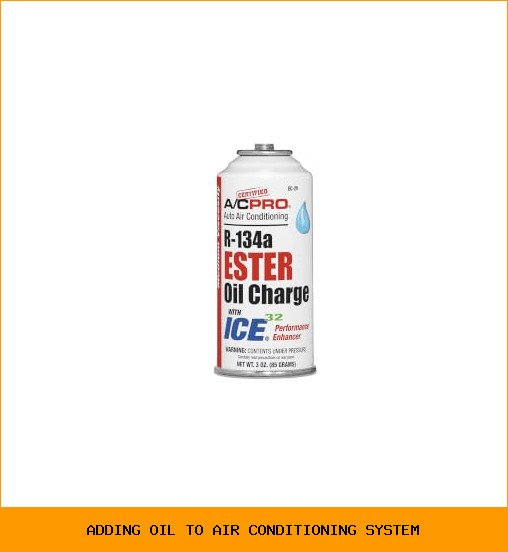
In this guide
You hooked up a recharge kit, topped off the refrigerant, and the air still blows warm. Or worse, the compressor locks up a week later. Nine times out of ten, the problem isn’t just low refrigerant — it’s low oil. The compressor needs oil to survive, and when a slow leak carries oil out along with the refrigerant, the compressor runs dry. The repair bill for a new compressor plus labor? Usually $800 to $1,200. A 3-ounce bottle of the right oil costs less than $15.
This article covers everything you need to know about adding oil to an air conditioning system: why it matters, when to do it, which oil to use, and a step-by-step method that won’t contaminate the system or create new problems. By the end you’ll know exactly what to do the next time your AC needs a shot of oil.

InterDynamics
Ester Charge Air Conditioner Oil, 3 Oz.
Compatibility: R-134A auto AC systems
Buy on AmazonA product like InterDynamics Ester Charge Air Conditioner Oil (3 oz.) is a practical option for R-134a systems. It meets OEM specifications and works in most late-model cars. The small can makes it easy to add a precise amount without buying a quart you’ll never finish. I’ve used it myself on a few jobs where the vehicle only needed an ounce or two.
Why Adding Oil Matters More Than You Think
The compressor is the only moving part in an AC system that gets pounded by high-pressure gas every cycle. It relies on a thin film of oil to keep the pistons or scroll plates from grinding against each other. That oil circulates with the refrigerant — it doesn’t just sit in the compressor. When the system loses refrigerant through a slow leak, it also loses oil. A loss of 10% of the charge can take one to two ounces of oil with it, depending on the leak rate.
Most passenger cars take 4 to 8 ounces of oil total. Some larger trucks or luxury vehicles take up to 10 ounces. If you throw in a can of refrigerant that already contains oil (many do, and they’re marked ‘with oil’), you might overfill. The compressor can hydro-lock under too much oil. It can also starve if there’s too little. So knowing the exact amount and the right type matters.
There are three main oil chemistries in automotive AC: PAG (polyalkylene glycol), POE (polyol ester), and to a lesser extent mineral oil for older R-12 systems. PAG is the standard for R-134a compressors because it dissolves well in the refrigerant. POE (often called ester oil) works as a retrofit oil for R-134a in systems designed for R-12, or as a drop-in for some newer R-1234yf systems. The InterDynamics product is an ester-based oil, so it’s compatible with both R-134a and R-1234yf in most cases. Always check the label on the compressor or the underhood decal before buying.
When to Add Oil — and When to Leave It Alone
You should add oil in these specific situations:
- After replacing the compressor, accumulator/drier, or condenser. These components trap oil. A new compressor often comes empty or with a minimal break-in charge. You must add the proper amount — usually 1 to 3 ounces for the accumulator, 1 to 2 for the condenser, and the rest into the compressor.
- After a major refrigerant leak that required evacuating the system. If the system sat empty for a week, a lot of oil likely leaked out. Weigh the recovered oil when you pull it out with a recovery machine; whatever you removed, you need to put back.
- When the compressor makes a rattling or whining noise shortly after a recharged system starts. That’s a red flag for low oil.
You should not add oil when:
- You’re only topping off a system that lost a small amount of refrigerant (under 15% of the charge). The oil that left with the refrigerant is negligible.
- You’re using a recharge can that already contains oil. Those cans typically add 1 to 2 ounces of oil per 12-ounce can. Adding extra oil on top of that can push the oil level too high.
- You have no idea how much oil the system currently holds. In that case, the safe move is to completely drain, measure, and add the specified amount.
Step-by-Step: How to Add Oil to an Air Conditioning System
This procedure assumes the system is already empty (evacuated) or you have a way to introduce oil without pressurizing the low side. If the system still has pressure, you’ll need a special oil injector tool that seals against the service port. I’ll describe the more common method used when the system is open.
- Confirm the system has been evacuated — either by a recovery machine or by intentionally letting the charge out (illegal in many places, but sometimes necessary for DIY). Wear safety glasses and gloves. Refrigerant can cause frostbite.
- Locate the low-side service port on the larger aluminum line between the accumulator and the compressor. Remove the cap.
- Remove the Schrader valve core using a valve core tool. This gives you direct access to the port without fighting the valve spring. Work quickly to minimize air ingress.
- Fill a clean syringe or an oil injector with the exact amount of oil called for in the service manual. Don’t guess. A digital oil charge scale helps — weigh the oil before and after.
- Insert the syringe tip or injector adapter into the open port. Slowly push the oil into the low side line. Take your time; forcing it in can cause oil to spill back out.
- Reinstall the Schrader valve core and torque it to spec (usually 6–8 in-lb, just snug). Replace the cap.
- Connect a manifold gauge set and pull a deep vacuum (at least 500 microns) for 30 minutes to remove any moisture that entered during the oil injection. Some newer tools include an oil injection port that lets you add oil under vacuum, which is cleaner and faster.
- Recharge the system to the specified refrigerant weight. Start the engine, turn on AC to max, and verify high and low side pressures are within range.
Pro tip: If you’re adding oil to a system that still has a partial charge (no vacuum), use an injector tool that pushes oil through the low side while the compressor is running. Follow the tool’s instructions precisely — you can easily add too much or introduce air.
How Different Oil Addition Methods Compare
There are three common approaches to adding oil. Each has its pros and cons.
| Method | Accuracy | Ease of Use | Best For | Caveat |
|---|---|---|---|---|
| Oil injector tool (syringe with Schrader adapter) | High | Moderate — requires removing valve core | Precise top-ups after component replacement | Must evacuate system afterward if you removed core |
| Pre-charged refrigerant can with oil | Low | Easy — just screw on and spray | Minor top-off for known system with known oil level | You can’t control how much oil goes in; can overfill |
| Separate oil charge can (like InterDynamics 3 oz.) | Medium | Easy — inject through low service port with included adapter | Adding a specific measured amount to an empty or evacuated system | You still need a way to pull vacuum afterward if the system was open |
If you’re working on a system that’s still sealed and running, the injector tool is the only way to add oil without losing charge. If the system is open, the separate oil charge can is simpler and cheaper.
Frequently Asked Questions About Adding Oil to AC Systems
Can I add too much oil? What happens?
Yes, you can absolutely overfill an AC system with oil. Too much oil reduces heat transfer in the condenser and evaporator. The compressor may struggle to pump the excess, leading to higher discharge temperatures and eventually failure. In severe cases, the compressor can hydro-lock — the pistons can’t compress the liquid oil, and something breaks. The fix is to drain the system and start over with the correct amount. That’s why measuring matters.
What happens if I use the wrong type of oil?
Wrong oil type can destroy the compressor within hours. Mixing PAG and POE oils causes them to separate, leading to poor lubrication and acid formation. Using mineral oil in an R-134a system won’t circulate properly because it doesn’t dissolve in the refrigerant. The result: seized compressor. Always match the oil type to the label on the compressor or the vehicle’s service manual. If in doubt, an ester-based oil (like the InterDynamics product) is compatible with most modern systems except those that specifically require PAG 46 or PAG 100.
Do I need to add oil every time I recharge the AC?
No. If you’re simply topping off a system that has a small leak and lost maybe 0.5 ounce of oil over a year, adding extra oil does more harm than good. Recharge kits often include oil for a reason — they assume the system lost oil along with refrigerant. But if you top off often without measuring, you’ll gradually overfill. Only add oil when you know the system lost a significant amount (more than 15–20% of the charge) or after a component replacement.
Can I add oil without pulling a vacuum?
You can, but it’s risky. If you inject oil into a partially charged system without vacuum, you introduce air and moisture. Moisture reacts with refrigerant and oil to form hydrochloric acid, which eats the compressor from the inside. Most professional shops always evacuate before adding oil. For a quick emergency top-off with an injector tool, you can get away with it if you’re careful, but don’t make it a habit.
How do I know how much oil my system needs?
Find the underhood sticker or the service manual for your vehicle. It lists the total oil capacity for the entire system. Subtract any oil already in the components you’re not replacing. For instance, if you replace only the compressor, you add the total system capacity minus the oil that remains in the condenser, evaporator, and lines. A typical passenger car takes 5 to 7 ounces total. The most reliable method is to drain the old oil from the old compressor and measure it, then add exactly that amount to the new one.
What to Remember Before You Add Oil
- Check the oil type against the factory spec — PAG, POE, or ester. Using the wrong one means a new compressor.
- Measure the oil for the specific component you’re replacing. A new compressor alone can need 3 to 5 ounces.
- Never add oil to a sealed, pressurized system unless you have a proper injector tool that doesn’t release refrigerant.
- When adding oil to an open system, always evacuate afterward to remove moisture and air.
- Weigh the oil you add. A small digital scale accurate to 0.1 ounce costs $15 and saves you from guessing.
- If you’re unsure, err on the side of slightly underfilling rather than overfilling. The compressor can survive a half-ounce low better than two ounces high.
- For most DIY jobs, a small pre-measured bottle like the InterDynamics Ester Charge 3 oz. removes the guesswork and avoids waste.

Eng. Kamrul Islam
Founder and product researcher
Engineer with more than 10 years of experience researching and selling products on Amazon, including his own brand on Amazon Australia. He compares specs, standards, sellers and owner feedback.
All guides by Eng. Kamrul IslamMore in ac & compressor oils
All 193 guides Guide
GuideThe Truth About Standard Oil Air Conditioning: Myths, Facts, and What Actually Works
Your neighbor told you his air conditioner runs on oil. Or you saw a product labeled ‘standard oil…
 Guide
GuideForced Air Oil Furnace With a Central Air Conditioning Unit: What You Need to Know
You have a house with a forced air oil furnace that keeps you warm through the winter. Now…
What Happens If You Put Too Much Pag Oil In An Ac System?
Maintaining an air conditioning system is essential for ensuring efficient performance and longevity. One crucial component of this…