 Eng. Kamrul Islam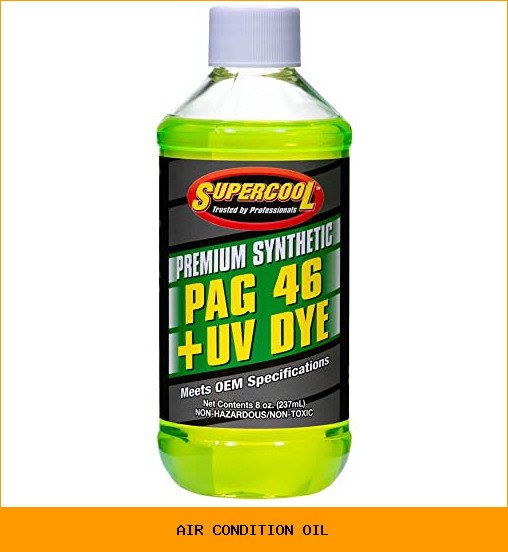
In this guide
Your car’s AC blows warm again. Maybe you hear a faint rattle under the hood. Some online video told you to dump a whole bottle of oil into the low side port. That’s a bad idea.
I’ve seen people wreck perfectly good compressors by overfilling with the wrong stuff. Air condition oil isn’t just ‘lubricant’ — it behaves differently depending on viscosity, moisture content, and how much you use. Get it wrong and your compressor seizes or your cooling performance tanks. This article walks you through the three things most DIYers mess up: oil quantity, viscosity, and the quiet hero that is UV dye.

TSI Supercool
TSI Supercool P46-8D PAG Oil 46 Viscosity with UV Dye 8oz 1-Pack
Meets OEM performance specifications
Buy on AmazonBy the time you finish, you’ll know exactly what to look for on a bottle, how to measure your system’s oil charge, and why a single 8-ounce bottle with dye might be the smartest ten bucks you spend this year.
The Product That Makes Oil Service Simple
If you’re topping off a system after a compressor swap or a leak repair, you need a clean, matched lubricant. The TSI Supercool P46-8D PAG Oil 46 Viscosity with UV Dye 8oz 1-Pack does exactly that. It meets OEM specs, resists moisture absorption, and the integrated UV dye lets you pinpoint leaks without injecting dye separately. Anti-wear agents and friction modifiers help extend compressor life, and antioxidants fight sludge buildup that kills efficiency. Grab one bottle and you eliminate guesswork.
Check the current price on Amazon — it’s often cheaper than buying oil and dye separately.
Myth #1: More Air Condition Oil Means Better Lubrication
Here’s the truth: extra oil does not give extra protection. It gives you a flooded compressor that struggles to pump refrigerant. Every AC system has a specific oil charge, usually stamped on a sticker under the hood or listed in the service manual. Overfill by just one ounce and you can drop cooling capacity by 10-15%. The excess oil coats the condenser and evaporator surfaces, reducing heat transfer. The compressor works harder, cycles longer, and wears out faster.
So where does the ‘more is better’ myth come from? Leaking systems lose oil along with refrigerant. People see low oil on the dipstick — wait, most AC systems don’t have a dipstick. You have to drain and measure, or rely on known charge amounts. If you just pour in oil because ‘it looked low,’ you’re guessing. And guessing leads to slugging, where liquid oil gets trapped in the compressor and damages valves.
Stick to factory specs. If you replace a major component like a condenser or accumulator, drain the old oil from the old part, measure it, and add exactly that amount back into the new part. Many compressors come pre-filled with a specific volume — don’t add more unless the system needs it.
Myth #2: All PAG Oils Are the Same — Viscosity Doesn’t Matter
PAG stands for polyalkylene glycol. But not all PAG is created equal. The number after ‘PAG’ — 46, 100, 150 — tells you the viscosity grade. PAG 46 is thin, meant for compressors with tight clearances and high-speed operation (most modern R134a systems). PAG 100 is thicker, used in older compressors and some heavy-duty applications. PAG 150 is rare, mostly found in large commercial units or vintage systems with R12 conversions.
Putting PAG 100 into a system designed for PAG 46 is like dumping 20W-50 motor oil into an engine that needs 5W-30. The compressor has to push thick, gooey oil through tiny passages, increasing drag, overheating the windings, and shortening lifespan. Conversely, thin oil in a system that needs thick oil can’t maintain a proper film, metal-on-metal contact occurs, and the compressor seizes.
Always check what your system calls for. Most Japanese and European cars from the 2000s use PAG 46. Some older GM and Ford stuff wants PAG 100. If you’ve replaced the compressor, the compressor manufacturer’s sticker often has the recommended viscosity. Don’t assume ‘PAG’ covers you.
Here’s a quick comparison of common PAG oil viscosities:
| Viscosity Grade | Typical Use | Compressor Types | Pros | Cons |
|---|---|---|---|---|
| PAG 46 | Modern R134a systems (2026+), most Japanese/Korean | Sanden, Denso, Delphi, scroll compressors | Flows well at low temps, excellent lubrication for high-speed bearings | Too thin for worn or older compressors with looser tolerances |
| PAG 100 | Older R134a systems, some domestic vehicles, heavy-duty | York, Tecumseh, large reciprocating compressors | Higher film strength, good for slower-speed compressors | Thicker, may cause drag in new compact compressors |
| PAG 150 | R12-to-R134a conversions, industrial, some retrofits | Large open-drive, slow-speed compressors | Very high viscosity, neutral with mineral oil residue | Hard to find, rarely needed for modern cars |
When to Add Air Condition Oil (and How Much)
There are exactly four situations where you should add oil:
- New compressor — Most come pre-filled. Check the label. If it says ‘oil charge 4.0 oz,’ don’t add any more unless system requires extra for drier or accumulator.
- New condenser or evaporator — Drain oil from the old component, measure it, pour that amount into the new one. If you can’t drain (evaporators are hard to access), add 1-2 ounces to account for the oil trapped in the old core.
- New accumulator (receiver-drier) — Add 1-2 ounces of PAG oil to the accumulator before installation. It replaces oil lost when the old accumulator was removed.
- After a major leak repair — If refrigerant blew out with oil, you need to restore oil. Best method: recover remaining oil from the system using a flush tool or by draining the compressor, then add the exact spec amount.
Never add oil ‘just because the system is low on refrigerant.’ Oil travels with refrigerant, so a slow leak often bleeds oil too. But the ratio is unpredictable. Instead of guessing, use a UV dye test first to locate the leak, then fix it, then add the correct oil charge based on components replaced.
One reliable way to estimate total system oil: look up OEM spec. For example, a typical Honda Civic (2026-2026) requires 4.5 oz of PAG 46 total. If you swapped the compressor (5.0 oz pre-filled) and added a new accumulator (+1.0 oz), you’d be 1.5 oz over — that’s too much. In that case, drain 1.5 oz from the compressor before installation.
I always keep a small graduated cylinder on hand to measure removed oil accurately. Eyeballing it is how systems get ruined.
Why UV Dye in Air Condition Oil is Worth It
UV dye gets a bad rap from people who’ve seen horror stories about it clogging orifices. Those stories are almost always from excessive dye — like using a whole bottle meant for a jumbo system in a tiny car. A proper dose (a fraction of an ounce) causes no problems. The TSI Supercool P46-8D already has dye mixed in at the right concentration, so you can’t overdose.
Without dye, finding a slow refrigerant leak can take hours with an electronic sniffer or a soap bubble test. With dye, you hit the system with a UV light and see the exact trail — a line of bright yellow-green ooze. That saves time and reduces refrigerant waste. Plus, you catch small leaks before they become big ones.
I’ve used PAG oil with integrated dye on a half dozen AC jobs. Every single time it revealed a pinhole leak at an O-ring or a Schrader valve that would have taken forever to find otherwise. One caveat: the dye works best on clean components. If your system is grimy, wipe it down first. And don’t use a cheap UV light — get a 12-LED flashlight with a 395nm wavelength. The cheap blue lights barely show anything.
Bottom line: oil with dye is cheap insurance. The 8-ounce bottle will last through multiple partial fills, and the dye stays in the system for years.
Frequently Asked Questions About Air Condition Oil
Can I mix different brands of PAG oil?
Technically yes, if they’re the same viscosity and type (e.g., both PAG 46). But it’s not recommended because additives differ. Some oils have more anti-wear agents or antioxidants. Mixing can reduce effectiveness. Best practice: drain and replace with a single brand. If you’re topping off a small amount, use the same brand as what’s already in the system. In a pinch, mixing PAG 46 from different reputable brands isn’t catastrophic — but don’t make it a habit.
How often should I change air condition oil?
You don’t change it like engine oil. AC oil circulates with the refrigerant and degrades slowly. It only needs replacement if you open the system for a major repair (compressor, condenser, evaporator) or if moisture contaminated the oil. Moisture turns oil acidic and can eat the compressor from inside. A properly sealed system can go a decade or more without needing an oil change. If you suspect moisture, replace the accumulator and flush the oil.
What happens if I use mineral oil in a PAG system?
Mineral oil and PAG do not mix. PAG is hygroscopic — it absorbs water. Mineral oil repels water. If you mix them, the PAG pulls moisture out of the mineral oil, creating acidic sludge that clogs expansion valves and corrodes aluminum parts. Eventually the compressor fails. Never cross-contaminate. Always flush the system thoroughly if switching from one type to another.
Can I use air condition oil without UV dye?
Sure. Many bottles don’t have dye. But you lose a diagnostic tool. If you’re doing a full system rebuild and don’t mind hunting leaks with a sniffer, plain oil is fine. For most DIY repairs, the tiny extra cost of dye is worth it. The TSI Supercool bottle includes dye, so you don’t have to decide.
Does oil charge change with different refrigerants (R134a vs R1234yf)?
Yes. R134a systems use PAG oil, typically PAG 46. R1234yf systems use a different PAG formulation that is compatible with the new refrigerant. Never use R134a PAG oil in an R1234yf system because the chemical properties differ — the oil may not carry the refrigerant properly or could cause seal swelling. Also, R1234yf systems have lower oil charge volumes (often 3-4 oz total). Always follow the manufacturer’s spec for your refrigerant type.
What to Take Away From This
- Never add oil without knowing the system’s exact total charge — look up the spec or measure what you removed.
- Use the correct viscosity: PAG 46 for most modern cars, PAG 100 for older or heavy-duty systems. Check the compressor label.
- Overfilling oil reduces cooling performance and can damage the compressor. Underfilling causes lack of lubrication and seizure. Precision matters.
- UV dye in your air condition oil is a time saver for leak detection. Use it at the correct concentration — pre-mixed bottles solve this.
- When replacing components, drain and measure oil from the old part, then add that amount to the new part. Don’t guess.
- Keep your oil bottle sealed until use. PAG absorbs moisture from the air within minutes. Moisture leads to acid and compressor failure.
- If you’re doing a simple top-up after a small leak repair (e.g., Schrader valve), add no more than 0.5-1.0 oz of oil. Anything more likely indicates a larger leak that needs component replacement.

Eng. Kamrul Islam
Founder and product researcher
Engineer with more than 10 years of experience researching and selling products on Amazon, including his own brand on Amazon Australia. He compares specs, standards, sellers and owner feedback.
All guides by Eng. Kamrul IslamMore in ac & compressor oils
All 193 guidesThe 7 Best Air Conditioner Oil Cleaners of 2026
Finding the best air conditioner oil cleaner can greatly enhance the efficiency and longevity of your air conditioning…
The 7 Best Air Conditioning Compressor Oil Capacities of 2026
**Selecting the right air conditioning compressor oil is crucial for maintaining the performance and longevity of your AC…
 Guide
Guide1997 Toyota Tacoma Air Conditioning Oil: Type and Amount Explained
You roll down the window on a July afternoon, turn the AC knob, and get warm air. Stale,…