 Eng. Kamrul Islam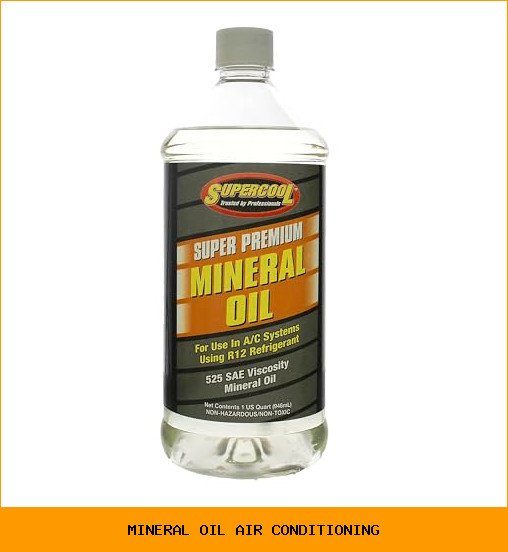
In this guide
- Introduction to Mineral Oil in Air…
- TSI Supercool MO-500-GM-32 Mineral Oil - 525…
- What Is Mineral Oil?
- The Role of Mineral Oil in Refrigeration…
- Comparison of Mineral Oil and Other…
- Benefits of Using Mineral Oil in HVAC…
- Environmental Considerations and Regulations
- How to Change Mineral Oil in Your…
- Common Myths About Mineral Oil in…
- What You Need to Remember
Introduction to Mineral Oil in Air Conditioning
You’ve got an older AC unit that still runs on R-12 refrigerant. Or maybe you’re working on a classic car’s air conditioning system. The compressor needs oil, and the manual says ‘mineral oil.’ But you’re not sure what that actually means, or why it matters. That’s a common spot to be in.
Mineral oil has been around since the early days of refrigeration. It’s a refined petroleum product designed to lubricate compressor bearings, pistons, and seals. Unlike the synthetic oils used with modern R-134a and R-410A systems, mineral oil has a different chemical structure. It doesn’t mix well with those newer refrigerants. That’s why it’s still relevant for older equipment.

TSI Supercool
TSI Supercool MO-500-GM-32 Mineral Oil - 525 VIS SAE 110 cSt 32oz 1-Pack
Super premium mineral oil
Buy on AmazonThis article covers exactly what mineral oil does, when you need it, and how to swap it out safely. You’ll also see a head-to-head comparison with synthetic oils, the environmental regulations you need to know, and the most common mistakes people make. By the end, you’ll know whether mineral oil is the right choice for your job.
If you’re working on an R-12 system, you’ll need a quality mineral oil like the TSI Supercool MO-500-GM-32 Mineral Oil (525 SAE, 32 oz). It’s a direct fit for most residential and automotive compressors that call for SAE 110 viscosity. Keep a bottle on hand—it beats guessing or mixing incompatible oils.
What Is Mineral Oil?
Mineral oil comes from crude oil. It’s refined to remove impurities, then treated to stabilize it at high temperatures. In HVAC systems, it’s used as a lubricant for the compressor. The oil circulates through the system with the refrigerant, coating internal parts and carrying heat away from the compressor.
There are different viscosities. For most R-12 systems, the standard is ISO 100 (about 525 SUS or SAE 110). Thinner oils (ISO 32) are used in some smaller compressors. Thicker oils (ISO 150) show up in large commercial units. Always check the compressor manufacturer’s spec before pouring anything in.
Mineral oil has a few quirks. It’s hygroscopic—it absorbs moisture from the air if left open. That moisture leads to acid formation and system failure. It also doesn’t mix well with HFC refrigerants like R-134a. That’s why retrofitting an R-12 system to R-134a usually requires flushing out the mineral oil and switching to a polyolester (POE) synthetic oil.
The Role of Mineral Oil in Refrigeration Systems
Think of mineral oil as the blood of the refrigeration loop. It lubricates the compressor’s moving parts, seals the compression chamber, and helps transfer heat from the compressor housing. Without enough oil, the compressor seizes. Too much oil, and the system loses capacity—excess oil coats the evaporator coils and reduces heat transfer.
Mineral oil is also the transport medium for additives. Some mineral oils contain anti-wear agents, antioxidants, and foam suppressants. The TSI Supercool MO-500-GM-32 includes these, which extends compressor life in older systems. But plain mineral oil (no additive package) is still used in many industrial applications. Always buy oil specifically labeled for refrigeration—automotive engine oil is not the same thing.
One often-missed point: mineral oil can break down under high discharge temperatures. If a system runs with a high compression ratio (say 8:1 or more), the oil can degrade, forming sludge that clogs the expansion valve. That’s why proper superheat and subcooling settings matter—they keep the oil cool enough to stay stable.
Comparison of Mineral Oil and Other Refrigerant Oils
Mineral oil isn’t the only option. Modern systems use synthetic oils: polyolester (POE), polyalkylene glycol (PAG), and alkylbenzene (AB). Each has different compatibility with refrigerants and materials. Here’s a no-nonsense comparison table.
| Oil Type | Common Refrigerants | Miscibility | Hygroscopic | Cost | Best For |
|---|---|---|---|---|---|
| Mineral oil | R-12, R-22 (with limitations), R-500, R-502 | Good with CFCs and HCFCs | Moderate | Economical | Older systems, classic cars, some industrial chillers |
| POE (polyolester) | R-134a, R-410A, R-404A | Excellent with HFCs | Very high (must handle carefully) | Moderate | Retrofits, new residential and commercial systems |
| PAG (polyalkylene glycol) | R-134a (automotive) | Good with HFCs | High | Moderate | Automotive A/C, some CO₂ systems |
| Alkylbenzene (AB) | R-22 (retrofit blends) | Good with HCFCs | Low | Slightly higher | R-22 system retrofits, compatibility upgrade |
Key takeaway: mineral oil wins on price and moisture tolerance compared to POE. But it loses on miscibility with modern refrigerants. If you’re working on a system built before 1995, mineral oil is likely the right choice. For anything newer, stick with the synthetic specified by the compressor manufacturer.
One more thing: don’t mix oil types. Even a small amount of POE in a mineral oil system can cause wax formation and clog screens. When switching refrigerants, flush the entire loop thoroughly.
Benefits of Using Mineral Oil in HVAC Applications
Mineral oil isn’t obsolete. It has real advantages in the right scenario. First, cost. A quart of quality mineral oil runs less than half the price of POE. For a big chiller that holds 20 gallons, that’s a serious savings.
Second, stability with CFC refrigerants. R-12 and mineral oil are like peanut butter and jelly—they mix perfectly. That means oil returns to the compressor from the evaporator efficiently. Systems using R-12 with mineral oil tend to have fewer oil return issues than retrofitted systems.
Third, availability. Mineral oil is sold at every auto parts store and HVAC supply house. You don’t need to special order it. The TSI Supercool MO-500-GM-32, for instance, is stocked by major online retailers and comes in a 32-ounce bottle—a common size for one residential compressor charge.
Fourth, compatibility with older seal materials. Many vintage compressors use neoprene or nitrile seals. Synthetic oils can attack those. Mineral oil won’t. If you’re restoring a 1960s refrigerator or a classic car AC, mineral oil is often the safest bet.
Environmental Considerations and Regulations
Mineral oil itself is biodegradable at around 40-60% in 28 days (depending on the formulation), but that’s not the main concern. The refrigerant it’s paired with—R-12—is a CFC that depletes the ozone layer. You can legally buy and use R-12 in the US if you have an EPA Section 608 certification, but production stopped in 1995. Supply is limited to recycled or reclaimed stock.
When you change mineral oil, you also change the refrigerant. Proper recovery is required by law. Venting R-12 to the atmosphere carries fines up to $37,500 per day. Use a certified recovery machine and tank.
Spilled mineral oil on the ground isn’t a major environmental hazard, but it’s still a petroleum product. Clean it up with absorbent material and dispose of it as used oil. Some states classify used refrigeration oil as hazardous waste if it contains heavy metals from compressor wear. Check local regulations.
If you’re retrofitting a system from R-12 to R-134a, you’ll flush out the mineral oil. That oil can be recycled—many shops run it through a filter/dehydrator and reuse it for non-critical applications. But most technicians just send it to a used-oil collection center.
How to Change Mineral Oil in Your Refrigeration System
This is the part most guides skip. Here’s a step-by-step walkthrough for a typical residential or automotive AC compressor.
- Recover the refrigerant. You must remove all R-12 or R-22 before opening the system. Use a recovery machine rated for CFCs. Don’t vent.
- Remove the compressor. On most units, you’ll unbolt it and lift it out. On automotive, disconnect the clutch wires, remove belts, and unbolt the compressor from the bracket.
- Drain the old oil. Tilt the compressor over a catch pan. Most compressors have a drain plug—remove it. Let it drain for 15 minutes. Rotate the shaft by hand to push out residual oil.
- Measure the oil you removed. Write down the volume. This tells you how much new oil to add. If you removed 4 ounces, add 4 ounces.
- Add new mineral oil. Use a fresh bottle of TSI Supercool MO-500-GM-32 or equivalent. Pour through the suction port or fill plug. If the compressor has an oil sump, fill to the mark on the sight glass.
- Rotate the compressor shaft. Turn it by hand 10-15 times to distribute the oil. This prevents dry start-up.
- Reinstall the compressor. Bolt it back in, connect lines, and replace belts (for automotive). Use new O-rings—old ones leak.
- Evacuate the system. Pull a vacuum to at least 500 microns for 30 minutes. This boils off any moisture absorbed by the oil.
- Charge with refrigerant. Use the correct type and amount for your system. Check superheat and subcooling to verify charge.
- Run and check oil return. Listen for clicking or rattling from the compressor. After 15 minutes, feel the oil separator (if equipped)—it should be warm but not hot.
Pro tip: when adding oil, use a graduated cylinder to measure precisely. Overfilling by even 10% can cause knocking and reduced efficiency.
Common Myths About Mineral Oil in Refrigeration
Let’s clear up some misinformation that floats around HVAC forums.
Myth 1: Mineral oil never needs changing.
Wrong. Mineral oil degrades over time. Heat, moisture, and acid break it down. Most manufacturers recommend changing it every 5-7 years or whenever the compressor is opened. If the oil looks dark brown or smells burnt, it’s time to swap it out.
Myth 2: Any mineral oil works for any system.
No. Viscosity matters. Using SAE 30 (ISO 68) in a compressor designed for SAE 110 (ISO 100) will cause excessive wear. The oil loses film strength at high temperatures. Stick to the spec in the service manual.
Myth 3: You can mix mineral oil with synthetic oil without issues.
Bad idea. Mineral oil and POE are incompatible. They can form a gel that clogs expansion valves. Even alkylbenzene, which is semi-compatible, shouldn’t be mixed with mineral oil in concentrations above 5%. When converting refrigerants, flush the system completely.
Myth 4: Mineral oil causes more greenhouse gas emissions than synthetic oils.
The oil itself has minimal GWP (global warming potential). The refrigerant is the problem. R-12 has a GWP of 10,900. Switching to mineral oil doesn’t change that. The environmental concern is the refrigerant, not the lubricant.
Myth 5: Mineral oil is banned alongside R-12.
Not true. You can still buy and use mineral oil freely. Only the CFC refrigerant is restricted. Mineral oil is used in many non-refrigeration applications too. The EPA doesn’t regulate it for HVAC use, though you must handle used oil responsibly.
What You Need to Remember
- Use mineral oil only in systems designed for it—mainly R-12 or R-22 with compatible seals. Check the compressor tag.
- Always match viscosity: SAE 110 / ISO 100 for most compressors. The TSI Supercool MO-500-GM-32 fits that bill for 32-ounce refills.
- Never mix oil types. Flush thoroughly if switching refrigerants or oil chemistry.
- Change mineral oil every 5-7 years, or when the system is opened for major repairs.
- Recover refrigerant before draining oil. It’s the law and protects the ozone layer.
- Measure oil removed and add exactly that amount back. Guessing leads to compressor failure.
- When in doubt, consult the compressor manufacturer’s data sheet. A 15-minute phone call beats a $1,500 compressor replacement.

Eng. Kamrul Islam
Founder and product researcher
Engineer with more than 10 years of experience researching and selling products on Amazon, including his own brand on Amazon Australia. He compares specs, standards, sellers and owner feedback.
All guides by Eng. Kamrul IslamMore in ac & compressor oils
All 193 guidesAir Conditioner Oil For Car
When it comes to maintaining your vehicle’s air conditioning system, many drivers overlook the significance of oil. Just…
The 7 Best Air Con PAG Oils of 2026
Looking for the best air conditioning PAG oils for 2026? We've done the research for you! Our top…
Can I Put Air Freshener In My Ac Unit?
Air conditioning units are essential for maintaining comfort during hot weather, but they can sometimes emit unpleasant odors.…