 Eng. Kamrul Islam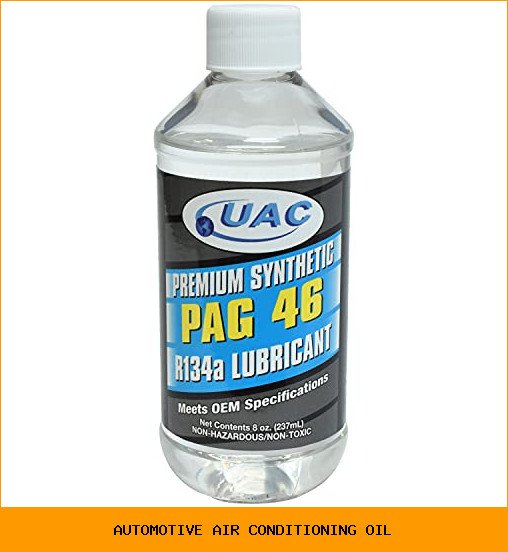
In this guide
Your car’s AC starts blowing warm air halfway through July. You grab a can of refrigerant from the parts store, hook up the gauge, and the compressor still sounds like a bag of rocks. Nine times out of ten, the problem isn’t the refrigerant. It’s the oil.
Automotive air conditioning oil does the heavy lifting inside the compressor. It lubricates moving parts, carries heat away, and helps the system maintain pressure. Using the wrong type or the wrong viscosity can kill a compressor in a few hundred miles. This article will teach you exactly which oil your system needs, why viscosity ratings matter, and how to add oil without guessing.

UAC
Universal Air Conditioner RO 0900B Refrigerant Oil
Fit type: Vehicle Specific;Fit Type: vehicle specific
Buy on AmazonYou’ll walk away knowing the difference between PAG, POE, and mineral oils, when to use each, and what numbers like 46 and 100 actually mean. No fluff, just what works.
One oil that consistently gets the job done for R134a systems is the UAC RO 0900B Refrigerant Oil. It’s a PAG 46 viscosity oil designed for modern compressors used in millions of vehicles. If you’re servicing a system that calls for PAG 46 and you want a dependable OE-replacement option without the dealer markup, this is a solid choice.
Why AC Oil Is Not Just Oil
Compressors are the most expensive component in an AC system. A new one can run $300 to $800 plus labor. The right oil protects that investment.
Early AC systems used mineral oil with R12 refrigerant. Mineral oil does not mix with R134a, so when the industry switched in the mid-1990s, a new class of oils had to be developed. PAG (polyalkylene glycol) oil became the standard for R134a. Later, POE (polyolester) oil emerged for use with R1234yf and in hybrid electric vehicles.
The oil must circulate with the refrigerant. If they don’t mix, the oil pools in the evaporator or condenser, the compressor runs dry, and you get metal-on-metal wear. That’s how compressors die.
Viscosity is the second critical factor. AC oils are graded by their viscosity at 40°C. The most common grades are PAG 46 (light), PAG 100 (medium), and PAG 150 (heavy). A smaller compressor in a compact car might use PAG 46. A large truck or SUV with a high-output compressor might call for PAG 100 or 150. Using the wrong viscosity can cause either insufficient lubrication or excessive drag that loads the engine.
You can check the required oil type and viscosity in your vehicle’s service manual or on a sticker under the hood. If the sticker is gone, look up the compressor model online.
Comparing the Major AC Oil Types
The table below shows the three main oil families, their typical applications, and notes on compatibility.
| Oil Type | Refrigerant Compatibility | Common Viscosities | Typical Applications | Key Caveat |
|---|---|---|---|---|
| PAG (Polyalkylene Glycol) | R134a, some R12 retrofit | 46, 100, 150 | Most cars 1995–2026, aftermarket compressors | Very hygroscopic (absorbs moisture from air) |
| POE (Polyolester) | R134a, R1234yf, R12 retrofit | 68, 100, 170 | Hybrid/electric vehicles, R1234yf systems | Compatible with mineral oil residues, but mix carefully |
| Mineral Oil | R12 only | 500 SUS (approx 100 ISO) | Classic cars, pre-1994 systems | Does not mix with R134a or R1234yf |
Notice that PAG oils are extremely hygroscopic. They attract water out of the air. If you leave the cap off a bottle of PAG oil for a few hours, it can absorb enough moisture to cause internal corrosion and ice plugging. Always reseal the bottle immediately.
POE oil is slightly less moisture-hungry but still needs careful handling. Mineral oil is relatively inert but obsolete for all new systems.
How to Pick the Right Oil for Your Car
Step one: know what refrigerant your system uses. R134a and R1234yf systems take PAG or POE, never mineral. R12 systems take mineral or POE (if retrofitting).
Step two: find the recommended viscosity. The compressor manufacturer often stamps the required oil grade on the compressor body. If that’s worn off, check a database like the one from Sanden or Denso. For common aftermarket compressors (like the ones sold by UAC and Four Seasons), PAG 46 is the default for most cars, but always verify.
Step three: consider the system oil capacity. A typical car holds 6 to 10 ounces of oil total. Some of that is in the compressor, some in the accumulator/dryer, some in the condenser. When you replace a compressor, you must drain the old oil from the new compressor, measure how much came out of the old one, and add the difference. Most new compressors come with a full charge (usually 6–8 oz) that must be adjusted.
Many DIYers dump the entire bottle in. That’s a mistake. Overfilling raises system pressure, reduces cooling, and can cause compressor noise. Underfilling starves the compressor. Measure.
The UAC RO 0900B is a 46-grade PAG oil. If your system calls for PAG 46, it’s a direct replacement. If it calls for PAG 100, don’t use it. Using a lighter oil in a high-load compressor will let metal parts touch.
Common Myths and Costly Mistakes
Myth: You can mix PAG and POE oil. Not advisable. They have different chemical bases and lubricity. Mixing can cause foaming, which reduces oil circulation and leads to compressor failure. Flush the system if you need to switch.
Myth: Any PAG oil works in any R134a system. Wrong. The viscosity matters. A 2026 Honda Civic uses PAG 46. A 2026 Ford F-250 with the rear AC uses PAG 100. Putting 46 in the Ford will let the compressor run hot and wear fast.
Myth: Oil never needs to be changed. False. Oil degrades from heat and moisture over time. If the compressor failed internally, metal debris contaminates the oil. You must flush the system and replace all the oil. If the system lost refrigerant and ran dry, the remaining oil may be acidic.
Myth: You can add oil without vacuuming the system. No. You need to pull a vacuum to remove moisture and air before charging. Adding oil without vacuuming traps air inside, which reduces performance and can create acid.
Myth: More oil means better cooling. Opposite. Too much oil coats the inner surfaces of the condenser and evaporator, reducing heat transfer. Stick to the spec.
Frequently Asked Questions
Can I use PAG oil in a system that originally had mineral oil?
Only if you are retrofitting from R12 to R134a. You must flush all mineral oil out first. Any mineral oil left in the system will separate from the PAG and the R134a, forming a sludge that plugs the orifice tube. Use a dedicated AC flush solvent and compressed air to clean every component except the compressor and accumulator (which should be replaced).
What oil do I use for R1234yf systems?
Most R1234yf systems use POE oil, usually POE 68 or POE 100. Some newer compressors use a specific type called PAG 46 for R1234yf (marked on the label). Check the underhood sticker. Do not guess. Using the wrong oil in a modern R1234yf system can void the warranty on components.
How do I know how much oil to add when replacing the compressor?
Drain the old compressor and measure the oil that comes out. Then drain the new compressor (they ship with a full charge) and measure that oil. Add back the difference. Example: old compressor had 4 oz, new one has 6 oz. Remove 2 oz from the new one before installation. If the system has a new accumulator or condenser, add an extra 1 oz for each new component.
Does the brand of AC oil really matter?
Brand matters less than specification. Any reputable brand that meets the required viscosity and type (PAG 46, etc.) will work. The UAC RO 0900B is one such option. Avoid unbranded or generic oils that don’t list the viscosity grade. Also avoid oils labeled ‘universal’ without a specific viscosity number — they’re usually too thin or too thick.
Can I add oil through the low-side service port?
Yes, but only if the system is empty or partially empty. You use a special oil injector tool that screws onto the low-side port. Never add oil while the system is running and under pressure. The oil must be drawn in during evacuation or with a dedicated injector. Dumping oil into the high-side port can damage the compressor.
What to Remember When Working with AC Oil
- Check your vehicle’s required oil type and viscosity before buying. Look on the underhood sticker or compressor label.
- Use PAG 46, PAG 100, or PAG 150 for R134a systems. Use POE for R1234yf or retrofits.
- Never mix different oil types or viscosities in the same system.
- Measure the oil removed from the old compressor and adjust new compressor oil charge accordingly.
- Keep all AC oil bottles tightly sealed to prevent moisture absorption.
- If your compressor failed from contamination, flush the entire system and replace the accumulator/dryer.
- When in doubt, the UAC RO 0900B PAG 46 oil is a reliable pick for the majority of R134a cars. Check your spec first, then buy with confidence.

Eng. Kamrul Islam
Founder and product researcher
Engineer with more than 10 years of experience researching and selling products on Amazon, including his own brand on Amazon Australia. He compares specs, standards, sellers and owner feedback.
All guides by Eng. Kamrul IslamMore in ac & compressor oils
All 193 guidesThe 7 Best Air Conditioning Oils for Cars of 2026
Maintaining your vehicle's air conditioning system is crucial for optimal performance, especially during those hot summer months. Selecting…
The 7 Best Do Four Seasons AC Compressors Come with Oil of 2026
Maintaining optimal performance in your car's air conditioning system requires using the right AC compressor oils. While the…
 Guide
GuideOil Pressure Switch Air Conditioning: What It Does and Why It Fails
Your car’s air conditioning suddenly blows warm on a July afternoon. You check the refrigerant charge – it’s…