 Eng. Kamrul Islam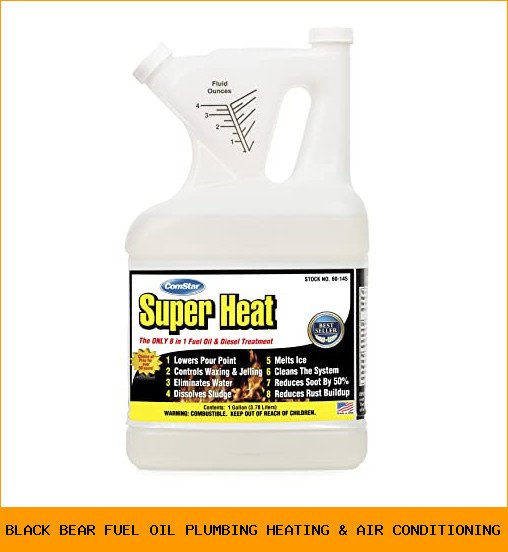
In this guide
Your furnace kicks on. For a minute, everything’s fine. Then the burner sputters. Shuts down. The temperature starts dropping, and you’re in the basement with a flashlight, staring at a half-full tank and praying it’s not a $2,000 repair. A lot of people have been there. Most of the time, the problem isn’t a dead furnace. It’s the fuel.
Heating oil goes bad. It absorbs water, grows sludge, and turns into gel when the thermometer hits single digits. The fix is not always a service call. The fix is prevention. This article covers what actually breaks down your fuel oil, what you can do about it with an additive, and when to call a professional like Black Bear Fuel Oil Plumbing Heating & Air Conditioning to handle the bigger issues.

ComStar
ComStar Super Heat 1 gal Heating Oil & Diesel Fuel System Treatment
ADVANCED 8-IN-1 FORMULA: Trusted by professionals for over 45 years, Super Heat is the ultimate all-in-one solution. It melts ice, lowers the pour point, prevents waxing and gelling, eliminates water, breaks down tank residue, cleans parts, limits soot formation, and helps guard against corrosion in your fuel system.
Buy on AmazonYou’ll walk away knowing exactly why water kills your system, what ‘gelling’ really means, and how one bottle of concentrated additive a year can save you a lot of headaches. Plus a few specific numbers to help you decide what works and what doesn’t.
And yes, there is a product that does the job without a lot of guesswork. The ComStar Super Heat 1 gal Heating Oil & Diesel Fuel System Treatment is a professional-grade 8-in-1 formula that melts ice, removes water, prevents gelling, and cleans tank residue. It’s the kind of thing you add once and forget about. One gallon treats a lot of fuel — check the current price on Amazon if you want to see how it stacks up against a single emergency service call.
The Truth About Fuel Oil Additives: Snake Oil or Necessity?
Some homeowners swear additives are a waste. Others think they’re magic in a bottle. The truth sits somewhere in the middle. A weak stabilizer that just stores fuel longer? Not very useful for a home that burns through oil every winter. A full multi-function additive that pulls water out, stops wax, and cleans the nozzle? That’s a different story.
Fuel oil starts degrading the moment it hits your tank. Within 30 days, microscopic solids begin settling out. Within 60, water condenses from the air inside the tank. By day 90, you have a layer of sludge on the bottom and droplets of water floating on top. Your furnace pulls fuel from the bottom of the tank. Guess what it picks up first.
An additive like Super Heat does not just ‘stabilize.’ It breaks down that bottom sludge so the burner actually burns it instead of leaving it to clog a nozzle. It also emulsifies water — turns it into tiny droplets suspended in the oil — so the burner can burn it off harmlessly. A lot of filter replacements and nozzle changes could have been avoided with one dose per fill-up.
No, Your Oil Filter Won’t Catch Everything
A common myth: the filter on your fuel line grabs all the junk. Single-stage filters catch particles down to about 10 microns. Water droplets? They slip right through. Wax crystals during a cold snap? Same thing. The filter clogs, the flow stops, and you’re calling Black Bear Fuel Oil Plumbing Heating & Air Conditioning for an emergency visit.
Water is the worst. It rusts your tank from the inside out. The rust particles then become more junk. And water can freeze in the line, blocking flow completely. A filter may stop rust flakes, but it won’t stop a solid plug of ice in your fuel pipe. You need something that handles water before it becomes ice. That’s where a chemical additive steps in. It drops the pour point of the oil so wax stays liquid in temps down to -30°F or lower, and it disperses water so finely that it passes through the filter and burns off.
Do not rely on your filter to save you. Think of it as a final safety net, not the primary defense. The real shield is good fuel chemistry.
Three Things That Actually Ruin Heating Oil (And How to Stop Them)
Let’s get specific. Three enemies of every oil furnace: water, wax, and microbial growth. Each one behaves differently, but an all-in-one additive can handle all three if you pick the right one.
- Water. Every tank breathes. When warm air gets in and cools, water condenses on the walls. A 275-gallon tank can accumulate a quart of water per season without a leak. That water breeds bacteria, which feeds on the oil and produces sludge. Super Heat works by dispersing water and preventing corrosion. One bottle handles it.
- Wax and gelling. Heating oil contains paraffin wax. Below about 15°F, those wax molecules start sticking together. Below 0°F, the oil turns to peanut butter. An additive with pour-point depressants keeps the wax suspended so the oil flows. If you live where temps drop below freezing regularly, this is not optional.
- Microbes. Yes, bacteria and fungi live in fuel oil. They eat hydrocarbons and produce acidic sludge that eats your tank. Clogged filters and smelly fuel are the early signs. A biocide in the additive kills them. Look for a product that includes a fuel biocide or broad-spectrum treatment.
Pick one additive that covers all three. The ComStar Super Heat formula does, and it’s been on the market for 45 years — long enough to know what works.
| Approach | Water Control | Anti-Gel Protection | Sludge Cleanup | Cost Per Season |
|---|---|---|---|---|
| No additive | None | None | None | $0 – but high risk of service calls |
| Basic stabilizer | Minimal (absorbs some water) | Low (10°F pour point drop) | None | $10–20 per tank |
| Full multi-function (e.g., ComStar Super Heat) | Emulsifies and removes | High (down to -40°F) | Breaks down residue | ~$25 per 275 gallons |
Five Real Questions People Ask About Fuel Oil Additives
Can I use diesel fuel additive in my home heating oil?
Yes, most of the time. Home heating oil and diesel are chemically similar. The trick is to look for a formula made for both. ComStar Super Heat is labeled for heating oil and diesel — it covers both. But avoid additives designed only for diesel engines if they lack anti-gel or water removal for a stationary tank.
How often should I add fuel treatment?
Once per fill-up during the heating season. If you burn through a 275-gallon tank in two months, add a dose with each delivery. For a lighter user, treat every time you fill the tank. One 8-ounce bottle treats 275 gallons, so a gallon jug covers several seasons.
Will additive fix a clogged nozzle or filter?
Not if it’s already blocked. Additives are preventive, not miracles. If your nozzle is fully plugged, you need to replace the filter and have a tech clean the nozzle. Once that’s done, start using additive to keep it from happening again.
Is it safe for old steel tanks?
Yes, as long as the additive includes a corrosion inhibitor. Water sitting in a steel tank is what causes rust. By removing that water, you actually protect the tank. Super Heat explicitly guards against corrosion. Just don’t pour in something with alcohol — that can attack gaskets.
Do I still need a service contract if I use additive?
Yes. Additives handle fuel quality, not burner tuning. You still need an annual inspection to clean the heat exchanger, check the motor, and test the safety switches. Think of additive as oil maintenance, not furnace maintenance. They work together.
What to Do Before the Next Cold Snap
- Treat your tank right after a delivery — mix the additive with fresh oil for the best dispersion.
- If you already have gelling, don’t pour additive into solid oil. Warm the tank or line first, then add treatment and let it circulate.
- Keep the tank full in winter. Less air space means less condensation. An empty tank breeds water.
- Change your fuel filter every year, regardless of how it looks. Cheap insurance against a no-heat night.
- Have a trusted company like Black Bear Fuel Oil Plumbing Heating & Air Conditioning do a pre-season tune-up. They’ll catch worn parts before they fail.
- Store a bottle of additive where you can find it in the dark — your basement light will go out at the worst time.
- Check the price on Amazon for a gallon of ComStar Super Heat. Compare it to the cost of one emergency service call. Then decide.

Eng. Kamrul Islam
Founder and product researcher
Engineer with more than 10 years of experience researching and selling products on Amazon, including his own brand on Amazon Australia. He compares specs, standards, sellers and owner feedback.
All guides by Eng. Kamrul IslamMore in ac & compressor oils
All 193 guidesAir Conditioner Oil For Car
When it comes to maintaining your vehicle’s air conditioning system, many drivers overlook the significance of oil. Just…
 Guide
GuideAuto Air Conditioning Compressor Oil: What Most DIYers Get Wrong
You just finished charging your car’s AC. The gauge reads perfect, but the air coming out of the…
 Guide
GuideOil Air Conditioning: What You Need to Know for Reliable Cooling
You expect your air conditioner to blast cold air on a 95-degree day. But when it sputters, blows…