 Eng. Kamrul Islam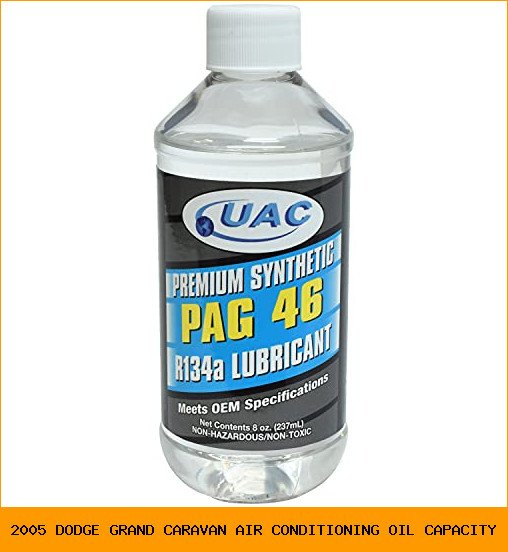
In this guide
- Universal Air Conditioner RO 0900B…
- Understanding AC Oil and Refrigerant Capacity
- Recommended Oil Type for 2005 Dodge Grand…
- How to Check and Refill AC Oil
- Common Symptoms of Low AC Oil
- Troubleshooting AC Issues
- Comparison: Oil Types and Their Suitability…
- Maintenance Tips for AC System Longevity
- Environmental Considerations for Refrigerants
- 5 Real Questions People Ask About 2005 Dodge…
- A few final things to keep in mind
Your 2005 Dodge Grand Caravan’s air conditioner blows warm on a hot day. You’ve checked the refrigerant pressure, added some R134a, but the compressor still clatters. Chances are you’re low on compressor oil – and that’s a problem many DIYers overlook. The AC system needs both refrigerant and a specific amount of oil to lubricate the compressor. Get that balance wrong and you’ll burn out the compressor in a season or two.
This article gives you the exact oil capacity for a 2005 Dodge Grand Caravan with the 3.3L or 3.8L engine (both use the same AC setup), tells you what type of oil to use, and walks you through checking and adding oil the right way. You’ll also learn the symptoms of low oil and how to keep the system running for years. No fluff, no guesswork.

UAC
Universal Air Conditioner RO 0900B Refrigerant Oil
Fit type: Vehicle Specific;Fit Type: vehicle specific
Buy on AmazonIf you’re replacing a compressor, drier, or any major component, you need this number: the total system oil capacity is 7.0 fluid ounces (207 ml) for the factory-installed Sanden SD7H15 compressor. That’s the spec for R134a systems in this generation of Grand Caravan.
When you do a repair that opens the system – swapping a compressor, flushing the condenser, replacing the evaporator – you lose oil. You can’t just dump in a whole bottle. You have to measure. A product like Universal Air Conditioner RO 0900B Refrigerant Oil (UAC brand) is a simple way to add clean PAG oil without guessing. It’s a vehicle-specific fit, comes in a 4-ounce bottle, and meets the viscosity specs the 2005 Grand Caravan needs. You’ll still need to measure how much to add, but having a fresh bottle of the right oil saves a lot of hassle.
Understanding AC Oil and Refrigerant Capacity
The AC system on your 2005 Dodge Grand Caravan uses R134a refrigerant. The factory refrigerant charge is 28.0 ounces (1.75 lbs). But that number only matters if the system is completely empty. Most DIY jobs aren’t a full evacuation – you’re replacing a failed compressor or fixing a leak, so you only add oil back to what you removed.
Here’s the key: refrigerant and oil travel together. The oil circulates with the R134a, lubricating the compressor seals and bearings. If you lose refrigerant through a leak, some oil goes with it. If you replace a compressor, the old compressor might have held 3–4 ounces of oil inside. The new compressor comes dry or with a small shipping charge. You have to add the missing oil manually.
The total system oil capacity is 7.0 fl oz. That includes oil trapped in the compressor, condenser, evaporator, and hoses. You can’t dump all 7 ounces into the compressor and call it done – the oil has to be distributed. A common mistake is to add too much oil, which reduces cooling performance and can slug the compressor. Too little oil and the compressor seizes in a few hundred miles.
Oil Capacity Breakdown by Component
If you’re replacing individual parts, here’s roughly how much oil each component holds when the system is running (these are factory estimates for the Sanden SD7H15):
- Compressor: 3.5–4.0 fl oz (the largest single pool)
- Condenser: 1.0–1.5 fl oz
- Evaporator: 1.0–1.5 fl oz
- Accumulator / drier: 0.5–1.0 fl oz
- Hoses and lines: 0.5 fl oz
Add those up and you’re close to 7 ounces. When you swap a compressor, drain the old one and measure how much oil comes out. Add the same amount to the new compressor before installation. If the old compressor blew up and you can’t drain it, add 3.5 ounces to the new compressor plus one ounce to the accumulator.
For a full system flush (after a compressor failure that sent metal debris everywhere), you have to start from zero. Flush all components, replace the accumulator, then add exactly 7.0 fl oz of new PAG oil. Then evacuate and recharge with 28 ounces of R134a.
Recommended Oil Type for 2005 Dodge Grand Caravan
Your 2005 Grand Caravan uses PAG 46 oil. Not PAG 100, not PAG 150, not mineral oil. PAG 46 is a polyalkylene glycol oil with a viscosity rating of 46 cSt at 40°C. It’s the standard oil for R134a systems with Sanden compressors from that era.
Why does viscosity matter? Too thick (PAG 100) and the oil doesn’t flow well at low temperatures, starving the compressor during cold starts. Too thin (PAG 46 is already thin compared to older oils) and the film strength drops at high operating temperatures. PAG 46 is the middle ground Chrysler spec’d for this compressor.
Don’t mix oils. If you’re topping off from a partial bottle, make sure it’s also PAG 46. Mixing different viscosities can change the overall lubricity in unpredictable ways. Also avoid ‘universal’ oils that claim to work with R12 and R134a – those are usually mineral-based and will degrade the compressor seals in your R134a system.
Can you use PAG 100 in a pinch?
I’ve seen people do it. It won’t kill the compressor immediately. But you’ll notice a drop in cooling performance because the thicker oil slows refrigerant flow. The compressor also runs hotter. If you’re stuck on a road trip and that’s all the parts store has, you can limp home for a few hundred miles. Then drain and replace with the correct PAG 46 as soon as possible. Don’t leave it in there permanently.
How to Check and Refill AC Oil
Checking AC oil isn’t like checking engine oil – there’s no dipstick. You measure oil by what you remove from the system. The process is simple but requires care. You’ll need a set of AC manifold gauges, a vacuum pump, and a scale to weigh refrigerant and oil.
- Recover the refrigerant. Connect your gauges and recover the R134a into a recovery tank. Do not vent to atmosphere – it’s illegal and harmful to the ozone layer.
- Disconnect a component. The easiest way to measure oil is to disconnect the compressor outlet hose or the accumulator. Catch the oil that drips out in a graduated cylinder. A small 10-ounce graduated cylinder costs under $10 and is worth owning for this job.
- Compare to expected amounts. If the system was working normally before you opened it, you should see roughly the numbers from the breakdown above. Anything significantly less means oil left with a leak. Anything more means the previous person overfilled.
- Add fresh oil. Use a clean syringe or oil injector to add the needed amount of PAG 46 into the compressor suction port or the accumulator. Do not pour oil into the high-side port – it will pool in the condenser and cause issues.
- Evacuate and recharge. Pull the system down to 500 microns or lower for at least 30 minutes to remove moisture. Then recharge with the correct weight of R134a (28.0 oz).
If you’re only topping off because you replaced a single component, you can skip the full recovery – just disconnect the part carefully, measure the oil inside it, and add the same amount to the new part. But for a complete system refresh, always recover, measure, add, evacuate, and recharge.
Tools you should have
- Manifold gauge set (R134a compatible)
- Vacuum pump (1.5 cfm or larger)
- Graduated cylinder (10 ml or 10 oz markings)
- Refrigerant scale
- PAG 46 oil – a brand like UAC RO 0900B works fine
Common Symptoms of Low AC Oil
Low oil doesn’t always cause immediate failure. It’s a slow killer. Here’s what to watch for:
- Compressor noise. A grinding or rattling sound when the AC clutch engages. That’s metal-on-metal contact inside the compressor.
- Intermittent cooling. The AC blows cold for a few minutes, then warm air. This happens when the oil film breaks down and the compressor clutch cycles off due to high internal temperature.
- Visible oil stains. A puddle of yellowish-green oil under the compressor or at hose connections tells you a leak is taking oil with the refrigerant.
- High-side pressure spikes. On your gauge set, the high side reads above 300 psi during normal operation in hot weather. Low oil causes the compressor to work harder and pressures can climb into the danger zone (350+ psi).
- Compressor seizes. This is the final stage. The compressor locks up, the belt squeals, and you need a new compressor, a thorough flush, and a new accumulator. That’s a $400+ repair for parts alone.
If you notice any of these, stop running the AC. Continuing to run a low-oil system can send metal debris through the entire loop, contaminating the condenser, evaporator, and hoses. Then you’re looking at a full replacement instead of just a compressor swap.
Troubleshooting AC Issues
Before you assume low oil, rule out the obvious. Check the refrigerant charge first. A system that’s 30% low on refrigerant will also blow warm air and may make the compressor noisy. Use your gauges:
- Low side (blue gauge) at idle: 25–35 psi on a warm day
- High side (red gauge) at idle: 150–200 psi
- Low side when revved to 1500 rpm: 30–40 psi
- High side when revved: 220–280 psi
If pressures are within range but the compressor still sounds rough, low oil is likely. Another clue: the accumulator (the silver can near the firewall) feels cold to the touch but the evaporator doesn’t cool. That means the oil is pooling in the accumulator and blocking refrigerant flow.
One more thing – check for a blown compressor shaft seal. Look for oil dripping from the front of the compressor pulley area. If the seal is leaking, you’ll lose oil quickly. That seal can be replaced without removing the compressor, but the job requires removing the clutch and pulley – doable with a puller set.
Comparison: Oil Types and Their Suitability for the 2005 Grand Caravan
| Oil Type | Viscosity | Compatible with R134a? | Suitable for 2005 Grand Caravan? | Common Use |
|---|---|---|---|---|
| PAG 46 | 46 cSt at 40°C | Yes | Yes – factory spec | Most 1990s–2000s R134a systems |
| PAG 100 | 100 cSt at 40°C | Yes | No – too thick | Older R134a systems with large compressors |
| PAG 150 | 150 cSt at 40°C | Yes | No – way too thick | High-pressure systems, Ford/Mazda some models |
| Mineral oil | Varies | No | No – incompatible | R12 systems only |
| Ester oil | Varies | Yes | Possible but not recommended | Retrofit from R12 to R134a, not for factory R134a |
The table makes it clear: stick with PAG 46. The UAC RO 0900B is labeled as PAG 46 (the RO stands for refrigerant oil). It’s a safe bet.
Maintenance Tips for AC System Longevity
You can’t ignore the AC for years and expect it to work reliably. These steps cost little time but save big money:
- Run the AC at least once a month year-round. Even in winter, run it for 10 minutes. This keeps the compressor seals lubricated and prevents them from drying out and leaking.
- Check the cabin air filter. A clogged filter reduces airflow across the evaporator, causing it to freeze up. When the evaporator ices, the compressor works harder and oil distribution suffers. Replace it every 12 months or 12,000 miles.
- Keep the condenser clean. Bugs, mud, and leaves block airflow through the radiator and condenser. Use a garden hose (gentle spray) to wash out debris – especially after driving on dirt roads. A blocked condenser raises high-side pressure and can blow the compressor shaft seal.
- Watch for leaks early. UV dye added during a recharge is a cheap way to spot slow leaks. If you see a greasy spot, investigate immediately rather than waiting for the system to go flat.
- Don’t overcharge refrigerant. Adding too much R134a raises head pressure and forces oil out of the compressor. The Goldilocks zone is 28.0 ± 0.5 ounces. Weigh it, don’t just go by pressures.
One more thing: if you live in a humid climate, the accumulator (drier) has a finite moisture-absorbing capacity. After about 5 years, the desiccant saturates. Replacing the accumulator when you do any major AC work is cheap insurance (around $25 for a quality part).
Environmental Considerations for Refrigerants
The 2005 Grand Caravan uses R134a, which has a global warming potential (GWP) of 1,430 – meaning it’s 1,430 times more potent than CO₂ over a 100-year period. This matters because leaky AC systems on older vehicles are a real contributor to greenhouse gas emissions.
R134a is being phased down under the Montreal Protocol. Starting in 2005, the U.S. banned new vehicle production with R134a for light-duty vehicles. But you can still buy it for retrofits and repairs. Some states (California, Vermont) restrict sales to certified technicians. Check local laws if you’re buying a 30-lb tank.
Don’t vent R134a to the atmosphere. It’s against the Clean Air Act (EPA fines up to $44,539 per day for intentional venting). Use a recovery machine or take the car to a shop that has one. Many auto parts stores rent recovery units.
If you’re replacing the entire AC system, consider converting to R1234yf. That refrigerant has a GWP of just 4. But it requires a different compressor and oil – PAG 46 still works with R1234yf if the system is designed for it. For a 2005 Grand Caravan, a full conversion isn’t cost-effective unless you’re already replacing every component. The best environmental move is to fix leaks and keep the existing R134a system tight.
5 Real Questions People Ask About 2005 Dodge Grand Caravan AC Oil
What happens if I put too much AC oil in my 2005 Grand Caravan?
Excess oil reduces cooling performance. The oil takes up space that should hold refrigerant, so the system becomes less efficient. You’ll notice the vents blow barely cool on a hot day. Worse, a severe overfill (more than 8–9 ounces) can cause liquid slugging – the compressor tries to compress oil instead of gas, which bends valves or shatters the reed valve plate. Overfilling by 1–2 ounces won’t kill it right away, but drain the excess as soon as you can. Best to measure carefully.
Can I use any PAG oil, or does it have to be a specific brand?
You can use any brand as long as it’s PAG 46. Brand doesn’t matter much for the oil itself – the chemistry is standardized. But some cheap oils come in bottles that don’t seal well or lack a graduated measuring window. The UAC RO 0900B is decent because the bottle has clear volume marks and a narrow tip for pouring into the compressor suction port. Avoid no-name eBay oils that don’t list viscosity clearly.
How often should I change the AC oil in my 2005 Grand Caravan?
There’s no scheduled oil change for AC systems like engine oil. You only add or replace oil when you open the system for a repair. If the system has never been opened and works fine, leave it alone. A healthy system can go 10–15 years without needing oil attention. But if the compressor fails, you must drain and measure the old oil and replace it.
My AC compressor is seized. Do I need to flush the system or just replace the compressor?
Definitely flush. A seized compressor typically sheds metal debris into the oil and refrigerant. That debris circulates through the condenser, evaporator, and hoses. If you just swap the compressor, the debris will destroy the new one within hours. Flush every component except the compressor and accumulator. Replace the accumulator (it can’t be flushed). Then add the 7.0 oz of fresh PAG 46. It’s extra work, but the alternative is a repeat failure in a few weeks.
Where do I add oil when installing a new compressor in a 2005 Grand Caravan?
Pour the oil directly into the suction port of the new compressor. The suction port is the larger of the two ports (usually the rear-facing one on Sanden compressors). Rotate the compressor clutch by hand a few turns to spread the oil inside. Do not add oil into the discharge port – it will just sit in the high-side passages and won’t lubricate the compressor’s internal parts. Then install the compressor and rotate the clutch 8–10 full turns before starting the engine. This primes the oil before the first startup.
A few final things to keep in mind
- The 2005 Dodge Grand Caravan AC system takes exactly 7.0 fl oz of PAG 46 oil total. Use this number when starting from scratch after a flush.
- When replacing a compressor, measure the oil drained from the old one and add the same amount to the new one. If the old compressor blew, add 3.5 oz to the new compressor plus 1 oz to the accumulator.
- Only use PAG 46 oil. PAG 100 or mineral oil will cause poor cooling and eventual compressor damage.
- Check for oil leaks visually – a puddle under the compressor or greasy hose connections mean you’re losing oil and refrigerant.
- Run the AC at least once a month year-round to keep the compressor seals lubricated and prevent leakage.
- Always recover refrigerant properly. Venting R134a is illegal and harmful to the environment – avoid fines and do the right thing.
- For a DIY oil addition, a graduated cylinder and the UAC RO 0900B bottle with visible markings make the job straightforward. Take your time, measure twice, and you’ll keep that Grand Caravan’s AC blowing cold for years.

Eng. Kamrul Islam
Founder and product researcher
Engineer with more than 10 years of experience researching and selling products on Amazon, including his own brand on Amazon Australia. He compares specs, standards, sellers and owner feedback.
All guides by Eng. Kamrul IslamMore in ac & compressor oils
All 193 guides Capacity
2005 Honda Air Conditioning Oil Capacity: Accord, Civic, and How to Refill
You roll down the highway on a July afternoon and the air coming out of the vents is…
The 7 Best Air Conditioner Fan Oils of 2026
Selecting the right air conditioner fan oil is crucial for maintaining the efficiency and longevity of your air…
The 7 Best Air Conditioner Bearing Oil of 2026
Discover the top air conditioner bearing oils of 2026 that keep your unit running smoothly and efficiently. Selecting…