 Eng. Kamrul Islam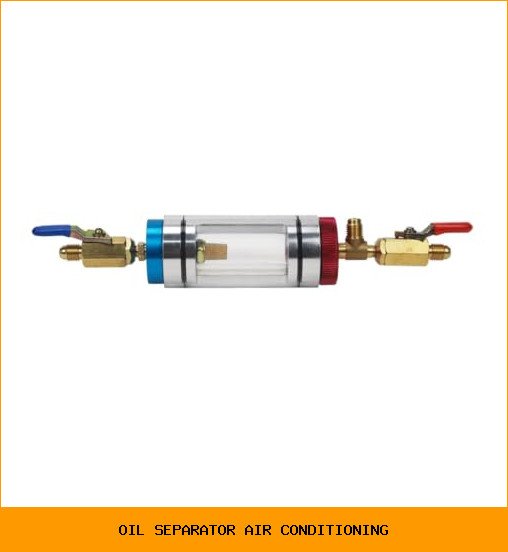
In this guide
- MKPARTY Car A/C Oil Purifier Filter Separator…
- What Is an Oil Separator?
- How Does an Oil Separator Work in HVAC…
- Types of Oil Separators and Their Applications
- The Importance of Oil Separation in…
- Common Issues Without an Oil Separator
- Maintenance and Best Practices for Oil…
- Environmental Impact and Sustainability of…
- Frequently Asked Questions
- Seven Things to Walk Away With
You top off the refrigerant in a car or home AC system, the compressor runs fine for a few days, then it starts clattering. No leak found, charge held steady. What gives? Oil starvation, more often than not. The compressor relies on a constant supply of refrigerant oil for lubrication, and when that oil gets trapped somewhere in the evaporator or condenser, the compressor runs dry. That’s where an oil separator enters the picture.
Oil separators aren’t magic. They sit in the discharge line between the compressor and condenser, pulling oil out of the refrigerant stream and sending it back to the compressor crankcase or sump. Without one, oil migrates through the system, reducing heat transfer, flooding the compressor, or leaving it bone-dry. By the end of this article, you’ll know exactly how these devices work, what types exist, when you absolutely need one, and how to maintain it. You’ll also pick up a few shop-tested tricks that save you troubleshooting time.

MKPARTY
MKPARTY Car A/C Oil Purifier Filter Separator Tool, AC Compressor Oil Injector Control Filtration Replacement Detector with Quick Couplers Hoses for Auto Air Conditioner Maintenance
High-Quality Material: Core valves, couplers and pipeline joints are forged from thick brass with anti-rust plating, resistant to refrigerants, cleaning agents and chemical refrigeration oil corrosion. The built-in replaceable filter cartridges capture tiny metal particles and sludge, extend the service life of your AC compressor, expansion valve and evaporator.
Buy on AmazonIf you work on automotive air conditioning, there’s a practical tool that simplifies the whole oil management process. The MKPARTY Car A/C Oil Purifier Filter Separator Tool combines filtration, separation, measuring, and injection into one transparent viewing tube. It’s designed to pull old contaminated oil out, trap metal particles and sludge, and let you inject fresh oil without cross-contamination. We’ll come back to how it fits into the workflow later.
What Is an Oil Separator?
An oil separator is a mechanical device installed in the discharge line of a refrigeration or air conditioning compressor. Its job: separate the refrigerant oil that gets carried out of the compressor by the hot discharge gas, then return that oil to the compressor. The refrigerant goes on to the condenser; the oil goes back where it belongs.
Think of it as a trap door for oil molecules. The separator uses a sudden change in velocity, direction, or both to make heavier oil droplets fall out of the gas stream. Some designs add filters or centrifugal force to catch mist. The separated oil collects in a reservoir at the bottom. A float valve or a bleed hole sends it back through a return line to the compressor’s crankcase.
Most factory-installed AC systems in cars and small residential units don’t have a dedicated oil separator. Engineers rely on proper piping design (sloping lines, P-traps) to keep oil moving. But in systems with long line sets, multiple evaporators, or variable refrigerant flow, an oil separator becomes essential. You’ll find them standard on commercial refrigeration racks, heat pumps, and large chillers.
How Does an Oil Separator Work in HVAC Systems?
The basic principle is gravity and inertia. Hot discharge gas enters the separator through a tangential inlet, creating a swirl inside the chamber. The centrifugal motion flings heavier oil droplets to the walls, where they coalesce and drain to a sump. The refrigerant gas, now mostly oil-free, exits through a central outlet tube and heads to the condenser.
Most separators achieve 85% to 95% oil removal efficiency at full load. That sounds good, but efficiency drops at low loads because gas velocity falls off. A well-designed separator maintains at least 80% removal down to 25% load. Cheap units often fail below 50% load, which is exactly when oil migration problems show up during mild weather.
The return oil must be metered back to the compressor. Too fast and you flood the crankcase with liquid oil, causing foaming and bearing washout. Too slow and the compressor starves. Typical return mechanisms include a float-operated needle valve or a fixed orifice paired with a check valve. The float type is more reliable because it matches return rate to how much oil is actually trapped.
Here’s a real detail: In a 5-ton commercial split system running R-410A, the separator should return oil at roughly 0.1 to 0.2 gallons per hour when the compressor is running. If you see the sight glass in the separator return line staying full for more than a minute after the compressor starts, the float could be stuck or the orifice plugged. That’s a common call you’ll get on startup.
Types of Oil Separators and Their Applications
Not all separators are built the same. The table below breaks down the four main types and where each makes sense.
| Type | How It Works | Efficiency Range | Best For | Drawback |
|---|---|---|---|---|
| Gravity (impingement) | Gas hits baffles or mesh; oil droplets fall out | 70–85% | Small residential splits, window units | Poor at low flow; bulky |
| Centrifugal | Swirling gas flings oil to outer wall | 85–95% | Commercial condensing units, heat pumps | Bigger pressure drop |
| Coalescing (filter-type) | Gas passes through fine filter media; oil droplets merge and drain | 95–99% | Clean rooms, refrigeration racks with scroll compressors | Filter element must be replaced regularly |
| Chemical (absorption) | Oil is absorbed by a solid medium like activated alumina | 90–98% | High-purity ammonia systems (industrial) | Medium must be regenerated or replaced; not for typical AC |
Gravity separators are the cheapest but barely adequate for modern high-efficiency systems. Centrifugal is the workhorse — most midrange commercial units use them. Coalescing separators give the best oil removal but add maintenance. Chemical separators are rare outside industrial ammonia plants.
One common misconception: bigger is always better. That is false. Oversizing a separator drops gas velocity below the threshold needed to fling oil outward. The oil stays suspended and passes right through. Size the separator to match the compressor’s actual displacement at full load. Manufacturer charts tell you the maximum tonnage per model. Don’t exceed that by more than 10%.
The Importance of Oil Separation in Refrigeration and Air Conditioning
Oil floating around an AC system causes three specific problems. First, it coats the inside of the evaporator coils. A thin film of oil reduces heat transfer by 15% to 30%, depending on refrigerant and temperature. Second, oil settles in low spots and traps refrigerant through absorption, lowering system capacity. Third, oil that reaches the expansion valve orifice can cause erratic metering, leading to compressor flooding or slugging.
In a real-world case, a convenience store walk-in cooler kept cycling on low suction pressure. The compressor would start, pull down to 10 psi, then shut off on the low-pressure switch after two minutes. Installing a centrifugal oil separator dropped the oil charge from 4.5 liters to 1.2 liters circulating in the system. The suction pressure stabilized, and the cooler held temperature without short cycling. That was an 80-dollar separator that saved replacing a 2,000-dollar compressor the next month.
From an environmental angle, good oil separation reduces the amount of oil that ends up in discarded refrigerant. When you recover refrigerant from a system, the oil contamination can drive up handling costs and foul recycling equipment. Separators keep more oil in the compressor and out of the recovery cylinder. That means less waste oil to dispose of and cleaner refrigerant for reclamation. In large chiller banks, this alone can cut annual oil disposal costs by 50%.
Common Issues Without an Oil Separator
Skip the separator, and you roll the dice on these failures:
- Compressor burnout: Lack of lubrication scores bearings, burns windings, and dumps copper particles into the system. That turns a simple repair into a full system cleanup or replacement.
- Oil logging in evaporator: Liquid oil sits in the evaporator and reduces superheat. The compressor starts flooding, which sounds like a knocking noise from the valve plate.
- Capacity loss: Systems without separators often lose 10–20% of nominal capacity because oil hogging the evaporator surface blocks refrigerant boiling.
- Short cycling on oil safety controls: Many compressors have an oil level switch. When oil leaves and doesn’t return fast enough, the switch kills the compressor. Frequent resets wear out contactors.
During a recent service call on a 20-year-old rooftop unit, the technician found the compressor had been replaced twice in three years. The system had no oil separator and the lines ran 80 feet horizontal with no traps. After installing a centrifugal separator and adding a P-trap at the evaporator outlet, the third compressor ran five years without issue.
Maintenance and Best Practices for Oil Separators
An oil separator needs attention, not just installation. Here are six steps a technician can follow to keep it working.
- Check the float valve or return orifice annually. If the separator has a sight glass on the return line, watch it during steady-state operation. Oil should trickle back, not gush. A constant full line means the valve is stuck open — replace the float assembly.
- Clean coalescing filter elements per manufacturer schedule. For automotive oil purifier tools like the MKPARTY unit, replace the built-in filter cartridges after every three oil-change cycles or when you see the differential pressure gauge rise above the spec. The MKPARTY tool uses replaceable cartridges that catch tiny metal particles and sludge, extending compressor and expansion valve life.
- Inspect the separator body for pitting or corrosion. Brazed steel separators rust from the inside if moisture slips past the driers. Swap it out at the first sign of pinhole leaks.
- Verify the separator is correctly sized for the load. If you add a second evaporator or a variable-speed compressor, recheck the separator’s capacity range. Undersizing leads to oil bypass; oversizing causes sluggish return.
- Always change the oil filter drier after major compressor repairs. New compressors sometimes shed debris that plugs the separator’s return port. A clean drier catches particulates before they reach the separator.
- Use a tool like the MKPARTY oil purifier for auto AC work. Hook it inline between the compressor and condenser, follow the supplied instructions to flush old oil, and watch the transparent tube for sediment. It eliminates guesswork about oil level and contamination.
Common Mistakes to Avoid
Mistake one: installing the separator backwards. The refrigerant flow arrow on the body must point toward the condenser. I’ve seen three separate jobs where someone flipped it thinking the arrows were decorative. Result: oil backed up into the compressor discharge and the high-pressure switch tripped.
Mistake two: skipping the oil return line filter. Many separators include a small mesh screen at the return port. If yours didn’t come with one, add a 100-mesh strainer. Without it, debris from the separator shell can jam the float valve shut.
Mistake three: using a separator rated for R-22 on R-410A without checking pressure ratings. R-410A operates at 40–60% higher pressure. A separator built for 450 psi max will blow its gaskets at 550 psi on a hot day. Verify the pressure rating matches the refrigerant.
Environmental Impact and Sustainability of Oil Separators
Every pound of oil that stays in the compressor is one pound that won’t contaminate recovered refrigerant. The EPA estimates that oil makes up 5–15% of the mass in typical recovered refrigerant from commercial systems. That oil must be separated before the refrigerant can be reclaimed. Using an effective separator upstream cuts the oil fraction in recovered gas to under 2%. That means less waste oil to incinerate and fewer new compressor lubricants needed.
On the sustainability side, a separator that extends compressor life by even two years reduces the embodied carbon of manufacturing a replacement unit. A single 10-hp semi-hermetic compressor takes roughly 300 kg of CO₂ equivalent to produce. Multiply that across hundreds of units in a supermarket, and the avoided replacements make a measurable dent. The MKPARTY tool’s replaceable filter cartridges also mean less disposable tool waste compared to using single-use flush cans.
Frequently Asked Questions
What happens if an oil separator fails?
If the separator stops returning oil, the compressor sump drains down over several hours of running. The compressor eventually trips on low oil pressure. If the float valve sticks open, the compressor gets flooded with liquid oil, causing foaming and rapid wear. Either way, the compressor rarely survives more than a week of operation in that condition.
Can I install an oil separator on any AC system?
Technically yes, but it’s not always worth it. On short line lengths under 25 feet total, the added pressure drop and cost don’t pay off. On any system with line runs over 50 feet or multiple evaporators, a separator is strongly recommended. Always check the manufacturer’s piping guidelines first.
How often should the oil separator filter be changed?
For coalescing element types, every 12 months or after each major system repair. For automotive tools like the MKPARTY purifier, change the cartridge after about three oil-change intervals, or earlier if you see heavy sludge build-up in the viewing chamber.
Does an oil separator fix a flooded compressor?
No. A flooded compressor means liquid refrigerant is returning to the suction line, not oil. The separator only handles oil. For liquid flooding, you need a suction accumulator or an adjusted expansion valve.
Are oil separators required by code?
Not for most residential systems. Commercial refrigeration codes (ANSI/ASHRAE 15) recommend them on systems where the oil return is uncertain — like multiple evaporators on one condensing unit. Some local mechanical codes now require them on new supermarket rack systems to reduce oil discharge into the environment.
Seven Things to Walk Away With
- Oil separators prevent compressor failure by returning oil from the discharge gas to the sump.
- Centrifugal types offer the best balance of efficiency and cost for most commercial AC work.
- Always size the separator to the compressor’s actual displacement, not the system nameplate tonnage.
- Check the return line sight glass during operation — a steady trickle is normal; a full line means the float is stuck.
- For automotive AC, a combined purifier/separator tool like the MKPARTY model cuts oil change time and contamination risk.
- Oil separators improve sustainability by keeping oil out of recovered refrigerant and extending compressor life.
- Mistakes to dodge: backwards install, wrong pressure rating, and omitting the return line filter.

Eng. Kamrul Islam
Founder and product researcher
Engineer with more than 10 years of experience researching and selling products on Amazon, including his own brand on Amazon Australia. He compares specs, standards, sellers and owner feedback.
All guides by Eng. Kamrul IslamMore in ac & compressor oils
All 193 guidesAir Conditioning Oil Car
When it comes to automotive maintenance, one of the most frequently overlooked aspects is the air conditioning system.…
The 7 Best Air Conditioner Compressor Oil Prices of 2026
Air conditioner compressors are vital to the performance of any AC system. To ensure they continue to operate…
How Often Air Conditioner Recharge
Air conditioners are essential appliances that provide comfort during hot seasons, but maintaining their performance requires understanding several…