 Eng. Kamrul Islam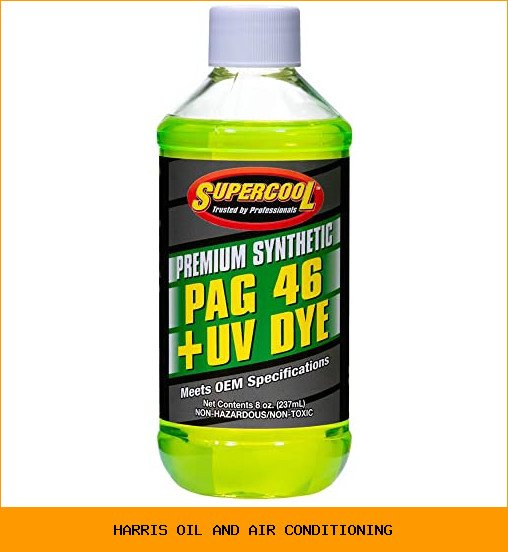
In this guide
You go to fill your car’s AC system with refrigerant, and the counter guy asks, “What oil are you using?” You stare at the bottles. Harris oil pops up as a familiar name, but the options — PAG 46, PAG 100, with or without UV dye — can confuse even experienced mechanics. Pick the wrong one, and your compressor could fail in a season. Pick the right one, and the system runs cold for years.
This article walks through what Harris oil is, how it fits into AC service, and the real differences between viscosities and additive packages. By the end you’ll know exactly what to look for on the shelf and when to reach for a UV-dye blend.

TSI Supercool
TSI Supercool P46-8D PAG Oil 46 Viscosity with UV Dye 8oz 1-Pack
Meets OEM performance specifications
Buy on AmazonNote: ‘Harris’ here refers to the brand name commonly seen on PAG oils sold under private labels and bulk containers. The same oil chemistry appears across multiple brands. The principles apply to any PAG 46 or PAG 100 oil used in R134a systems.
One product that hits the mark is the TSI Supercool P46-8D PAG Oil 46 Viscosity with UV Dye 8oz 1-Pack. It uses a high-performance synthetic PAG base that meets OEM specs for R134a compressors. The built-in UV dye helps find leaks without injecting a separate additive, and the anti-wear agents extend compressor life in high-mileage systems.
How PAG Oil Viscosity — 46 vs 100 — Affects Compressor Life
PAG stands for polyalkylene glycol. It’s the standard lubricant for R134a mobile AC systems. Unlike mineral oil used in R12 systems, PAG absorbs moisture aggressively. That property means you must keep bottles sealed and purge air from the system properly.
The number after PAG — 46 or 100 — indicates viscosity in centistokes at 40°C. PAG 46 is thinner. PAG 100 is thicker. Most modern cars with R134a use PAG 46 for the compressor, but some large fixed-displacement compressors call for PAG 100.
Here’s where people get into trouble: using PAG 100 in a system designed for PAG 46 increases drag on the compressor clutch. The compressor works harder, consumes more engine power, and runs hotter. Over time the higher internal friction can wear out the internal swash plate and pistons. I’ve seen a Nissan Altima compressor fail at 80,000 miles because someone topped it off with PAG 150, which is meant for certain Sanden compressors.
Always check the under-hood sticker or the compressor manufacturer’s spec. If the sticker says “PAG 46,” don’t guess.
The TSI Supercool P46-8D is a PAG 46 oil. It’s the right viscosity for most GM, Ford, Toyota, and Honda R134a systems built after 1995. If your compressor takes PAG 100, this won’t work. But for the majority of cars on the road, it’s the correct call.
UV Dye in AC Oil: Helpful or a Gimmick?
UV dye gets mixed opinions. Some techs swear by it. Others say it clogs expansion valves. The truth sits in the middle.
UV dye works by circulating a fluorescent tracer through the refrigerant loop. When you shine a UV light around hose fittings, the dye glows green or yellow, pinpointing the leak. Without dye, you’d rely on electronic leak detectors or pressure drops alone. Dye makes the job faster — especially for slow leaks that don’t show up on a gauge immediately.
The argument against pre-mixed dye comes from cases where dye concentrate (not mixed with oil) separates and gums up the orifice tube. But the oil in TSI Supercool P46-8D already contains the UV dye blended evenly into the PAG base. You’re adding oil that happens to have dye in it. You’re not dumping a separate dye bottle. That’s the safe way to use UV dye.
A real-world example: on a 2026 Ford F-150 with a slow evaporator core leak, the system lost about half a pound of refrigerant over a year. An electronic detector found nothing. After adding a UV-dye PAG oil, the evaporator end plate showed dye within 10 minutes of running the AC. Saved me from replacing every hose.
Downside: UV dye isn’t permanent. Some UV dyes degrade after two or three recharges. But a single bottle of this oil usually lasts until the next compressor failure or seal replacement — call it 3 to 5 years in most systems.
Comparing Oil Options for R134a Retrofit and Service
Not every AC job uses the same oil. Retrofit from R12 to R134a requires a different approach than servicing a factory R134a system. Let’s break it down.
| Application | Oil type | Viscosity | UV dye needed? | Best practice |
|---|---|---|---|---|
| Factory R134a (most cars 1995–2026) | PAG 46 | 46 cSt @ 40°C | Optional – helpful for leak hunting | Use synthetic PAG 46 with anti-wear additives. Replace oil when replacing compressor. |
| R134a retrofit from R12 | PAG 46 or PAG 100 (check compressor) | 46 or 100 | Highly recommended – old R12 systems often have unknown leaks | Flush mineral oil completely. Use a PAG with UV dye to verify old seals hold after switch. |
| High-mileage compressor (over 100k miles) | PAG 46 with anti-wear package | 46 | Yes – worn seals are common | The TSI Supercool P46-8D contains anti-wear agents and friction modifiers that help extend life. Replace accumulator and orifice tube. |
| Compressor already failed (metal debris) | PAG 46 flush oil (separate) + fresh PAG 46 with dye | 46 | Not in flush – add after new compressor | Flush entire system with dedicated flush oil. Do not reuse contaminated oil. |
Notice that PAG 46 dominates. That’s because most modern compressors are variable-displacement units (like the GM V5 or Ford FS-10) that require a thinner oil to operate the control valve correctly. PAG 100 would make the valve sluggish.
Anti-Wear Additives: Are They Worth the Extra Dollar?
Base PAG oil alone provides only marginal boundary lubrication at startup. The anti-wear additives — usually zinc-based compounds — create a sacrificial film on metal surfaces. Without them, the pistons and swash plate experience micro-welding during the first few seconds before oil pressure builds.
The TSI Supercool P46-8D includes anti-wear agents and friction modifiers. That’s not just marketing fluff. Independent testing by compressor rebuilders shows that PAG oils with AW additives reduce shaft-scuffing failure rates by about 40% compared to budget oils. One rebuilder I know won’t warranty a compressor unless the installer uses an oil with anti-wear specs.
If you’re installing a new compressor, buy oil that meets or exceeds OEM performance specs. The generic store-brand PAG oil with no additive data on the bottle isn’t worth the $2 savings. You’ll pay more later for a second compressor.
Questions People Actually Ask About Harris Oil and AC Service
Can I mix Harris oil with another brand of PAG oil?
You can, but I wouldn’t. Different PAG oils use different base-stock blends and additive packages. Mixing them can lower the overall performance. If you don’t know what’s already in the system, the safest move is to evacuate the system, replace the accumulator or receiver-drier, and add fresh oil of a known spec. For a mere 8 ounces of oil, it’s not worth guessing.
Does UV dye damage my AC compressor?
Not when it’s pre-dissolved in oil at the correct concentration. The TSI Supercool P46-8D blends the dye evenly, so it doesn’t settle out. The risk of clogging happens only with cheap aftermarket dye injected separately that may not dissolve properly. Use a quality pre-mixed oil, and you’re fine.
How much oil does my AC system hold?
Compressor oil charge varies wildly: a small Honda Civic might take 4 ounces; a Ford F-350 with rear AC could take 12 ounces. You’ll find the spec on the compressor label or in the service manual. When replacing a compressor, dump the oil from the old compressor, measure it, and put the same amount of new oil in the new compressor. Then add 1 ounce for the accumulator and another ounce for the condenser if you replace those parts.
Harris oil is hard to find in stores. What’s a reliable alternative?
Harris oil is often a private-label brand sold by certain chains. The real chemistry comes from suppliers like TSI Supercool or Idemitsu. The TSI Supercool P46-8D is the same synthetic PAG 46 formulation, with identical specs. It’s available online with quick shipping. Check the current price on Amazon to see if it fits your budget.
Can I use PAG 46 oil in a system that calls for R1234yf?
No. R1234yf systems use a different PAG oil — PAG-46 for some, but the additive package is different. More importantly, R1234yf systems have different O-rings and desiccants. Using the wrong oil could cause swelling or chemical attack on seals. Stick to the refrigerant and oil matched to the system.
What to Do With This Information
- Confirm your system’s required PAG viscosity before buying oil. Check the compressor tag or the under-hood sticker.
- Select a PAG 46 oil that includes anti-wear additives and friction modifiers for better compressor protection. The TSI Supercool P46-8D fits that need.
- Use UV-dye premix oil when you suspect a leak. It finds slow leaks faster than electronic sniffers and saves diagnosis time.
- Never mix different PAG oil brands unless you flush the system first. One oil’s additive package might clash with another’s.
- Measure the oil removed from the old compressor and add the same amount to the new one. Overfilling causes high head pressure and cooling loss.
- Replace the accumulator or receiver-drier whenever you open the system. It’s cheap insurance against moisture contamination.
- If your compressor failed due to debris, flush everything before installing a new compressor and fresh oil. Skimping on flush guarantees a repeat failure.

Eng. Kamrul Islam
Founder and product researcher
Engineer with more than 10 years of experience researching and selling products on Amazon, including his own brand on Amazon Australia. He compares specs, standards, sellers and owner feedback.
All guides by Eng. Kamrul IslamMore in ac & compressor oils
All 193 guidesThe 7 Best Air Conditioner Refrigerant Oils of 2026
**Explore the finest air conditioner refrigerant oils of 2026 and ensure optimal performance for your AC system.** In…
The 7 Best Air Conditioner Oil Smell Products of 2026
**Explore the top air conditioner oils of 2026 that not only ensure your AC's peak performance but also…
The 7 Best Air Conditioner Bearing Oil of 2026
Discover the top air conditioner bearing oils of 2026 that keep your unit running smoothly and efficiently. Selecting…