 Eng. Kamrul Islam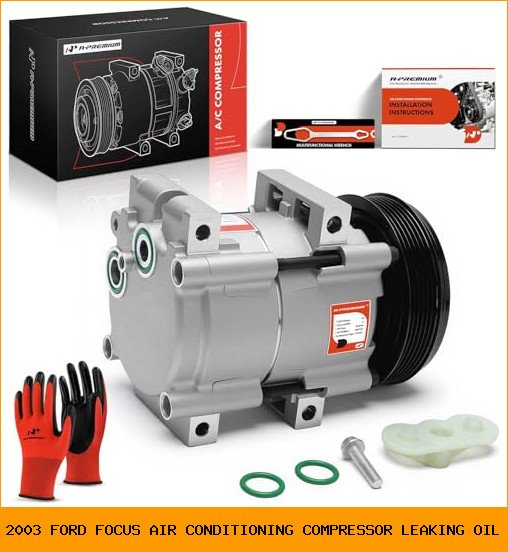
In this guide
- A-Premium Air Conditioner AC Compressor with…
- Understanding the 2003 Ford Focus AC System
- Symptoms of a Leaking AC Compressor
- Diagnosing the Source of the Oil Leak
- Common Causes of Oil Leaks in Ford Focus AC…
- DIY Repair Steps for an AC Compressor Oil Leak
- Professional Repair Options: What to Expect
- Environmental Considerations and Proper…
- Preventive Maintenance Tips for Your AC System
- Frequently Asked Questions about Ford Focus…
- What to Remember
You hop in your 2003 Ford Focus on a July afternoon, crank the AC, and get warm air. Pop the hood. There it is — a greasy smear along the compressor body, maybe a drip hanging off the pulley. That’s compressor oil mixed with refrigerant, and it means you’ve got a leak. Ignoring it won’t fix it. The system will lose enough refrigerant to stop cooling, and running it low can burn up the compressor entirely.
This article walks you through what’s actually leaking, how to confirm it’s the compressor (and not a hose or condenser), whether you can patch it yourself, and when it’s smarter to swap the whole unit. You’ll get concrete steps, real numbers on cost and time, and the environmental rules you need to follow. No fluff.

A-Premium
A-Premium Air Conditioner AC Compressor with Clutch
[Specifications]: ①Compressor Type: FS10; ②Oil Type: PAG46; ③Oil Prefilled: 180 ml (20ml tolerance); ④Pulley Grooves: 6; ⑤Clutch Included: Yes
Buy on AmazonIf you do end up needing a replacement, the A-Premium Air Conditioner AC Compressor with Clutch is worth a look. It’s an FS10 type, pre-filled with 180ml of PAG46 oil, and comes with a clutch and 6-groove pulley. It fits the 2003 Focus 2.0L SOHC (LX and SE trims) and the 2003 SVT 2.0L DOHC. Check your specific submodel before ordering, but it’s a direct-fit option that saves you the hassle of swapping oil or measuring clearances.
Understanding the 2003 Ford Focus AC System
Your Focus uses an FS10 compressor — a rotary-vane design driven by a six-rib serpentine belt. The system holds about 24 ounces of R134a refrigerant and roughly 7–8 ounces of PAG46 oil total (split between compressor, evaporator, condenser, and lines). The compressor circulates both: refrigerant carries heat, oil lubricates the internal vanes and seals.
When oil leaks, it always takes some refrigerant with it. But because oil is thicker, it often leaves a visible dark stain. That’s your easiest clue.
Symptoms of a Leaking AC Compressor
- Oil slick on compressor housing or nearby components. Often black or brown, sometimes with a greenish tint if the previous shop used UV dye.
- Weak or no cooling. The system loses refrigerant gradually; you’ll notice the air gets warmer over days or weeks.
- Clutch noise or intermittent engagement. Low oil pressure inside the compressor can cause the clutch to chatter or slip.
- Visible drip under the car after sitting. Oil mixed with refrigerant is thinner than plain engine oil — it leaves a greasy puddle.
One symptom people miss: a hissing sound at shutdown. That’s refrigerant blowing out through a failed seal. If you hear it, you’ve got a serious leak.
Diagnosing the Source of the Oil Leak
Not every oil leak around the compressor is from the compressor itself. A leaking hose or condenser can drip oil onto the compressor body. Here’s how to pin it down.
Visual Inspection
Clean the compressor and surrounding area with brake cleaner. Let it dry. Run the AC for ten minutes, then shut off and look for fresh oil. Common leak points:
- Front seal (where the shaft exits the compressor body, under the clutch hub) — oil will appear on the front face of the compressor and sometimes fling onto the belt.
- Rear seal — check the back plate where the suction and discharge lines bolt on. Oil here often runs down onto the engine block.
- Pressure switch — a small electrical switch on the compressor body. Oil around its threads means the O‑ring failed.
- Manifold block — where the two refrigerant lines attach. A wet ring around either fitting points to a bad O‑ring.
UV Dye Test
Buy a UV leak detection kit (about $15–20). Add a small amount of dye into the low‑pressure service port using a charging hose. Run the AC for 15 minutes, then hit the area with a UV flashlight. The dye glows bright green at the exact leak source. This method catches tiny seeps that visual inspection misses.
Pressure Test
A shop can isolate the compressor and pressurize it with nitrogen. If it holds steady, the leak is elsewhere. If pressure drops, the compressor is the culprit. This test costs around $50–80 at a shop but saves you from replacing a good compressor.
Common Causes of Oil Leaks in Ford Focus AC Compressors
Most leaks happen for one of four reasons:
- Age and heat cycles. The front shaft seal is a rubber lip seal that hardens over time. After 15–20 years, it’s brittle.
- Debris contamination. If the system was opened before or a hose got a hole, dirt and grit can score the seal surfaces.
- Overcharge of refrigerant or oil. Too much oil causes excess pressure inside the compressor, blowing out the rear seal. This happens after a DIY recharge with no regard for stated oil capacity.
- Clutch bearing failure. A wobbling clutch hub puts side load on the shaft seal, tearing it open. If your clutch is noisy, fix that before the seal goes.
Once a seal starts leaking, it rarely self-seals. The rubber loses its resilience. You can slow the leak slightly by running the AC less, but that’s a temporary patch.
DIY Repair Steps for an AC Compressor Oil Leak
Decide: do you replace just the seal or the whole compressor? Seals are cheap ($10–20) but require pulling the compressor, removing the clutch, and pressing the old seal out — plus you still have to evacuate and recharge the system. A complete compressor swap (like the A‑Premium unit) is more straightforward for most DIYers because it comes ready to install.
Below are the steps for compressor replacement, which is the realistic DIY fix for a car this old.
Tools and Materials Needed
- AC manifold gauge set
- Refrigerant recovery machine (or a shop to evacuate the system)
- Socket set, wrenches, screwdrivers
- New compressor (with clutch, pre-filled oil — match your pulley style)
- New receiver/drier or accumulator (always replace when opening the system)
- New O-rings (NBR or HNBR for R134a)
- PAG46 oil (small bottle for replenishing lines and condenser)
- Torque wrench
Safety Precautions
Never open an AC system that still contains pressure. R134a boils at -15°F — if you disconnect a line while charged, it can spray liquid refrigerant on your skin, causing frostbite. Always recover refrigerant before disassembly. If you don’t own a recovery machine, take the car to a shop for evacuation first (around $40–60).
Wear safety glasses. Compressor oil and refrigerant will burn your eyes.
Professional Repair Options: What to Expect
If you’re not comfortable tackling it yourself, a shop will do the job. Here’s how the options stack up:
| Option | Average Cost | Time | Warranty | Skill Needed |
|---|---|---|---|---|
| DIY compressor swap (part + tools) | $200–350 | 3–6 hours | Part warranty only | Intermediate |
| Independent shop | $600–900 | 2–3 hours labor | 12 months / 12k miles typical | None (you drop it off) |
| Dealership | $1,000–1,400 | 1–2 hours labor | 24 months | None |
| Mobile mechanic | $400–700 | 2–4 hours | Varies (ask) | None |
The DIY route saves the most money, but you trade that for your own time and the risk of getting the oil quantity or seal alignment wrong. If you’ve never worked on an AC system, the independent shop is the sweet spot — they know the FS10 and will vacuum the system properly.
Environmental Considerations and Proper Refrigerant Disposal
R134a has a global warming potential of 1,430. Releasing it to the atmosphere is illegal under the Clean Air Act. The EPA fines can hit $37,500 per day for intentional venting. But even aside from the law, it’s bad practice. A single car’s AC charge is roughly equivalent to driving 1,000 miles in terms of greenhouse impact.
When you replace a compressor, you must recover the old refrigerant into a certified tank. Most auto parts stores rent recovery machines, or you can pay a shop to do the recovery-only step for about $50. The oil drained from the old compressor must go to a hazardous waste collection site — never pour it down the drain. Used PAG oil contains dissolved refrigerant and heavy metals from compressor wear.
If you use a new compressor like the A-Premium that comes pre-filled, you still need to add the correct amount of oil to the condenser and evaporator (usually 1–2 ounces total, depending on which components you replaced). Overfilling causes high pressure and leaks. Underfilling starves the compressor. Measure everything.
Preventive Maintenance Tips for Your AC System
- Run the AC at least once a week year-round. Even in winter, ten minutes on defrost cycles the compressor and keeps seals lubricated.
- Check the belt tension. A loose or glazed belt can cause the clutch to slip and overheat the front seal.
- Clean the condenser fins every spring with a garden hose (low pressure). Debris blocks airflow, causing high head pressure and shortening compressor life.
- Monitor the sight glass if your system has one. Steady bubbles after a charge indicate a leak or low refrigerant.
- Replace the receiver/drier every time you open the system. It’s a $15–20 part that traps moisture. Skip it and the new compressor can fail from acid formation within months.
Frequently Asked Questions about Ford Focus AC Leaks
Can I just add stop-leak to my AC system?
Stop-leak products for AC systems are snake oil for compressors with shaft seal leaks. They contain particles that can clog the expansion valve or condenser. I’ve seen more ruined systems from stop-leak than from the original leak. Pass on it.
How much oil does my 2003 Ford Focus AC compressor need?
Total system oil capacity is about 7.5 ounces of PAG46. If you install a new compressor that’s pre-filled with 6.1 ounces (180 ml), you need to add roughly 1.4 ounces to the lines, condenser, and evaporator. Check factory specs for your exact trim — some SVT models vary slightly.
Will a slow leak eventually stop on its own?
No. Seals don’t heal. As oil seeps out, the compressor runs with less lubrication, wearing the internal vanes. That can generate metal debris that clogs the rest of the system. A slow leak always gets worse, not better.
Is it safe to drive with a leaking AC compressor?
Yes, but you’ll lose AC performance completely. The bigger risk is if the clutch seizes — it can shred the serpentine belt, leaving you stranded with no power steering or alternator output. If you hear grinding or the compressor locks up, turn off the AC immediately and get it fixed.
How do I know if the leak is from the compressor or somewhere else?
The UV dye test is the most reliable method. Without dye, look at the pattern: oil on the front of the compressor near the clutch hub points to the shaft seal. Oil dripping from the bottom of the compressor body often comes from the rear seal or manifold O‑rings. Oil on the passenger side of the engine bay suggests the condenser or lines. Clean everything and recheck.
What to Remember
- A visible oil leak on the compressor almost always means a seal failure — it won’t heal on its own.
- Diagnose with UV dye before buying parts; you may only need an O-ring.
- If you replace the compressor, always swap the receiver/drier and vacuum the system for at least 30 minutes.
- New compressor oil quantity matters more than brand. Stick to PAG46, and don’t guess.
- Professional recovery is mandatory — don’t vent refrigerant. It’s illegal and harms the environment.
- For a 2003 Focus, a direct-fit compressor (like the A-Premium FS10) saves you fitment headaches and pre-fill guesswork.
- If you’re not confident in your AC skills, pay an independent shop $600–900 for a job that will last years.

Eng. Kamrul Islam
Founder and product researcher
Engineer with more than 10 years of experience researching and selling products on Amazon, including his own brand on Amazon Australia. He compares specs, standards, sellers and owner feedback.
All guides by Eng. Kamrul IslamMore in ac & compressor oils
All 193 guides How-to
How to Choose a Home Heating Oil & Air Conditioning Provider That Won’t Let You Down
It’s 6:00 AM in January. You crawl out of bed and the house is cold – not just…
 How-to
How to Add Oil to a Car Air Conditioning Compressor (Step-by-Step Guide)
Your car’s AC blows warm. You check the refrigerant pressure and it’s fine. But the compressor sounds rough,…
Pag Air Conditioning Oil: What Works, What Doesn’t, and Why It Matters
You replaced the compressor, pulled a vacuum, and charged the system. A week later the compressor locked up.…