 Eng. Kamrul Islam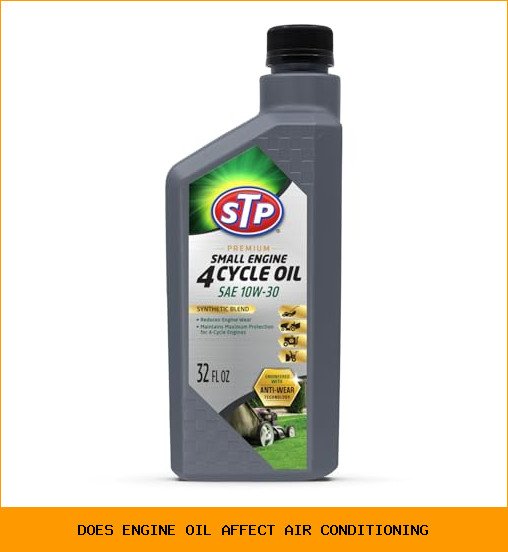
In this guide
- STP Premium Synthetic Blend 4 Cycle Small…
- How Engine Oil and Air Conditioning Are…
- The Viscosity Factor: Why Oil Thickness…
- Oil Quality and AC Component Longevity
- Common Myths About Oil Changes and AC…
- Troubleshooting AC Issues That Aren’t…
- A Comparison: Oil-Related vs. Non-Oil AC…
- Proactive Steps to Keep Both Engine and AC in…
- Final Takeaways
You hop in your car on a July afternoon, crank the AC to max, and wait for cold air. Nothing. Or maybe it blows warm, or barely cools. Your first thought might be a refrigerant leak, a bad compressor, or an electrical gremlin. But what about your engine oil? Could something as simple as an overdue oil change be the real culprit? It sounds unlikely, but the answer is yes – in a roundabout way.
Here’s what you’ll walk away knowing: how engine oil indirectly affects your air conditioning, why viscosity matters, where the common myths come from, and most importantly, what to actually check when your AC isn’t cold. I’ll also walk you through a step-by-step troubleshooting process so you stop wasting money on parts you don’t need.

STP
STP Premium Synthetic Blend 4 Cycle Small Engine Oil, SAE 10w30 Motor Oil for Lawnmowers, Generators, Tractors, Snow Blowers, and More, 32 fl oz
SAE 10W-30 MOTOR OIL FOR SMALL ENGINES: One 32 fl oz bottle of STP Premium Synthetic Blend 4 Cycle Small Engine Oil SAE 10W-30, formulated for small engines in lawnmowers, generators, tractors, snow blowers, and other outdoor power equipment
Buy on AmazonLet’s start with a surprising fact: your AC compressor is driven by the engine. That means anything that messes with engine performance – including lousy oil – can mess with your AC.
Even in small engines like those in lawnmowers or generators, oil quality matters for maintaining operating temperature and preventing component wear – issues that can indirectly affect any attached cooling systems. A solid choice for such equipment is STP Premium Synthetic Blend 4 Cycle Small Engine Oil SAE 10W-30. It fights thermal breakdown with antioxidants and uses detergents to control carbon deposits, keeping the engine running clean and cool. Check the current price on Amazon if you maintain yard equipment alongside your car.
How Engine Oil and Air Conditioning Are Connected
Your car’s AC compressor runs off a belt connected to the engine crankshaft. When the engine turns, the compressor turns. That compressor needs a certain amount of power to pressurize the refrigerant. If your engine is working harder because of thick, sludgy oil or low oil level, it may not spin the compressor fast enough at idle or low RPMs. The result? Weak airflow or warm air when you’re stopped in traffic.
But there’s another link: engine temperature. A poorly lubricated engine runs hotter. That extra heat radiates into the condenser (the radiator-like unit in front of your car). When the condenser gets too hot, it can’t shed heat from the refrigerant effectively. The AC system loses its ability to cool the cabin air.
I’ve seen cars where a simple oil change dropped engine operating temperature by 10–15°F on the gauge. That’s enough to make a noticeable difference in AC performance on a 95°F day.
The Viscosity Factor: Why Oil Thickness Matters for Your AC
Oil viscosity is basically how thick or thin the oil is at a given temperature. Your owner’s manual specifies a certain grade – 5W-20, 5W-30, 10W-30, etc. Using the wrong viscosity can cause two problems.
First, too-thick oil (say, 20W-50 in an engine that calls for 5W-20) increases internal friction. The engine has to work harder to pump that sludge, especially when cold. That extra load means more heat and less power available for the AC compressor. Second, too-thin oil (like 0W-20 where 10W-30 is specified) may not provide enough film strength at high temperatures, leading to metal-on-metal contact. That generates severe heat, again raising engine temp and hurting AC efficiency.
Pro tip: If you live in a hot climate and regularly sit in traffic with the AC on max, you might be tempted to use a heavier oil. Don’t. Modern engines are designed with tight tolerances. Stick to the manufacturer’s recommended viscosity. A 10W-30 synthetic blend like the STP product mentioned earlier is a safe bet for many older engines and small equipment, but always check your owner’s manual first.
How to Check If Your Oil Is Causing AC Problems
Follow these steps before you touch any AC parts:
- Check oil level with the engine off, on level ground. Pull the dipstick, wipe, reinsert, pull again. Low oil means the engine may be running hotter and the compressor may not get enough power at idle.
- Check oil condition. Dip some onto a paper towel. Dark, gritty, or milky oil is bad. If it smells like gas, you have a fuel dilution problem – that thins the oil and reduces protection.
- Verify oil viscosity. Look at the bottle you last used. Did you accidentally buy a heavier grade? I’ve done it – grabbed a quart of 20W-50 for a car that takes 5W-30. Easy mistake.
- Monitor engine temperature. After a 20-minute drive on a hot day, note the temp gauge. If it’s higher than normal (above the middle mark), that’s a red flag. Address the oil issue before blaming the AC.
Oil Quality and AC Component Longevity
The relationship between oil quality and AC longevity is indirect but real. Here’s the chain: poor oil → increased engine heat → higher underhood temperatures → accelerated degradation of AC seals, hoses, and compressor clutch bearings.
Heat is the number one enemy of AC systems. The compressor clutch bearing is lubricated by a small amount of grease, not engine oil. But ambient heat from a struggling engine can cook that grease, causing the bearing to fail prematurely. Same goes for the rubber O-rings in AC lines – they harden and crack when exposed to excessive heat for long periods.
I’ve replaced AC compressors on cars with less than 60,000 miles simply because the previous owner neglected oil changes. The engine ran hot, the condenser couldn’t shed heat, the compressor cycled constantly, and eventually the bearing seized. A $40 oil change every 5,000 miles might have prevented a $1,200 repair.
That’s why using quality oil with robust antioxidants (like the STP synthetic blend, which resists thermal breakdown) matters. It keeps engine temps in check, which keeps the whole underhood environment cooler.
Common Myths About Oil Changes and AC Performance
Let’s clear up some nonsense I hear in shops and forums.
Myth 1: “An oil change can fix an AC that won’t blow cold.” No. If your AC is completely dead – no compressor engagement, no cold air at all – it’s not the oil. You likely have a refrigerant leak, a failed compressor, or an electrical fault. An oil change won’t resurrect a dead system.
Myth 2: “Using synthetic oil will improve AC cooling.” Synthetic oil can reduce engine friction and heat, which may help marginally. But it won’t make your AC blow colder. The refrigerant and compressor are the main players. Synthetic oil is a supporting cast member, not the star.
Myth 3: “Thicker oil protects the AC compressor.” The AC compressor has its own oil – PAG or POE oil mixed with refrigerant. Engine oil never touches the compressor internals. The only link is the belt-driven clutch. Thicker engine oil won’t help that clutch at all.
Myth 4: “If your AC is weak, just change the oil and top off the refrigerant.” Topping off refrigerant without fixing the leak is like putting a band-aid on a bullet hole. And changing the oil won’t seal a leak. Find the leak first, fix it, then recharge.
Troubleshooting AC Issues That Aren’t Oil-Related
Engine oil can contribute, but most AC problems have nothing to do with it. Here’s a methodical approach I use when a customer says “AC isn’t cold.”
- Check the cabin air filter. A clogged filter restricts airflow. The AC may be making cold air, but you can’t feel it. Replace it – takes two minutes, costs $15.
- Inspect the condenser and radiator fins. Bugs, leaves, and dirt block airflow. Spray them out with a garden hose (gently, from the back side).
- Listen for the compressor clicking on. Turn the AC to max and listen. If you hear a click and the engine RPM dips slightly, the compressor is engaging. If not, check the AC relay, fuse, and low-pressure switch.
- Feel the two AC lines at the firewall. One should be cold, the other warm. If both are warm, you’re low on refrigerant or the compressor isn’t pumping. If one is frosty and the other is warm, you might have a restriction.
- Test refrigerant pressure with a manifold gauge set (or have a shop do it). Low-side pressure too low? Probable leak. High-side too high? Possible overcharge or condenser airflow issue.
- Scan for trouble codes. Some modern cars log AC-related codes if the system pressure is out of range.
If you get to step 4 and find warm lines, step 5 usually reveals a leak. At that point, an oil change won’t help. You need a proper AC repair.
A Comparison: Oil-Related vs. Non-Oil AC Problems
| Symptom | Likely Oil-Related? | Better Next Step |
|---|---|---|
| AC works fine on highway, warm at idle | Possibly – low oil level or wrong viscosity can cause high engine temp and weak compressor at idle | Check oil level and condition; clean condenser fins; test coolant fan operation |
| AC blows cold for 5 minutes then goes warm | Unlikely – usually indicates a refrigerant leak, a failing expansion valve, or a frozen evaporator | Check refrigerant pressure; look for oily residue on AC components |
| AC never gets cold, compressor never engages | Very unlikely – electrical or mechanical compressor failure, or no refrigerant | Check AC relay, fuse, and pressure switch; call a pro for electrical diagnosis |
| AC blows slightly cool but not cold | Possibly – high engine temp from poor oil can reduce condenser heat rejection; more often a low refrigerant charge | Check engine temp gauge; clean condenser; then have refrigerant level checked |
| Clicking noise from compressor when AC is on | No – compressor clutch bearing or internal failure; oil can’t fix mechanical wear | Replace compressor (usually) – do not just add oil |
Proactive Steps to Keep Both Engine and AC in Top Shape
You don’t have to wait for a hot day to discover your AC is weak. Here are practical habits that protect both systems.
- Change your oil on schedule – every 5,000 miles for conventional, up to 7,500 for synthetic blend, or as your owner’s manual says. Use the right viscosity. This is the single cheapest way to prevent heat-related AC wear.
- Flush the radiator and replace coolant every 30,000 miles or 2 years. A cooling system in good shape keeps engine temp stable, which helps the condenser work.
- Keep the condenser and radiator clean. Spray them out with water at every oil change. I use a hose with a spray nozzle – takes 60 seconds.
- Run your AC at least once a week year-round, even in winter. This circulates refrigerant and oil in the compressor, keeping seals lubricated and preventing leaks.
- Listen for changes. If your engine starts running hotter than usual (temp gauge creeps up), investigate before the AC suffers. Could be a failing thermostat, a clogged radiator, or yes, old oil.
Common mistake: ignoring the coolant level. Low coolant causes the engine to overheat, and that heat kills AC performance just as fast as bad oil. Check coolant level monthly.
Final Takeaways
- Engine oil does affect air conditioning, but only indirectly – through engine temperature and power delivery to the compressor.
- Wrong oil viscosity or low oil level can raise engine temp enough to weaken AC cooling, especially at idle.
- Oil quality matters for long-term AC component life. Use oil with good thermal stability (like a synthetic blend with antioxidants) to keep underhood temps under control.
- Most AC problems are not oil-related. Systematically check cabin air filter, condenser airflow, compressor engagement, and refrigerant pressure before blaming the oil.
- Changing your oil won’t fix a dead AC, but neglecting it can accelerate AC wear. Maintenance is prevention, not a cure.
- If you maintain small engines (lawnmowers, generators), use a quality oil like STP Premium Synthetic Blend 10W-30 that resists thermal breakdown – the same principles apply.
- When in doubt, check your owner’s manual for oil and coolant specs. Stick to them, and your AC will thank you on the first 100°F day.

Eng. Kamrul Islam
Founder and product researcher
Engineer with more than 10 years of experience researching and selling products on Amazon, including his own brand on Amazon Australia. He compares specs, standards, sellers and owner feedback.
All guides by Eng. Kamrul IslamMore in motor & engine oils
All 185 guidesWhich Engine Oil Is Recommended For A Toyota Yaris?
Choosing the right engine oil for your Toyota Yaris is crucial for maintaining its performance and longevity. With…
Motor Oils Explained
Motor oils play a crucial role in the performance and longevity of your vehicle’s engine. With various types,…
How Engine Oil Change
Maintaining your vehicle is crucial for its longevity and performance, and one of the most important aspects of…