 Eng. Kamrul Islam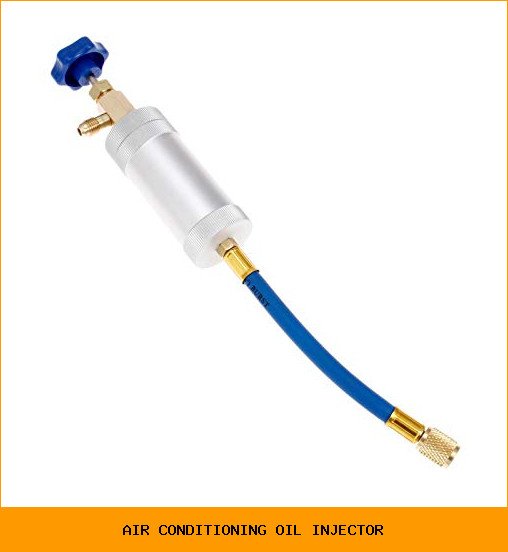
In this guide
You pull a vacuum on a car AC system, replace a compressor or accumulator, and then realize you need to add oil. Dumping it into the suction hose seems easy, but air gets trapped, oil pools in the wrong places, and you end up with a noisy compressor or a seized unit a month later.
An air conditioning oil injector fixes that. It lets you add the exact amount of oil — usually 2 ounces — directly into a system that’s already under pressure or freshly evacuated, without introducing moisture or air. The tool itself is a small metal canister with a needle valve and two 1/4 SAE fittings. You install it between the manifold gauge set and the service hose, crack the valve, and let vacuum or refrigerant pressure pull the oil in.

gohantee
gohantee R12 AC Oil dye Injector for R134a R22 2oz A/C Injection Tool | Female 1/4" SAE x Male 1/4" SAE
[PREMIUM QUALITY] The oil injector made of high quality aluminum alloy. 100% tested before shipping.
Buy on AmazonBy the end of this article you’ll know exactly when to use an oil injector, what mistakes to avoid, and which features actually matter. I’ll also cover a few things most DIY guides get wrong.
One tool that handles this job well is the gohantee R12 AC Oil Dye Injector. It’s a simple all-metal 2-ounce canister with brass fittings and a needle valve. It works with R12, R134a, and R22 systems, and it handles pressures up to 3000 PSI. No plastic parts, no leaky o-rings. You can use it to inject oil or UV dye without needing extra refrigerant to push the charge. It’s not fancy, but it does the job reliably.
Big Myth: Pouring Oil Into the Low Side Port Works Fine
This is the #1 mistake I see on forums. Someone disconnects the low-side hose, pours a couple of ounces of PAG or mineral oil into the port, reconnects, and fires up the compressor. It works for a while, then the compressor starts rattling.
Here’s why that fails. Liquid oil does not compress. When you pour it directly into the low-side port while the system is open to atmosphere, you also pull in humid air. That moisture reacts with refrigerant and oil to form acid. The acid eats the compressor bearings and the expansion valve. The oil also tends to sit in the suction line or the accumulator instead of circulating evenly. Within a year the compressor seizes.
A proper air conditioning oil injector solves both problems. First, you install it between the gauge set and the service port. The system stays sealed. Second, you open the valve slowly while the system is under vacuum (or low pressure) so the oil gets pulled through the entire circuit, not dumped into one spot. The result: correct oil distribution and no moisture contamination.
There is one exception — some cars have a dedicated oil fill port on the compressor itself. But even then you still risk air entrapment if you don’t pull a vacuum afterward. For any other situation, an injector is the right tool.
Another Myth: Oil Injectors Are Only for Adding UV Dye
I see injectors sold as ‘dye injectors’ all the time. The gohantee model even includes dye in the name. That makes people think the tool is only for adding fluorescent leak detection dye. Not true.
The exact same tool works for refrigerant oil. The needle valve lets you meter the flow — whether it’s oil or dye. The 2-ounce capacity matches the typical oil charge for most cars after a compressor replacement (usually 2 to 3 ounces for the compressor itself, plus 1 ounce for the accumulator if replaced).
The only difference is that oil is thicker than dye. You might need to warm the canister slightly (warm tap water, not a torch) to help it flow when the system is under vacuum. Dye flows easier because it’s less viscous. But the injector mechanism — the valve, the fittings, the pressure rating — handles both fluids identically.
If you already own a dye injector, you don’t need to buy a separate oil injector. Clean it out thoroughly with mineral spirits or brake cleaner after dye use, and you’re good to go.
How to Pick the Right Air Conditioning Oil Injector
Not all injectors are built the same. Some have plastic bodies that crack under cold refrigerant. Others use a push-button valve that’s hard to control. Here’s what to look for and a direct comparison of the three main approaches.
| Method | Capacity | Material | Pressure Rating | Best For | Main Drawback |
|---|---|---|---|---|---|
| Needle-valve canister injector (like gohantee) | 2 oz | Aluminum/brass | 600-3000 PSI | Adding oil or dye to sealed systems | Needle valve can drip if not fully closed |
| Plastic syringe-style injector | 1-4 oz | Plastic body, rubber seals | ~200 PSI max | Low-budget DIY, one-time use | Seals fail with R134a pressures; can explode |
| Oil charge via vacuum-only (no injector) | Any | No tool needed | N/A | Adding oil before evacuation only | Must re-evacuate; risk of oil entering gauge manifold |
My take: spend the $12 on a metal canister injector. The plastic syringe injectors are dangerous — I’ve seen the rubber plunger blow out at 150 PSI. And trying to add oil through the manifold without an injector works only during the initial vacuum charge, not after you’ve already charged the system with refrigerant.
The gohantee model handles both scenarios. You can use vacuum to pull oil in after evacuation, or you can use refrigerant pressure to push oil in if the system is already charged. The needle valve gives you precise control, so you don’t accidentally dump all 2 ounces in half a second.
Real Numbers for Adding Oil
How much oil do you actually need? Here are concrete figures from SAE and ASHRAE standards plus factory service manuals.
- New compressor: most come pre-filled with 4-6 ounces. If you replace an accumulator or drier, subtract the amount that’s already in the old components (about 1 ounce for the accumulator). The injector lets you add the difference.
- After a compressor seizure: you should flush the entire system and start with fresh oil. Typical total system oil charge: 6-8 ounces for a car, 10-14 for a light truck.
- Adding oil without component replacement: if the compressor is low on oil (noisy, but no metal contamination), you can add 1 ounce at a time. Run the system for 5 minutes, then check the sight glass or discharge temperature. Overfilling kills cooling performance just as fast as underfilling.
The injector’s 2-ounce capacity is deliberate. Most single-component swaps need exactly that amount. You remove the compressor, drain the oil from the old one, measure it, and add the same amount — minus what you already put in the new compressor. An injector makes that measurement precise.
FAQ: 5 Questions People Actually Ask About Oil Injectors
Can I use an oil injector on a system that’s already charged with refrigerant?
Yes, as long as the system isn’t running. Connect the injector between the manifold center hose and the low-side service port. Open the valve slowly while watching the low-side pressure. The refrigerant will push the oil in. Stop if the pressure drops below 25 PSI on R134a — you don’t want to create a vacuum while refrigerant is still in the system.
Will the oil mix with the refrigerant or just sit in the hose?
It mixes — if you inject slowly. If you open the needle valve fully, the oil may slug into the hose and then get pushed into the compressor all at once. That’s fine for initial charge, but for a running system it can cause liquid slugging and damage. Slow and steady wins. The needle valve on the gohantee lets you adjust flow to a trickle.
What about R1234yf systems — does this injector work for those?
The gohantee model lists R12, R22, and R134a. It does not specify R1234yf compatibility. R1234yf systems use different service ports (1/4 SAE vs. larger connectors) and the refrigerant operates at different pressures. The injector might physically connect with an adapter, but the rubber seals inside are not rated for the newer refrigerant. Do not use it for R1234yf unless the manufacturer confirms compatibility.
How do I clean the injector after using dye so it doesn’t contaminate oil later?
Disassemble the injector (unscrew the needle valve completely). Flush the canister and valve body with isopropyl alcohol or brake cleaner. Blow dry with compressed air. Reassemble and store with the valve closed to keep dust out. I keep two injectors — one for oil, one for dye — to avoid cross-contamination. But one is fine if you clean it thoroughly each time.
Do I need to pull a vacuum after using the injector to add oil?
It depends. If you added oil during the initial evacuation phase (before charging), you’re already under vacuum. Close the injector valve, remove it, and proceed with charging. If you added oil after the system was charged, you don’t need to re-evacuate — the system is still sealed. Just close the valve, disconnect, and run the compressor for 10 minutes to circulate the oil.
What You Should Actually Remember
- Never pour oil into an open service port. Always use an injector to keep air and moisture out.
- Choose a metal injector with a needle valve over plastic syringes. Plastic fails, metal doesn’t.
- One 2-ounce injector covers most single-component swaps. Keep a second on hand for dye if you do leak checks regularly.
- Add oil slowly under vacuum or low pressure to avoid slugging the compressor.
- Warm the canister to 90-100°F if the oil won’t flow easily on a cold day.
- Do not reuse an injector that had R1234yf or flammable refrigerant unless it’s specifically rated for it.
- Check the current price on Amazon for the gohantee injector — it costs less than a single compressor replacement and saves you from losing a system to over- or under-oiling.

Eng. Kamrul Islam
Founder and product researcher
Engineer with more than 10 years of experience researching and selling products on Amazon, including his own brand on Amazon Australia. He compares specs, standards, sellers and owner feedback.
All guides by Eng. Kamrul IslamMore in oil tools & accessories
All 31 guidesThe 7 Best Automotive Air Conditioning Oil Injector Tools of 2026
Choosing the right automotive air conditioning oil injector tool is essential for maintaining the efficiency of your vehicle's…
The 7 Best Gear Oil Jugs of 2026
Choosing the right gear oil can make a significant difference in your vehicle's performance and longevity. **In 2026,…
The 7 Best Gear Oil Transfer Pumps of 2026
Choosing the right gear oil transfer pump can make a world of difference in maintaining your vehicle or…