 Eng. Kamrul Islam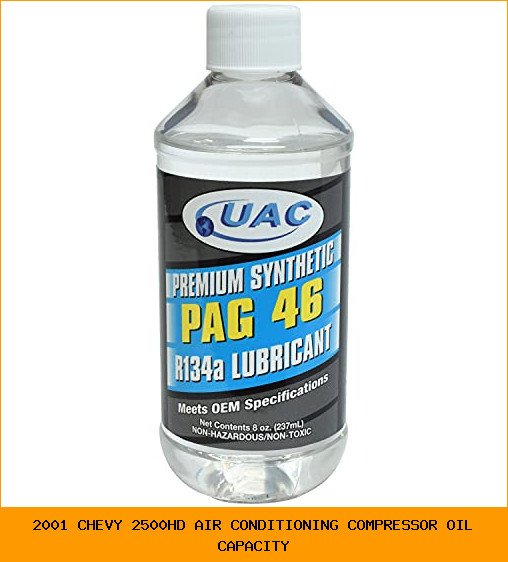
In this guide
- Universal Air Conditioner RO 0900B…
- What’s Compressor Oil and Why Does…
- Exact Oil Capacity for the 2001 Chevy 2500HD
- How to Check and Refill A/C Compressor Oil
- Common Issues from Low Compressor Oil
- Which PAG Oil Type Does Your Chevy Need?
- Maintenance Tips for a Cool 2001 Summer
- Frequently Asked Questions
- What to Remember
Your 2001 Chevy 2500HD’s A/C starts blowing warm air halfway through summer. You grab a recharge kit from the auto parts store, hook it up, and nothing changes. Maybe you even add a full can of oil – and now the compressor sounds like a coffee grinder. Sound familiar? I’ve seen this exact mistake dozens of times. The problem isn’t the refrigerant. It’s the 2001 Chevy 2500HD air conditioning compressor oil capacity. Get that wrong and you’ll either starve the compressor or hydro-lock it. Neither ends well.
This guide walks you through the exact oil capacity for your truck, the right PAG oil type, how to check it, and what happens when the level’s off. You’ll walk away knowing exactly what your A/C needs and how to avoid butchering a simple job. No fluff, no guesswork.

UAC
Universal Air Conditioner RO 0900B Refrigerant Oil
Fit type: Vehicle Specific;Fit Type: vehicle specific
Buy on AmazonIf you’re planning to replace a compressor or just flush the system, you’ll need a bottle of Universal Air Conditioner RO 0900B Refrigerant Oil. This is a UAC-branded PAG oil that matches GM’s factory fill spec. It comes pre-measured, so you don’t have to eyeball ounces. Keep it on hand – it’s cheap insurance against a seized compressor.
What’s Compressor Oil and Why Does Capacity Matter?
Air conditioning compressor oil is not engine oil. It’s a special lubricant called PAG (polyalkylene glycol) oil. It does three things: lubricates the compressor’s internal parts, helps seal the piston rings, and carries heat away from moving components. Without enough oil, the compressor wears out fast. Too much oil, and it can’t pump refrigerant effectively – plus excess oil can slug the compressor and lock it up.
Why ‘Capacity’ Isn’t a Simple Number
Your 2001 Chevy 2500HD’s A/C system has an air conditioning compressor oil capacity that depends on which parts are replaced. The total system holds oil distributed across the compressor, condenser, evaporator, and accumulator. If you only swap the compressor, you don’t dump 8 ounces into the new unit – most of that oil stays in the other components. The exact amount you add changes based on how much you drained out and what parts you changed.
Exact Oil Capacity for the 2001 Chevy 2500HD
Here’s the number that matters: Total system oil capacity for a 2001 Chevy 2500HD with the 6.0L or 8.1L gas engine is 8 fluid ounces (237 mL) of PAG 46 or PAG 100 oil. Wait – two different viscosities? Yes, and this is where many people get tripped up. GM originally specified PAG 46 for most of their trucks in that era. But aftermarket compressors often require PAG 100. Check the label on your new compressor or call the manufacturer. Using the wrong viscosity can still lubricate but may cause noise or reduced efficiency.
Oil Amounts for Common Repair Scenarios
| Situation | Oil to Add (ounces) | Notes |
|---|---|---|
| New compressor only (system otherwise full) | 4 to 5 | Drain oil from old compressor, measure it, then add same amount to new one. Typical is 4–5 oz. |
| New compressor + accumulator + orifice tube | 6 | Accumulator holds ~1 oz, so add that much extra. |
| Complete system flush (all components dry) | 8 | Full system capacity. Distribute: 3 oz in compressor, 2 in condenser, 2 in evaporator, 1 in accumulator. |
| Replacing condenser only | 1 to 2 | Condenser traps about that much. Pour into the inlet before installing. |
| Replacing evaporator only | 2 to 3 | Evaporator core holds more than you think. |
These numbers come from GM service bulletins and real-world experience. I always err on the side of adding a little less – you can top off later if needed. Overfilling is a pain to fix.
How to Check and Refill A/C Compressor Oil
You can’t check compressor oil with a dipstick like engine oil. The A/C system is sealed. To measure or add oil, you need to open the system (which requires recovering the refrigerant first – never vent it to atmosphere). Here’s the process for a compressor swap.
Step 1: Recover Refrigerant
Use an A/C recovery machine. If you don’t own one, most shops do this for $30–50. Don’t skip it – R134a is a greenhouse gas and illegal to vent.
Step 2: Drain Old Compressor Oil
With the old compressor off the truck, turn it upside down over a graduated cup. Let it drain for 10 minutes. Measure what comes out. This tells you how much was circulating. Typically 4–5 oz comes out of a worn compressor.
Step 3: Add Oil to New Compressor
Pour the exact same amount of fresh PAG oil into the new compressor. Rotate the clutch hub by hand a few times to spread the oil inside. This primes the internal seals.
Step 4: Pour Extra Oil Into the Suction Hose
If you’re replacing other components, add the extra oil from the table above directly into the suction hose (low side) before connecting everything. The oil will flow into the system when you start the engine.
Common Issues from Low Compressor Oil
Low oil doesn’t cause a refrigerant leak, but it causes compressor death. Here’s what to watch for.
Compressor Noise
A low-oil compressor makes a metallic rattling or clattering sound, especially at idle. The internal swash plate and pistons lose lubrication and start wearing metal-to-metal. If you hear this, stop the engine. Continuing will send metal debris through the entire system – then you’re replacing everything.
High Discharge Pressure
Insufficient oil means less heat transfer inside the compressor. The discharge line can get abnormally hot. You might see high side pressures above 300 psi on a warm day. That’s a red flag.
Compressor Seizure
The final stage. The compressor locks up, the belt stops turning, or the clutch slips. At this point, you need a new compressor, a full system flush, and new accumulator. A $50 oil bottle could have prevented a $1,200 repair.
Which PAG Oil Type Does Your Chevy Need?
GM originally called for PAG 46 in most 2001 full-size trucks. But aftermarket compressors – especially the popular Sanden and Delphi models – often recommend PAG 100. Why the difference? The newer compressors use tighter clearances and different seal materials. Using PAG 46 in a unit designed for 100 can cause higher operating noise and slightly reduced life.
How to Decide
- If you’re using an ACDelco factory replacement compressor (part number 15-20231 or similar), stick with PAG 46.
- For aftermarket compressors from Four Seasons, UAC, or GPD, check the box. Most say ‘Use PAG 100’ or include a bottle.
- When in doubt, call the manufacturer with your compressor’s model number. A 2-minute phone call saves a redo.
The UAC RO 0900B is PAG 46. If your aftermarket compressor calls for PAG 100, look for UAC’s 100-grade oil or a generic brand. Never mix different viscosity oils – it’s not recommended.
Maintenance Tips for a Cool 2001 Summer
Get the oil right, and your A/C will last years. But oil alone isn’t the whole story. Here’s what else matters for the 2001 Chevy 2500HD.
Check Refrigerant Charge
Proper oil level assumes proper refrigerant charge. This truck takes 36–40 ounces of R134a depending on cab configuration (regular cab vs crew cab). Too little refrigerant and the oil won’t circulate; too much and pressures spike. Use a manifold gauge set, not a can with a pressure gauge.
Inspect the Accumulator
The accumulator (drier) on these trucks has a desiccant bag that degrades over 20+ years. If you open the system for any reason, replace the accumulator. It costs $20 and prevents moisture damage that kills compressors.
Clean the Condenser
Chevy HD trucks have a massive condenser in front of the radiator. Bugs, mud, and debris block airflow. A simple garden hose spray (gentle, not high pressure) cleans it. Better airflow means lower head pressure and less wear on the compressor.
Frequently Asked Questions
How many ounces of oil does a 2001 Chevy 2500HD compressor hold?
The total system holds 8 ounces. The compressor itself, when new and empty, needs between 4 and 6 ounces depending on whether other components are replaced. Measure what came out of the old compressor and put that same amount in the new one.
Can I use any PAG oil in my Chevy truck?
No. Use PAG 46 for factory GM compressors and PAG 100 for many aftermarket units. Using the wrong viscosity won’t destroy the compressor immediately, but it can cause noise and reduce efficiency. Check the compressor’s label or manual.
What happens if I put too much oil in the A/C system?
Excess oil pools in the evaporator and condenser, reducing heat transfer. You’ll get warmer vent temps and higher discharge pressure. In extreme cases, oil slugs the compressor and locks it up. If you overfilled, drain some from the compressor or flush the system and start over.
Do I need to add oil when recharging R134a?
Only if you know the system is low on oil – for example, after a component replacement or a large leak that sprayed oil. Most recharge cans contain a small amount of oil, but it’s rarely enough. If you just top off a system that’s low on refrigerant, adding extra oil can overfill. When in doubt, recover, check oil, and recharge with the correct amount.
How do I know if my compressor has enough oil without draining it?
There’s no quick dipstick method. The only reliable way is to recover refrigerant, remove the compressor, and pour out the oil. Some technicians use a sight glass on the compressor housing, but few Chevy HD compressors have one. If the A/C cools well and the compressor runs quietly, oil level is likely fine.
What to Remember
- Total system oil capacity for a 2001 Chevy 2500HD is 8 fluid ounces – no more, no less.
- When replacing the compressor alone, add the same amount of oil that drained from the old one (usually 4–5 oz).
- Use PAG 46 if you have a factory GM compressor; use PAG 100 if the aftermarket compressor says so.
- Never top off oil without measuring. One extra ounce can cause warm air or a dead compressor.
- Replace the accumulator whenever you open the system – moisture kills compressors faster than low oil.
- Keep a bottle of UAC RO 0900B or equivalent in your garage. It’s cheap and ensures you don’t grab the wrong oil in a rush.
- If you hear noise or see high pressures, stop and check oil before the compressor grenades.
Getting the 2001 Chevy 2500HD air conditioning compressor oil capacity right is a simple task that separates a $50 fix from a $1,200 repair. Measure twice, pour once, and your A/C will keep you cool for another decade.

Eng. Kamrul Islam
Founder and product researcher
Engineer with more than 10 years of experience researching and selling products on Amazon, including his own brand on Amazon Australia. He compares specs, standards, sellers and owner feedback.
All guides by Eng. Kamrul IslamMore in ac & compressor oils
All 193 guides How-to
How to Add Oil to an Air Conditioning System (Without Ruining It)
You hooked up a recharge kit, topped off the refrigerant, and the air still blows warm. Or worse,…
 Guide
GuideThe Right Way to Lock in a Hairstyle Without Sacrificing Shine or Heat Protection
You spent 20 minutes with a curling iron, got the waves just right, and sprayed your hair. Then…
Can I Put Air Freshener In My Ac Unit?
Air conditioning units are essential for maintaining comfort during hot weather, but they can sometimes emit unpleasant odors.…