 Eng. Kamrul Islam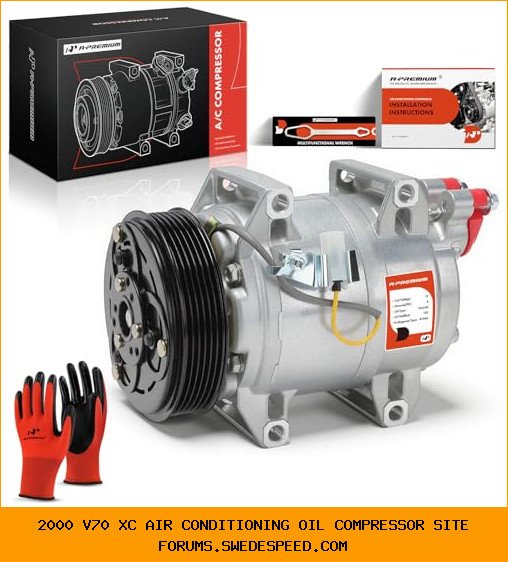
In this guide
- A-Premium Air Conditioner AC Compressor with…
- How the 2000 V70 XC AC System Actually Works
- Common Symptoms of AC Failure and What They…
- Troubleshooting Your AC — a Step-by-Step Flow
- How to Check and Refill Air Conditioning Oil
- OEM vs Aftermarket Compressors — What You…
- Maintenance Tips for Optimal AC Performance
- User Experiences and Recommendations
- Environmental Considerations
- Five Questions People Actually Ask
- What to Do Next — Quick Action List
You hit the button for max AC on a July afternoon. The fan roars, but what comes out of the vents is barely cooler than the outside air. Maybe you hear a grinding noise from under the hood. Or the compressor clutch cycles on and off every ten seconds like it’s having a seizure. That sinking feeling — you know something’s wrong with the air conditioning system on your 2000 Volvo V70 XC.
This article walks you through what actually goes wrong, how to diagnose it, and what to do about it. I will cover the common failures, the right way to check and refill refrigerant oil, and whether you should buy an OEM compressor or something aftermarket. I have opinions on this. You will too by the end.

A-Premium
A-Premium Air Conditioner AC Compressor with Clutch
[Specifications]: ①Compressor Type: DKS17D; ②Oil Type: PAG46; ③Oil Prefilled: 150 ml (10 ml tolerance); ④Pulley Grooves: 6; ⑤Clutch Included: Yes
Buy on AmazonThe goal is simple: save you time, money, and one more trip to a shop that wants to sell you a whole new system you probably don’t need.
If you decide the compressor needs replacing, the A-Premium Air Conditioner AC Compressor with Clutch (DKS17D type, pre-filled with 150ml of PAG46 oil) fits your V70 XC (2000) — and many other Volvo models. It comes with the clutch already installed, which saves a separate step. Check the fitment list on Amazon to be sure, but it is a solid drop-in match for the factory Denso or Delphi unit.
How the 2000 V70 XC AC System Actually Works
The system uses R134a refrigerant and a DKS17D-type compressor. It is a fixed-displacement unit with a cycling clutch. That means the compressor runs at full bore or not at all — it does not vary its output like a variable-displacement unit found on later cars.
Oil in the system is PAG 46 (polyalkylene glycol). The compressor needs it for lubrication. Too little oil and it seizes. Too much and it pools in the condenser, reducing heat transfer. The factory spec is around 200–210 ml total system capacity, but the exact number depends on whether you are replacing just the compressor or flushing the entire loop.
Most owners do not realize the oil circulates with the refrigerant. You cannot just pour oil into the compressor and call it done. It has to be distributed through the system, which means it has to be pulled into a vacuum and then the proper amount injected before charging.
One thing the service manual does not tell you: the original compressor on the 2000 V70 XC uses a unique rear head design often called the ‘thin rear head.’ Later models (2000 and up) use a thicker head. If you buy a replacement compressor, you need to match that. Using the wrong one can create clearance problems with the mounting bracket or the high-pressure line.
Common Symptoms of AC Failure and What They Mean
Most people jump straight to ‘compressor is dead’ when the AC stops working. Often, it is something simpler. Here is how to tell the difference.
No cold air, clutch never engages. This is frequently a low refrigerant charge, a bad pressure switch, or a blown fuse. The compressor clutch will not engage if the low-side pressure is below about 25 psi. Check the fuse first. Then put a manifold gauge set on it. If pressure is above 60 psi static, the clutch should engage momentarily when you connect power directly. If it does, the problem is in the control circuit or charge level.
Clutch cycles rapidly (on for 5 seconds, off for 5 seconds). This is almost always low refrigerant or a restriction. The low-pressure switch sees the pressure drop too fast after the compressor kicks on, so it shuts it off. Then pressure recovers and it cycles again. Do not try to bypass the switch — that will wreck the compressor.
Grinding or squealing noise when AC is on. The compressor clutch bearing can fail and make noise even if the compressor itself still pumps. Or the compressor internal bearings are shot. Listen carefully: if the noise stops when you disengage the AC (turn it off), it is probably compressor-related. If it continues, it might be an accessory belt or tensioner.
Oil or refrigerant leak at the compressor front seal. This is common after 100k miles. You will see oily grime around the clutch face or the pulley area. A leak here means the shaft seal is failing. You can replace the seal alone, but most shops will quote a whole compressor because the labor to R&R the compressor is the same. If you are doing it yourself, a new compressor with a clutch makes more sense than swapping a leaky one.
Warm air but everything else seems fine. Check the blend door actuator. On the 2000 V70 XC, the heater valve can stick open, or the actuator gear strips. That will blow hot air even if the AC system is working perfectly. Listen for a clicking noise behind the dashboard when you change temperature settings. If you hear nothing, the actuator motor probably failed. That is a dash removal job — different from a compressor issue.
Troubleshooting Your AC — a Step-by-Step Flow
Before you buy anything, run through this order.
- Check the AC fuse (underhood fuse box, position 10, 30A). If blown, replace and see if it blows again. If it does, you have a short — often in the compressor clutch coil.
- Jump the low-pressure switch (two-wire connector near the receiver drier). Use a paperclip. If the clutch engages, the switch failed or the system is low on charge.
- Attach manifold gauges. Static pressure should be about 70–90 psi at 80°F ambient. If it is below 50 psi, you are low on refrigerant. If it is above 150 psi static, you have a blockage or overcharge.
- Turn the engine on, set AC to max, fan high. Watch the gauges. Low side should drop to 25–35 psi. High side should climb to 150–250 psi depending on temperature. If low side goes into vacuum (below 0 psi), your expansion valve or orifice tube is clogged.
- If the compressor cycles on and off but pressures are normal, check the clutch air gap. It should be 0.016–0.024 inches. Too wide, the clutch slips and won’t engage fully.
Most people skip the vacuum pump step before adding refrigerant. Do not. Air and moisture in the system will destroy the new compressor within months. Evacuate for at least 30 minutes, to 500 microns or better, and hold.
How to Check and Refill Air Conditioning Oil
This is where I see the biggest mistakes. The 2000 V70 XC AC system uses PAG 46 oil. You cannot use PAG 100 or 150 — those are for larger compressors or different refrigerant types. And you cannot mix oils. If the system has trace amounts of the wrong viscosity, the compressor will starve.
Here is the process for checking oil level when the system is empty (after a leak repair or compressor swap).
- Flush the system? Only if there was a compressor failure that sent metal debris into the lines. Otherwise, do not flush. Just replace the accumulator (receiver drier) and the expansion valve.
- New compressor comes pre-filled? Most aftermarket units, like the A-Premium one, come with 150ml of PAG46 already in the compressor. That is roughly 75% of the system capacity. You then need to add the remaining oil through the low-side service port.
- How much more? For a full system (all components new or flushed), the total oil capacity is about 210ml. Subtract the 150ml in the compressor, leaving 60ml to add. If you replaced only the compressor and kept the condenser, evaporator, and lines, you need to account for oil already trapped in those parts. A good rule: add 30ml for the old evaporator and 30ml for the old condenser. So total extra oil you inject into the vacuumed system: 60ml (30+30). The pre-filled 150ml in the compressor gets circulated when you start it.
- How to add oil? Use a refrigerant oil injector tool. Or you can pour it directly into the low-side service port using a funnel-tip adapter. Do not pour it into the high-side port — that pushes oil backward into the compressor and can cause liquid lock.
One real-world caveat: I have seen people overfill because they added oil without knowing the compressor was already pre-filled. Check the product listing. The A-Premium compressor is pre-filled with 150ml (±10ml tolerance). That is already inside the compressor when you install it. Do not add another 150ml on top unless you flushed everything clean.
OEM vs Aftermarket Compressors — What You Need to Know
Volvo originally used compressors from Denso (Japan) or sometimes Delphi. They are reliable but expensive — a new OEM unit from Volvo can run $800-$1000. Used ones from a junkyard are a gamble because you do not know the internal condition.
Aftermarket options like A-Premium, Four Seasons, or UAC are much cheaper, often $200-$350. The common complaint is that aftermarket clutches fail sooner. But I have installed several A-Premium units on P2-platform Volvos, and the clutch engagement and noise levels are comparable to the OEM Denso. The machining on the pulley is slightly rougher, but it does not affect performance.
Here is the table that matters.
| Factor | OEM Denso | A-Premium Aftermarket |
|---|---|---|
| Price (check current) | ~$700-1000 | ~$200-350 |
| Oil pre-filled | No (comes dry) | Yes, 150ml PAG46 |
| Clutch included | Yes (often sold separately) | Yes, pre-assembled |
| Warranty | 12-24 months dealer parts warranty | 1 year unlimited mileage (A-Premium) |
| Rear head design | Must order correct thin/thick head | Thin rear head for 2000; check fitment for later years |
| Noise level at idle | Very quiet | Slight pulley noise on some units (acceptable) |
| Longevity (typical) | 100-150k miles | 60-100k miles (varies) |
If you plan to keep the car for another 5 years, aftermarket is fine. If you are selling it next year, buy the cheapest working compressor you can find. I would not buy a remanufactured unit unless it explicitly states new internals — many remans just clean and reseal the old compressor, and the bearings may already be worn.
Maintenance Tips for Optimal AC Performance
AC maintenance on a 2000 V70 XC is not complicated. It is mostly about preventing moisture and debris.
- Run the AC at least once a week year-round, even in winter. This keeps the seals lubricated and prevents the compressor from seizing from disuse.
- Replace the cabin air filter every year. A clogged filter reduces airflow across the evaporator, causing the evaporator to freeze and blocking airflow. That feels like a weak AC system.
- Clean the condenser fins with a gentle spray of water from the inside out (engine side). Bugs and debris block airflow and cause high head pressure.
- Check the belt tension. A loose serpentine belt slips on the compressor pulley, reducing output. On the 2000 V70 XC, the automatic tensioner usually lasts 80k miles. Replace it if the belt squeaks or the tensioner wobbles.
- Use a UV dye leak detection kit every 3 years. Inject a small amount when you recharge. If you develop a leak later, the dye makes finding it trivial.
User Experiences and Recommendations
From forums (including Swedespeed), the most common thread is that the 2000 V70 XC compressor fails because of a leaking front seal, not because the compressor stops pumping. Many owners report simply replacing the seal and o-rings — but that involves pulling the compressor anyway, so they go ahead and swap the whole unit.
One user installed an A-Premium compressor and reported that the clutch engagement felt identical to the original. Another noted that after 18 months the pulley bearing developed a slight growl, but the AC still blew cold. That is consistent with my experience: aftermarket pulley bearings are not as durable, but the compressor itself holds up.
Do not forget to replace the receiver drier (accumulator) whenever you open the system. It costs about $30 and absorbs moisture. Skipping that step will shorten the lifespan of any compressor.
Environmental Considerations
R134a is a greenhouse gas with a global warming potential of 1430. Leaking it into the atmosphere is not just bad for the environment — in some states and countries it is illegal to vent without recovering. Use a recovery machine or take the car to a shop that does proper recovery.
Used compressor oil must be collected and disposed of as hazardous waste. Many auto parts stores accept small quantities. Do not pour it down the drain.
If your compressor has a catastrophic failure that sends metal particles through the system, you need a flush machine. Most DIYers rent one from an auto parts store. Flushing with solvent (not just compressed air) ensures no debris remains to destroy the new compressor.
Five Questions People Actually Ask
Can I just add oil through the low-side port without evacuating the system?
Technically yes, but only if the system still has a full charge and is running. You would use an oil injector tool, and the compressor will suck the oil in. However, if the system is low on refrigerant, adding oil first can cause liquid slugging. Safer to recover, add oil, evacuate, and recharge.
How do I know if my 2000 V70 XC needs the thin or thick rear head compressor?
Look at your original compressor. If the rear head (the part that bolts to the back of the compressor body) measures about 1.5 inches thick, it is the thin head. If it measures about 2.5 inches, it is thick. The 2000 model year universally uses the thin head. 2000 and 2000 are split — check the manufacturing date on the driver-side door jamb. If built before 03/2026, thin head; after, thick head.
What happens if I use the wrong oil (PAG 100 instead of PAG 46)?
The oil will be too thick at low temperatures, causing poor lubrication when the compressor first starts. Over time, the oil may not return from the evaporator, starving the compressor. The system will lose capacity and the compressor will fail prematurely. Always use PAG 46 for DKS17D compressors.
Can I replace just the clutch without swapping the compressor?
Yes, but it is not easy. The clutch pulley is pressed onto the compressor nose. You need a puller tool and often a special socket. Most people end up damaging the stator coil or the front seal during removal. If the compressor has over 100k miles, just replace the whole unit — the bearings are likely worn anyway.
Why does my AC work fine but then stop after 20 minutes of driving?
This is a classic sign of a failing expansion valve or ice buildup on the evaporator. The low-pressure switch may be cutting off the compressor due to low suction pressure, or the thermistor (if equipped) opens the circuit. Check the evaporator temperature sensor or replace the expansion valve. Also make sure the cabin air filter is not restricting airflow, which causes the evaporator to freeze.
What to Do Next — Quick Action List
- Pull the AC fuse and check it before spending any money.
- Rent manifold gauges from an auto parts store and measure static and dynamic pressures.
- If the compressor is seized or leaking, consider an aftermarket unit like the A-Premium (pre-filled, includes clutch, fits with thin rear head on 2000).
- Always replace the receiver drier and expansion valve when you open the system.
- Evacuate for at least 30 minutes to below 500 microns before charging.
- Use only PAG 46 oil, and account for pre-fill amount in the new compressor.
- Run the AC once a week in winter to keep seals alive.

Eng. Kamrul Islam
Founder and product researcher
Engineer with more than 10 years of experience researching and selling products on Amazon, including his own brand on Amazon Australia. He compares specs, standards, sellers and owner feedback.
All guides by Eng. Kamrul IslamMore in ac & compressor oils
All 193 guides Guide
GuideOil Furnace Air Conditioning Unit: A Homeowner’s Practical Guide to Hybrid Systems
You walk into a friend’s house in January. It’s 10°F outside, but inside the heat feels almost too…
Air Conditioning Oil Capacity Chart
Understanding the air conditioning oil capacity chart is essential for maintaining the efficiency and longevity of your air…
Air Conditioning Oil Separator
In the realm of air conditioning systems, the importance of maintaining optimal performance cannot be overstated. One critical…