 Eng. Kamrul Islam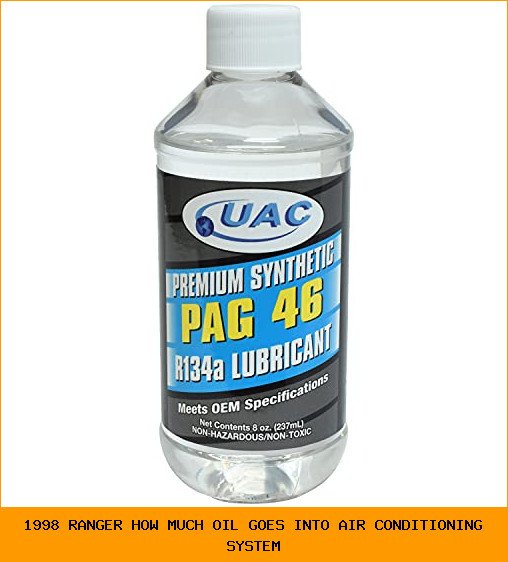
In this guide
- Universal Air Conditioner RO 0900B…
- What Refrigerant Oil Does and Why It Matters
- How Much Oil Does the 1998 Ranger A/C System…
- Step-by-Step Guide to Adding Refrigerant Oil
- Signs of Low Refrigerant Oil in Your A/C…
- Best Practices for Maintaining Your 1998…
- Frequently Asked Questions
- Quick Takeaways for Your 1998 Ranger
You’re sitting at a stoplight in your 1998 Ford Ranger, the summer heat pressing through the windshield. The A/C blows warm — not cold, not cool, just expensive air. You’ve checked the refrigerant pressure, but the system still doesn’t chill. Maybe the compressor is cycling too fast, or the clutch keeps kicking in and out. You’ve heard that adding oil might help, but you don’t want to dump in the wrong amount. That’s where this article comes in.
I’ll walk you through exactly how much oil the 1998 Ranger’s A/C system needs, why that number matters, and how to add it without wrecking your compressor. You’ll also learn to spot when oil is low before it starts grinding metal parts together. By the end, you’ll know whether you’re looking at a simple top-off or a bigger problem — and you’ll have the numbers to back up your decision.

UAC
Universal Air Conditioner RO 0900B Refrigerant Oil
Fit type: Vehicle Specific;Fit Type: vehicle specific
Buy on AmazonThis isn’t generic advice. It’s specific to the 1998 model with the factory R134a system. No guesswork, no ‘add a little until it feels right.’ We’re using the factory spec that Ford stamped in the service manual.
If you need a reliable oil to refill the system, the Universal Air Conditioner RO 0900B Refrigerant Oil is a vehicle-specific PAG oil that matches the OEM spec. It’s a straightforward replacement that works with the R134a system in your 1998 Ranger. No mixing, no guesswork — just drain and fill to the correct volume.
What Refrigerant Oil Does and Why It Matters
The oil in your A/C system isn’t there to make the air colder. It lubricates the compressor piston, bearings, and seals. Without it, metal grinds on metal. Within minutes, the compressor can seize. Then you’re replacing a compressor, drier, and orifice tube — a $500+ job.
But too much oil is just as bad. Excess oil sits in the evaporator and condenser, coating the heat transfer surfaces. The system will still blow cold, but it’ll take longer and work harder. Over time, the compressor may lock up from fluid hammer.
So the right amount is critical. The 1998 Ford Ranger uses R134a refrigerant. Unlike older R12 systems, the oil is polyalkylene glycol (PAG) oil. PAG oil is hygroscopic — it absorbs moisture from the air. Leave an open bottle overnight, and the oil is ruined. That’s why you seal the container immediately.
Different compressor types need different oil viscosities. The 1998 Ranger came with either a Ford FOT-116 compressor or a Nippondenso compressor. Both use PAG 100 oil. Do not substitute mineral oil from an R12 system. It won’t mix with R134a, and the compressor will starve for lubrication.
How Much Oil Does the 1998 Ranger A/C System Hold?
Here’s the number you came for: the total system oil capacity is 7.0 fluid ounces (207 ml). That’s for a completely dry system — brand-new compressor, new condenser, new evaporator, new lines. This is the factory spec from Ford’s 1998 Ranger service manual.
But here’s the nuance: you never put all 7 ounces in at once unless everything is new. Most repairs are partial. If you replace just the compressor, you need to add only the amount that was lost — typically 1.5 to 2.0 ounces. The compressor itself holds about 1.5 ounces of that 7-ounce total. The rest circulates through the rest of the system.
If you’re just topping off after a leak repair, add maybe 2 ounces at most. Too much and the system won’t perform. Too little and the compressor dies. The table below breaks it down for common service scenarios.
| Situation | Oil to Add (ounces) | Notes |
|---|---|---|
| Full system recharge (all components new and flushed) | 7.0 | Ensure system is vacuum-pulled for 30 minutes minimum |
| Compressor replacement only | 1.5 to 2.0 | Drain old oil from the new compressor first; add the difference |
| Evaporator or condenser replacement | 1.0 to 1.5 | Oil may have pooled in the old part; measure what drains out |
| Minor leak repair (no component swap) | 1.0 to 2.0 | Add based on how much refrigerant was lost — estimate 1 oz per 8 oz of R134a lost |
| Flushing the entire system | 1.0 to 1.5 | Flushing solvent removes oil; you must add new oil after |
No table can cover every situation. The best practice is to measure the oil that comes out of each component during disassembly. If you drain 2 ounces from the old compressor, add 2 ounces to the new one. If you lose track, stick with the factory spec of 7 ounces total, but never exceed 7.5 ounces.
Step-by-Step Guide to Adding Refrigerant Oil
Adding oil requires that the system be open — you can’t inject oil through a low-side port on a fully charged system. The oil needs to be added during reassembly before the vacuum pump pulls a deep vacuum. Here’s the process.
- Disconnect the battery negative terminal. Safety first. The compressor clutch can engage if the ignition is on.
- Recover remaining refrigerant using a certified recovery machine. Do not vent R134a to atmosphere — it’s illegal and harmful.
- Disconnect the lines at the compressor inlet and outlet. Expect some oil to drip. Catch it in a clean container and measure it.
- Install the new or repaired compressor. Before tightening the bolts, pour the measured oil directly into the compressor suction port. Use a funnel with a fine mesh filter to keep debris out.
- Rotate the compressor clutch hub by hand about 10 turns. This distributes the oil across the internal surfaces and prevents dry start.
- Reconnect all lines and tighten to factory torque specs (typically 30-40 ft-lbs on the manifold bolts).
- Install new drier and orifice tube if you replaced those components. The drier absorbs moisture; it should be replaced whenever the system is opened.
- Pull a vacuum for at least 30 minutes. A deep vacuum (500 microns or lower) boils off any moisture. If the vacuum leaks down fast, you have a leak.
- Add refrigerant according to the under-hood sticker — usually 28 to 30 ounces of R134a for the 1998 Ranger.
- Start the engine with A/C on max. Let the system stabilize for 5 minutes, then check pressures. High side should be around 180-225 psi, low side 25-35 psi at 80°F ambient.
One warning: never add oil through the high-side port with the system running. The high-side pressure can force oil back into the can and cause a burst. Always add oil during assembly, when the system is open.
Signs of Low Refrigerant Oil in Your A/C System
Low oil doesn’t show up as a warning light or a code. You have to pay attention to how the system sounds and feels. Here are the tell-tale signs.
- Compressor noise. A grinding or chirping sound on startup. The compressor may struggle to turn, then suddenly kick in with a loud clunk. That’s metal-on-metal contact.
- Intermittent cooling. The system blows cold for a minute, then warm. The compressor may cycle off and on rapidly. Low oil causes the internal thermal overload to trip.
- Oil stain at connections. Look for a black, greasy residue around hose fittings, the compressor shaft seal, or the Schrader valves. That’s oil mixed with refrigerant leaking out.
- Burned smell from vents. When the compressor runs dry, the oil that’s left cooks. The smell is acrid and sweet — burnt PAG oil. If you smell this, stop using the A/C immediately.
- Weak or no cooling despite correct refrigerant charge. You’ve added R134a, pressures look normal, but air temperature only drops 10-15°F below ambient. Oil fouling in the condenser reduces heat transfer.
If you catch low oil early, you can often save the compressor by draining the system, adding the correct amount, and pulling a fresh vacuum. But if the noise has been going on for more than a few minutes of run time, the compressor bearings are likely scored. Replace the compressor, flush the lines, and start fresh.
Best Practices for Maintaining Your 1998 Ranger A/C
Keep the system running strong for years with these habits.
- Run the A/C at least once a week year-round. The seals need refrigerant and oil to stay pliable. Even in winter, run it for 5 minutes on the defrost cycle.
- Check the compressor clutch operation every spring. The clutch should engage within 1-2 seconds of turning on the A/C. If it delays or clatters, the air gap may need adjustment.
- Replace the drier every 3 years. The desiccant bag degrades over time. A saturated drier can’t absorb moisture, leading to acid formation and compressor failure.
- Monitor high-side pressure. If it climbs above 350 psi on a hot day (100°F+), the condenser is clogged or the cooling fan isn’t working. Fix that before the oil breaks down from heat.
- Use only PAG 100 oil marked ‘for R134a.’ Some aftermarket oils are PAG 46 or PAG 150 — both wrong for the Ranger. Check the label. The UAC RO 0900B is specified as PAG 100 and is a direct fit.
Frequently Asked Questions
Can I use any PAG oil in my 1998 Ranger A/C?
No. Use only PAG 100 viscosity. PAG 46 is too thin for the Ranger’s compressor, and PAG 150 is too thick — it won’t flow properly in the evaporator. The UAC RO 0900B is PAG 100 and matches the OEM spec. Stick with that.
How do I know if the previous owner added the wrong oil?
Symptoms include poor cooling, compressor noise, and a sweet, burned smell. If you suspect contamination, remove the compressor and drain the oil into a clear bottle. Correct PAG 100 is clear to light yellow. If it’s dark brown, greenish, or smells like burnt plastic, flush the system completely and replace the drier.
Do I need to add oil when I recharge the A/C after a small leak?
Yes, but only a small amount. For every 8 ounces of R134a lost, about 1 ounce of oil escapes with it. If you lost half the refrigerant (14 ounces), add 1.5 to 2 ounces of oil. If you only lost a couple of ounces, skip the oil addition — the system can run slightly low on oil without immediate harm.
Can I add oil through the low-side service port while the system is running?
Technically yes, but it’s risky. You need a special oil injector tool that screws onto a can of oil. The tool meters the oil into the suction line. Problem is, you have no idea how much oil the system already has. It’s far safer to open the system and measure.
What happens if I put too much oil in the A/C system?
The compressor can hydrolock — the oil fills the cylinder and prevents the piston from reaching top dead center. That can bend a connecting rod or break the valve plate. At best, cooling performance drops by 20-30% because oil coats the condenser tubes. Don’t exceed 7.5 ounces total.
Quick Takeaways for Your 1998 Ranger
- The factory oil capacity is exactly 7.0 ounces of PAG 100 oil for a completely dry system.
- When replacing only the compressor, add 1.5 to 2.0 ounces — not the full 7.
- Use only PAG 100 oil. Mineral oil or other viscosities will wreck the compressor.
- Add oil only when the system is open and before pulling a vacuum. Never inject oil into a charged system.
- Low oil symptoms include grinding noise, intermittent cooling, and a burned smell. Act fast to avoid a compressor replacement.
- Measure oil drained from old components to match the amount going into new ones. Guessing leads to trouble.
- The UAC RO 0900B is a clean, direct replacement oil that matches the factory spec — no mixing, no confusion.

Eng. Kamrul Islam
Founder and product researcher
Engineer with more than 10 years of experience researching and selling products on Amazon, including his own brand on Amazon Australia. He compares specs, standards, sellers and owner feedback.
All guides by Eng. Kamrul IslamMore in ac & compressor oils
All 193 guides Guide
GuideAdding Air Conditioning to Your Oil Furnace: What Actually Works
It’s July, the house is 85 degrees, and you’re standing next to your oil furnace wondering if it…
The 7 Best Air Conditioner Tea Tree Oils of 2026
Discover the top 7 air conditioner tea tree oils of 2026 that can refresh and revitalize your living…
What Is Ac Oil
Air conditioning systems are essential for maintaining comfort in homes, offices, and vehicles, especially in warmer climates. While…