 Eng. Kamrul Islam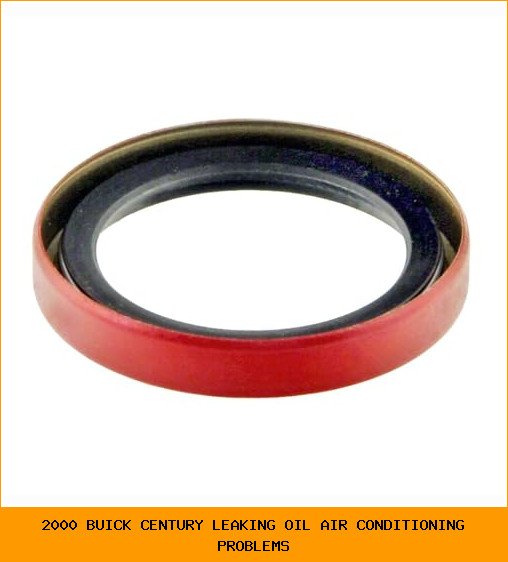
In this guide
- The Double Whammy: Oil Puddles and Warm Air
- ACDelco Gold 9845 Crankshaft Front Oil Seal
- Common Symptoms: What You’re Likely…
- Root Causes: Why the 3.1L V6 Does This
- Step-by-Step Diagnostic Process
- Repair Options and Costs: What to Expect
- Maintenance Tips to Avoid Future Headaches
- Environmental Considerations and Responsible…
- Frequently Asked Questions
- What to Do Next – Practical Steps
The Double Whammy: Oil Puddles and Warm Air
You pull into the driveway on a July afternoon. The cabin temperature in your 2000 Buick Century feels like an oven. The A/C blows barely cool air. And when you step out, there’s a fresh oil stain on the concrete. Two problems at once can feel overwhelming. But both are common on this generation of Century, and both are fixable without replacing the car.
This guide covers what causes the oil leak and the air conditioning failure, how to diagnose each, and what repairs actually cost. You’ll get the step-by-step process I use in my shop. I won’t sugarcoat the labor involved, but I’ll show you where you can save money and where you should hand off the work.

ACDelco
ACDelco Gold 9845 (19340263) Crankshaft Front Oil Seal
Designed, Engineered, Tested For GM Vehicles.
Buy on AmazonOne frequent source of oil leaks on the 3.1L V6 is the front crankshaft seal. The ACDelco Gold 9845 is a direct-fit replacement designed specifically for GM vehicles. It’s a low-cost part that can stop a messy leak if installed correctly. I’ve used this seal on dozens of these engines with no comebacks.
Common Symptoms: What You’re Likely Seeing
Oil leaks and A/C trouble often show up together because by 200,000 miles, seals and gaskets start failing at roughly the same time. Here’s what to look for.
Oil leak symptoms
- Drips on the ground under the front of the engine, usually near the harmonic balancer or oil pan.
- Burning oil smell when the engine is hot, especially after a long drive.
- Low oil level between changes, requiring top-ups every few weeks.
- Oil film on the underside of the engine or on the front sway bar.
Air conditioning failure symptoms
- Warm air from the vents even with the A/C turned to max cool.
- Compressor clutch does not engage when you press the A/C button.
- Hissing or bubbling sound from the dashboard (refrigerant leak inside the evaporator).
- Visible moisture or ice on the A/C lines under the hood (low refrigerant).
Root Causes: Why the 3.1L V6 Does This
The 2000 Buick Century uses the 3.1L V6 (Vin J). It’s a solid engine, but it has known weak points. Understanding them saves you from throwing parts at the car.
Oil leak sources
- Valve cover gaskets – They harden and shrink after 100k miles. Oil drips onto the exhaust manifold, causing smoke. Cheap parts, but the rear valve cover is a pain to reach.
- Front crankshaft seal – The seal wears out, especially if the harmonic balancer has wobbled. This is where the ACDelco Gold 9845 comes in. It’s a direct replacement, and the key is to install it squarely without scratching the seal surface.
- Oil pan gasket – Less common, but if the pan is rusted or the bolts backed off, you’ll see drips from the bottom of the engine.
- Intake manifold gaskets – The plastic coolant elbows crack, but oil leaks from the lower intake gasket are possible. Usually you’ll see coolant mixing with oil, not just oil.
A/C failure causes
- Refrigerant leak – The 2000 Century uses R134a refrigerant. Evaporator leaks are extremely common. The evaporator sits behind the dashboard, and moisture causes pinholes. A refrigerant leak is the number one cause of A/C failure on this car.
- Compressor issues – The compressor clutch can fail (gap too wide, coil burned out) or the compressor itself can seize. Often you’ll hear a squeal or the A/C blows cool then warm intermittently.
- Condenser malfunction – Road debris or corrosion can puncture the condenser, causing a leak. Look for oily spots on the radiator’s front face.
- Pressure switch failure – A faulty low-pressure switch prevents the compressor from engaging even if the system has refrigerant. Quick check: jump the switch terminals to see if the clutch kicks in.
Step-by-Step Diagnostic Process
You don’t need a full shop to figure out what’s wrong. These steps take about an hour and require basic tools.
Diagnosing the Oil Leak
- Clean the engine – Spray degreaser over the front and top of the engine. Rinse with a hose. Let it dry.
- Add UV dye – If you have a UV light, add a small bottle of UV dye to the oil. Drive the car for 20 minutes.
- Inspect with a flashlight – Look for the highest wet point. That’s your leak source. A drip at the crank pulley points to the front seal. Drip between the valve cover and head points to the gasket.
- Check PCV valve – A clogged PCV can cause crankcase pressure, pushing oil past the seals. Replace it if you’re already there.
Diagnosing the A/C
- Check compressor clutch – With the engine running and A/C set to max, watch the clutch. Does it spin? If not, check the fuse and relay first.
- Measure static pressure – Use a manifold gauge set. Connect to the low and high ports. At 80°F, static pressure should be around 80-90 psi on both sides. If it’s 40 psi or less, you have a refrigerant leak.
- Leak hunt – Use an electronic leak detector or UV dye (specific for A/C) to find the leak. Evaporator leaks are tricky – you’ll smell sweet coolant or see frost on the lines behind the glove box.
- Pressure switch test – Unplug the low-pressure switch and short the two terminals with a jumper wire. If the compressor now works, the switch is bad or the system needs refrigerant.
Repair Options and Costs: What to Expect
Prices vary by region, but here are realistic ranges for the 2000 Buick Century. Labor rates average $100–$130 per hour at independent shops. Dealers charge more.
| Repair | DIY Cost (parts only) | Shop Cost (parts + labor) | Difficulty |
|---|---|---|---|
| Front crankshaft seal replacement | $15–$25 (ACDelco Gold 9845) | $250–$400 | Medium – need harmonic balancer puller |
| Valve cover gasket job | $30–$50 | $200–$350 | Easy to medium (rear valve cover is tight) |
| A/C refrigerant recharge (R134a) | $40–$60 (can and hose) | $150–$250 (includes leak check) | Easy if no leaks |
| Compressor replacement | $200–$350 (new or reman) | $800–$1,200 | Hard – requires vacuum pump and flush |
| Evaporator core replacement | $50–$120 | $900–$1,500 | Very hard – entire dash removal |
Pro tip: If you’re doing the front crankshaft seal yourself, replace the harmonic balancer bolt and torque it to spec (104 ft-lbs). Many DIYers strip the threads and cause a bigger oil leak.
Maintenance Tips to Avoid Future Headaches
The 2000 Buick Century can reach 250k miles with decent maintenance. These few actions double the life of your A/C and engine seals.
- Run the A/C weekly even in winter. The compressor needs to circulate oil to keep the shaft seal from drying out. Five minutes per week prevents refrigerant loss.
- Change oil every 3,000 miles with a good conventional or synthetic blend. Old oil breaks down additives that keep seals pliable.
- Inspect the harmonic balancer at every oil change. If it wobbles or the rubber ring cracks, it’ll chew up the front seal fast.
- Keep the condenser clean – wash bugs and debris off the front of the radiator every spring. A blocked condenser causes high pressure and compressor strain.
- Use the correct refrigerant – R134a only. Do not mix with R12 or any stop-leak products. Stop-leaks often gum up the expansion valve and make future repairs more expensive.
Environmental Considerations and Responsible Refrigerant Handling
Refrigerant leaks aren’t just bad for your wallet – R134a has a global warming potential of 1,430. That means one pound leaking is equivalent to roughly 1,430 pounds of CO2. Proper handling matters.
If you DIY a recharge, don’t vent refrigerant into the atmosphere. It’s illegal under EPA Section 608. Use a recovery machine or take the car to a shop for evacuation. Many parts stores offer loaner recovery machines. Even a slow leak should be repaired, not topped off repeatedly.
For oil leaks, catch the drips with a pan. Used oil goes to an auto parts store for recycling. Never pour oil on the ground or in storm drains. In some states, a visible oil leak can fail a safety inspection.
Frequently Asked Questions
What refrigerant does a 2000 Buick Century use?
It uses R134a. The factory fill was about 28 ounces. You’ll find the spec sticker under the hood on the core support or radiator shroud. Do not use R12 or any hydrocarbon blend (like Red Tek) – they can damage the compressor seals and are not recommended by GM.
Can I drive the car with an oil leak and bad A/C?
Yes, but monitor the oil level. A slow leak (< 1 quart per 1,000 miles) is drivable. An oil leak that leaves a palm-sized puddle overnight means the engine could run low on oil. Fix it within a week. The A/C won't hurt the engine, but the longer you wait, the more moisture gets into the system, causing corrosion and higher repair costs.
Why does my A/C blow cold for a while then go warm?
That’s a classic sign of a refrigerant leak. The low-pressure switch cycles the compressor off when pressure drops. You may have a small leak that lets refrigerant out, then pressure builds back up temporarily. It could also be a failing compressor clutch – the coil weakens when hot. Use manifold gauges to confirm.
How hard is it to replace the front crankshaft seal myself?
Moderately hard if you’ve never pulled a harmonic balancer. You need a 3-jaw puller to remove the balancer, a special tool to install the seal straight, and a torque wrench to retighten the bolt. Expect 2–3 hours for a first-timer. The ACDelco Gold 9845 includes the seal only – you’ll need to buy a separate harmonic balancer puller. Watch two YouTube videos before starting. If you’re not comfortable, the shop cost is around $300, which is reasonable.
What’s the average cost to fix the A/C in a 2000 Buick Century?
Depends on the part that failed. A simple recharge with leak repair (O-rings, Schrader valve) runs $150–$300. A compressor replacement with full flush and recharge is $800–$1,200. An evaporator replacement (the most common internal leak) is $900–$1,500 because the entire dashboard has to come out. For many owners, that’s more than the car is worth. In that case, consider a used evaporator from a salvage yard or a professional A/C shop capable of doing the job in a day.
What to Do Next – Practical Steps
- Confirm the oil leak source by cleaning the engine and adding UV dye. Don’t replace random gaskets.
- Check the A/C pressure with a manifold gauge set. Anything below 50 psi static means a leak is present.
- If the front crankshaft seal is leaking, order the ACDelco Gold 9845 – it fits and lasts. Check the current price on Amazon before buying.
- For an evaporator leak, weigh the repair cost against the car’s value. A $1,200 A/C fix on a $2,500 car may not make sense. Consider bypassing the A/C entirely if you live in a mild climate.
- Never mix refrigerant types. Use pure R134a with a small amount of PAG oil (type compatible with your compressor).
- Keep a quart of oil in the trunk until the leak is fixed. Check oil level every other fuel fill.
- Run the A/C for at least five minutes each month in winter to keep the seals lubricated and prevent future compressor failure.

Eng. Kamrul Islam
Founder and product researcher
Engineer with more than 10 years of experience researching and selling products on Amazon, including his own brand on Amazon Australia. He compares specs, standards, sellers and owner feedback.
All guides by Eng. Kamrul IslamMore in ac & compressor oils
All 193 guidesIs Ac Harmful For Bronchitis?
As temperatures rise, many people rely on air conditioning (AC) systems to maintain a comfortable indoor environment. However,…
Will Ac Make A Cough Worse?
As temperatures rise and air conditioning units work overtime to keep us comfortable, many individuals may wonder about…
The 7 Best Air Conditioner Oil Cleaners of 2026
Finding the best air conditioner oil cleaner can greatly enhance the efficiency and longevity of your air conditioning…