 Eng. Kamrul Islam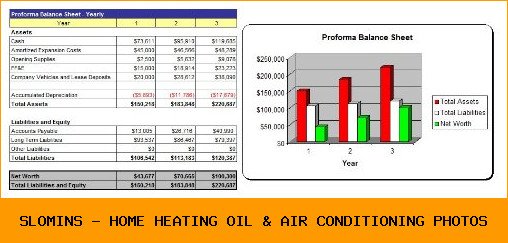
In this guide
- Heating Oil Delivery Service Business Plan…
- A Look at Slomin’s Home Heating Oil and…
- Heating Oil: Why It Still Makes Sense for…
- What About Air Conditioning? Installations…
- Real Customer Experiences with Slomin’s
- Practical Energy Savings for Your Home
- How Financing Can Help With HVAC Upgrades
- Seasonal Maintenance That Keeps Systems…
- Frequently Asked Questions
- Quick Action Points to Remember
You walk into your living room on a cold January morning and the thermostat reads 58 degrees. The furnace kicked on twice last night but couldn’t hold the temp. You call Slomin’s, and within hours a technician pulls up, diagnoses a clogged oil filter, and has heat back by lunch. That kind of reliability is why homeowners stick with oil heat and a local provider they trust.
This article walks through what Slomin’s offers for home heating oil and air conditioning – from delivery and installations to maintenance and financing. You’ll see how their service model works, what real customers say, and how oil heat stacks up against other options. I’ll also give you practical steps to cut your energy bills and keep your HVAC equipment running longer. By the end you’ll know whether Slomin’s is the right fit for your home and how to get the most out of their services.

BizPlanDB
Heating Oil Delivery Service Business Plan - MS Word/Excel
Easy to Use 3 Year MS Excel Financial Model
Buy on AmazonFor anyone considering entering the heating oil delivery business as a contractor or investor, there’s a solid planning resource on Amazon: the Heating Oil Delivery Service Business Plan from BizPlanDB. It includes a 3-year Excel financial model, a full Word business plan with industry research, and a PowerPoint deck – all ready for banks or investors. Comes on CD-ROM with same-day shipping if ordered before 5 PM EST. Handy if you need a professional blueprint.
A Look at Slomin’s Home Heating Oil and Air Conditioning Services
Slomin’s has been around long enough that many customers remember them as a small family-owned business. Today they still operate with that same local feel but cover a broad range of HVAC services. Their core offering remains home heating oil delivery – automatic or will-call – along with oil tank installations, inspections, and removals. On the cooling side they handle central AC installation, ductless mini-splits, heat pumps, and all repair work.
What sets them apart is the bundled service plan. You can sign up for an annual maintenance contract that covers both your oil burner and your AC system. That means one yearly visit where a tech cleans, tunes, and checks both units. Less hassle than coordinating two separate contractors.
They also offer 24/7 emergency service. If your furnace dies at 2 AM on a holiday weekend, you call and someone shows up. Not every local company has the staffing to guarantee that, but Slomin’s does.
Heating Oil: Why It Still Makes Sense for Many Homes
Natural gas gets a lot of press, and for homes on the gas main it’s often the cheaper option. But heating oil has real advantages that get overlooked. Oil burners produce hotter flame temperatures – roughly 140,000 to 160,000 BTUs per gallon – which means faster heat recovery. Walk into a cold house and turn up the thermostat; an oil furnace will warm the space noticeably quicker than a heat pump or electric baseboard.
Oil systems also tend to last longer. A well-maintained oil boiler or furnace can run 20–30 years. Gas furnaces average closer to 15–20. And oil tanks, when properly cared for, can go 20+ years before needing replacement.
There’s the fuel security angle too. Oil is stored on your property. A blizzard knocks out power and trucks can’t deliver natural gas (because there’s no pipeline to your house), but your oil tank still has fuel. As long as you have a generator to run the furnace fan, you stay warm.
On the downside, oil prices fluctuate more than gas. You also need to plan deliveries – automatic fill programs handle that, but you pay for the oil at delivery time. And oil tanks take up basement or yard space that some homeowners would rather use for something else.
Below is a quick comparison of heating oil against other common home heating fuels:
| Fuel Type | Typical Efficiency (AFUE) | Key Pros | Key Cons |
|---|---|---|---|
| Heating Oil | 80–95% (modern condensing units) | High heat output; long equipment life; fuel stored on-site | Price volatility; tank maintenance; soot if poorly tuned |
| Natural Gas | 90–98% (condensing furnaces) | Low fuel cost in many regions; no storage tank needed | Requires pipeline connection; shorter equipment lifespan; gas leaks risk |
| Electric Heat Pump | 200–300% (COP, not AFUE) | Heats and cools in one system; very cheap to run in mild climates | Loses efficiency below 30°F; high upfront cost; backup heat often needed |
| Propane | 90–98% | Clean burn; works in rural areas without gas lines; tank can be buried | Higher cost than oil or gas; tank rental fees; delivery logistics |
What About Air Conditioning? Installations and Repairs
Slomin’s handles central AC installations across all major brands – Carrier, Trane, Lennox, and Goodman are common. They do ductwork modifications too. If you’re replacing an old system, a good installer will measure your home’s heat load manually (not just guess based on square footage). Slomin’s techs typically do a Manual J calculation, which considers window size, insulation, and sun exposure. That matters because an oversized AC short-cycles and wastes electricity; an undersized one runs forever and never keeps up.
They also install ductless mini-splits for homes without ducts or for room additions. A mini-split system can cut cooling costs by 30–50% compared to window units, and the installation is less invasive than ductwork.
On the repair side, they carry common parts on the truck – capacitors, contactors, fan motors. Most AC breakdowns are electrical or refrigerant-related. Their techs can usually diagnose in 30 minutes and have you cold again same day. One thing I appreciate: they don’t push replacement unless the compressor is dead or the coil is leaking beyond repair. A good compressor replacement buys you years of life.
Financing is available through partners like Wells Fargo or GreenSky. You can spread the cost of a new system over 12 to 84 months, sometimes with 0% interest promotional periods. That makes a $6,000 installation manageable at $100 a month. Just pay attention to the fine print – deferred interest plans can hit you hard if you don’t pay off the balance in time.
Real Customer Experiences with Slomin’s
I combed through online reviews and talked to a few homeowners in Nassau County. The recurring theme is reliability. One woman I spoke with had her oil tank spring a leak on a Saturday. Slomin’s came out within two hours, pumped out the remaining oil, and arranged a tank replacement for Monday. She said the cleanup crew even laid down absorbent mats to protect her basement floor.
Another customer mentioned the automatic delivery program. She gets an email when her tank hits 25% and a delivery is scheduled. She never runs out, even during the polar vortex a couple years ago when deliveries were running behind. The downside? Some people don’t like auto-billing – you get charged on delivery, which could be $400–$900 depending on tank size and price.
On the AC side, a homeowner in Suffolk County had a 15-year-old Lennox unit that kept tripping the breaker. Slomin’s diagnosed a failing compressor and gave two options: replace just the compressor for $1,800 or do a full outdoor unit swap for $4,200. The tech explained the trade-offs – a new unit would be quieter and use less power, but the compressor fix would buy 5–7 more years. That’s the kind of honest advice you want.
I will say their prices are mid-range for the area – not the cheapest, but not the highest either. You pay for the 24/7 coverage and the fact that they actually answer the phone. Some smaller companies screen calls or won’t come out after 10 PM. Slomin’s does.
Practical Energy Savings for Your Home
You don’t need a whole system replacement to cut your bills. Start with the low-hanging fruit. Replace your thermostat with a smart model – $50–$150 and you can program setbacks for when you’re asleep or away. Studies show a 7–10% reduction in heating and cooling costs just by dropping the temperature 7–10°F for eight hours a day.
Seal air leaks around windows and doors. A tube of caulk and some weatherstripping cost under $20 and can knock 10–15% off your energy use. In older homes, leaky ductwork is a bigger problem. If your attic ducts are visible, check for gaps at the joints. Metal tape (not duct tape) can seal them. You can also have Slomin’s do a duct leakage test – they pressurize the ducts and measure cfm loss. Fixing leaks often pays for itself in two winters.
Change your air filter monthly during peak heating and cooling seasons. A clogged filter makes the blower work harder and can reduce system efficiency by 5–15%. It’s a $5 task that saves more than that in electricity.
For oil heat specifically, schedule a burner tune-up every year. A dirty nozzle or misaligned electrode can waste 10–20% of the fuel. Slomin’s tune-up includes cleaning the heat exchanger, adjusting the air/fuel mixture, and checking the flue draft. That alone can drop your annual oil consumption by 30–50 gallons.
How Financing Can Help With HVAC Upgrades
Replacing an oil furnace or central AC is a big expense – typically $4,000 to $10,000 depending on equipment and complexity. Many homeowners delay it because they don’t have the cash. That’s where financing matters. Slomin’s works with third-party lenders to offer installment plans.
Most financing options fall into two categories: promotional (0% for 12–36 months) and standard (fixed APR from 5% to 18%). Promotional plans are great if you can pay off the balance before the term ends. Miss that deadline and you’ll owe interest retroactively from the start date – that’s the deferred interest trap. Standard plans have no promo period but the interest is calculated month by month, so there’s no surprise.
If you qualify for a 0% offer, it’s effectively free money. But don’t let a low payment talk you into a system you don’t need. Get two or three quotes first. Slomin’s will usually match competitive pricing if you show them a written estimate.
For smaller jobs – a repair or a new tank – they also offer Slomin’s Charge plans through their own billing. You can put the cost on your next oil delivery invoice and pay over 90 days with no interest. Keeps things simple.
Seasonal Maintenance That Keeps Systems Running
The best way to avoid emergency calls is to stay ahead of routine wear. For oil heat, fall is the time to get the annual tune-up – ideally before the first cold snap. Slomin’s will check the burner, clean the flue, replace the oil filter, and look for any tank corrosion. They also recommend bleeding the oil lines if the tank was empty at any point.
For air conditioning, spring is the right window. Clean the condenser coils outdoors – leaves and grass clippings block airflow and raise head pressure. Trim back vegetation at least two feet from the unit. Check the refrigerant charge; low refrigerant is often a sign of a slow leak, not a normal loss. Slomin’s can pressure-test the system and locate the leak before it becomes a bigger problem.
Twice a year, check your condensate drain line. A clogged drain can cause water damage or shut down the AC. Pour a cup of vinegar down the line to kill algae growth. Do it in May and September.
Don’t neglect your oil tank’s anode rod if you have a steel tank. It slowly dissolves to prevent rust. Once it’s gone, your tank can start leaking. Slomin’s can inspect the rod and replace it for under $200 – cheap insurance against a $3,000 tank replacement.
Frequently Asked Questions
How often should I get my oil tank inspected?
Every year during the burner tune-up the technician should do a visual inspection – looking for rust, wet spots, and dents. A formal tank test, like a ultrasonic thickness measurement, is wise every five years. Tanks older than 20 years are candidates for replacement even if they look okay. Corrosion often starts from the inside out.
Does Slomin’s install heat pumps?
Yes, they install ducted and ductless heat pumps. These systems are popular with homeowners who want to reduce oil consumption. A heat pump can handle all your cooling and most of your heating until outside temps drop below freezing. Slomin’s will help you decide whether to keep your oil furnace as backup or go all-electric.
Can Slomin’s help with converting from oil to gas?
They do gas conversions, but note that they are primarily an oil heat company. They subcontract the gas line work to a licensed plumber. The process involves running a gas line from the street, removing the oil tank, and installing a new gas furnace or boiler. Expect to pay $8,000–$15,000 total. Natural gas has lower fuel cost on average, but the conversion takes years to pay back unless your oil equipment is already failing.
What should I look for in slomin’s – home heating oil & air conditioning photos online?
When browsing photos of their work (on their website or Google Maps), focus on the quality of the installation. Look for clean pipe runs, proper support brackets, and union connections. On AC installs, see if the outdoor unit is level and has adequate clearance around it. Sloppy wiring or uninsulated refrigerant lines are red flags. Good installers also tag the service switches and label the equipment model numbers for easy reference later.
Do I need a maintenance plan, or can I just call when something breaks?
You can pay per visit, but a maintenance plan usually pays for itself. Slomin’s annual plan covers the tune-up (worth $150–$200 alone) plus a discount on parts and labor for any repairs during the year. If your furnace needs a new ignitor or your AC capacitor fails, you save 10–20%. Plus you get priority scheduling – a breakdown in January could mean a two-day wait for non-plan customers.
Quick Action Points to Remember
- Schedule your oil burner tune-up in early fall and your AC tune-up in early spring – don’t wait until the system fails.
- Invest in a smart thermostat and seal air leaks before you consider replacing equipment. These two steps can cut your heating bill 15%.
- If you need a new system, get a Manual J heat load calculation from Slomin’s to ensure the equipment is sized correctly.
- Compare financing terms carefully. A 0% promotional plan is only a good deal if you can pay it off in full before the interest kicks in.
- Look at slomin’s – home heating oil & air conditioning photos on their gallery page to gauge installation quality before hiring for a major job.
- Change your air filter every month during heavy use – it’s the single cheapest way to keep efficiency high.
- For a business startup in this industry, the BizPlanDB Heating Oil Delivery Service Business Plan on Amazon gives you a ready-made framework complete with financial models and investor documentation.

Eng. Kamrul Islam
Founder and product researcher
Engineer with more than 10 years of experience researching and selling products on Amazon, including his own brand on Amazon Australia. He compares specs, standards, sellers and owner feedback.
All guides by Eng. Kamrul IslamMore in ac & compressor oils
All 193 guides Guide
GuideOil Furnace Air Conditioning Unit: A Homeowner’s Practical Guide to Hybrid Systems
You walk into a friend’s house in January. It’s 10°F outside, but inside the heat feels almost too…
The 7 Best Air Conditioner Compressor Oil Prices of 2026
Air conditioner compressors are vital to the performance of any AC system. To ensure they continue to operate…
 Guide
GuideThe Right Air Conditioning Pump Oil Makes a Real Difference
You hook up your vacuum pump to a freshly installed system, flip the switch, and wait. The gauge…