 Eng. Kamrul Islam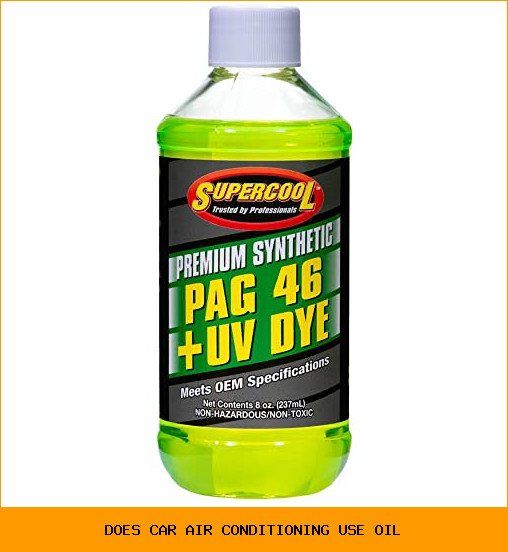
In this guide
- TSI Supercool P46-8D PAG Oil 46 Viscosity…
- The Short Answer: Yes, Car AC Systems Use Oil
- Why Oil Quality Matters for AC Performance…
- Signs of Oil Leaks in Your AC System
- How to Check and Maintain Oil Levels in Your…
- What to Do When You Need AC Oil: A Comparison
- Frequently Asked Questions
- Final Checklist: Keep Your AC Running Cool
You open your car door on a 95-degree afternoon. You press the A/C button. Cold air pours out—until it doesn’t. A week later the mechanic says your compressor seized up, and the repair bill runs into four figures. Most people assume the air conditioning system runs exclusively on refrigerant. It doesn’t. The compressor—the heart of the system—needs oil to survive. And that oil is not engine oil, not transmission fluid. It’s a dedicated PAG or ester oil, and without it your A/C is a ticking time bomb.
This article covers everything you need to know: why the AC system uses oil, how it circulates, what happens when oil levels are wrong, how to spot leaks, and how to choose the right product. No fluff. Just the things a good mechanic would tell you over the counter.

TSI Supercool
TSI Supercool P46-8D PAG Oil 46 Viscosity with UV Dye 8oz 1-Pack
Meets OEM performance specifications
Buy on AmazonIf you’re servicing your own system or topping off after a repair, you’ll want the right oil. The TSI Supercool P46-8D PAG Oil 46 Viscosity with UV Dye 8oz is a solid choice. It meets OEM performance specs, includes UV dye for leak tracing, and resists moisture absorption better than generic PAG oils. One bottle covers most passenger-car compressors.
The Short Answer: Yes, Car AC Systems Use Oil
The compressor needs lubrication just like an engine does. But the oil in your A/C system is not engine oil. Engine oil is designed for combustion chambers, bearings, and timing chains. AC compressor oil is formulated to withstand high pressures (sometimes over 300 psi on the high side), stay fluid at low temperatures, and mix with refrigerant without forming sludge.
Most modern cars built after 1994 use R-134a refrigerant with PAG (polyalkylene glycol) oil. Some European cars use ester oil, especially older R-12 systems or conversions. The oil circulates with the refrigerant through the entire loop—compressor, condenser, evaporator, expansion device. Every time the compressor runs, oil moves through the system and returns to the compressor sump. That’s how the compressor stays lubricated.
If the system loses oil (via a leak or improper service), the compressor wears fast. Metal-on-metal contact inside the swash plate or scroll mechanism causes seizing. That’s how a $50 oil problem becomes a $1,200 compressor replacement.
How Much Oil Does an AC System Hold?
Most passenger car AC systems hold between 4 and 8 ounces of compressor oil. A small car like a Honda Civic might take 4.5 oz. A full-size truck like a Ford F-150 can take 7-8 oz. The exact amount is stamped on the compressor body or listed in the service manual. When you replace any major component (compressor, condenser, evaporator, accumulator), you must add oil back to spec. Overfilling is just as bad as underfilling—excess oil can pool in the condenser, reducing heat transfer and cooling performance.
Do All Cars Use the Same AC Oil?
No. The viscosity and type depend on the compressor and refrigerant. PAG 46 is the most common for R-134a systems, used in Toyota, Honda, Chevrolet, Ford, and many others. PAG 100 or 150 is used in some high-capacity compressors (often in trucks or hybrids with electric compressors). Ester oil (POE) is typical for R-12 systems or when converting to R-134a in older cars. Never mix PAG and ester oils—they can gel or separate. Stick with what the underhood label says.
Why Oil Quality Matters for AC Performance and Longevity
Cheap AC oil burns off faster, absorbs moisture more readily, and lacks anti-wear additives. That leads to premature compressor failure. A high-quality PAG oil like the TSI Supercool P46-8D contains anti-oxidants that prevent varnish buildup inside the compressor. Varnish restricts oil flow through tiny passageways in the swash plate and bearings, starving them of lubrication. Over time the compressor gets noisier, then locks up.
The TSI oil also includes friction modifiers. These reduce the wear rate on the compressor’s internal surfaces. Most OEM compressors are tested with oils that meet specific additive packages. Using an off-brand oil that fails those specs can void your compressor warranty (if you bought a new one). The TSI product meets OEM performance specifications—that matters when your repair needs to last.
Moisture: The Silent Killer
PAG oil is hygroscopic—it grabs moisture from the air. A bottle left open for a few hours can absorb enough water to ruin your AC system. Moisture reacts with refrigerant to form hydrofluoric acid, which eats aluminum components from the inside out. That’s why high-dollar AC machines vacuum-draw the system before charging. The TSI PAG 46 oil has additives that improve moisture resistance compared to basic PAG oil, but you still need to keep the bottle sealed until you’re ready to pour.
If you’re unsure how old your current AC oil is, or if you suspect contamination, replacing it is cheap insurance. An 8-ounce bottle covers a full system flush and refill for most cars.
Signs of Oil Leaks in Your AC System
You can’t check AC oil level with a dipstick. There’s no sight glass on most modern compressors. So you have to rely on indirect signs of oil loss.
- Oily residue at fittings or on the compressor clutch. PAG oil is clear or slightly amber. It attracts dirt, so oily grime around a Schrader valve, O-ring, or compressor seal means oil is leaking out. That oil carries refrigerant with it. If you see a wet spot, get a UV light and check for dye (if your oil has it—the TSI oil includes UV dye).
- A/C works intermittently then stops blowing cold. Low oil causes the compressor to cycle on thermal overload protection. The compressor gets hot, shuts off, cools down, turns on again. You feel brief cold air then nothing.
- Loud noise from the compressor, especially on start-up. A rattling or chirping sound indicates worn bearings from lack of lubrication. That noise might disappear once the oil warms up and gets thicker, but damage is already done.
- Sudden compressor lock-up. If the pulley stops turning or the clutch won’t engage, the compressor likely seized due to oil starvation. This usually requires full replacement.
If you notice any of these, don’t just add refrigerant. The system might need an oil recharge or component replacement. A DIY check: use a UV light and yellow glasses to look for glowing traces around the condenser and compressor. UV dye remains visible for months.
How to Check and Maintain Oil Levels in Your AC System
You cannot accurately check AC oil level without evacuating the system and recovering the refrigerant. The compressor holds most of the oil while running. When off, oil settles in the accumulator, condenser, and lines. Any guess about how much remains is just that—a guess. The correct approach:
- Recover the refrigerant using a certified recovery machine. Venting refrigerant to the atmosphere is illegal and bad for the environment.
- Remove the compressor or the accumulator depending on the component you’re replacing. Drain the old oil into a measuring cup. Note how much came out.
- Add new oil equal to what you removed, or follow the spec for the component you replaced. New compressor? Add the full system oil charge (usually 4-7 oz). New condenser? Add 1-2 oz to account for oil trapped in it.
- Rotate the compressor by hand 5-10 times before installing to distribute oil inside the compressor body. This prevents a dry start.
For a simple top-off after a minor leak repair, you can buy a can of refrigerant with oil already mixed in. But those blends are imprecise—you might get too much or too little. Better to add pure PAG oil via the low-side service port using a dedicated oil injector, then add refrigerant separately. The TSI P46-8D bottle works perfectly with any standard injector tool.
Common Myths About Oil and Air Conditioning
Myth 1: “I can use engine oil to lubricate the AC compressor.” No. Engine oil won’t mix with refrigerant, will clog the orifice tube, and destroys the compressor within miles. Only use approved AC compressor oil.
Myth 2: “More oil is better.” False. Excess oil coats the inside of the evaporator core, reducing heat transfer. Your AC gets lukewarm. Stick to the spec.
Myth 3: “If the compressor runs, it has enough oil.” Not necessarily. A compressor can run for a while with low oil before failure. The only way to know is to measure during service.
Myth 4: “All PAG 46 oils are identical.” Incorrect. Additive packages vary widely. Cheap oils lack anti-wear agents and moisture stabilizers. The TSI Supercool product includes those extras, which matters for compressor longevity.
What to Do When You Need AC Oil: A Comparison
| Situation | Recommended Product | Oil Quantity | Notes |
|---|---|---|---|
| Compressor replacement on a compact car (R-134a) | TSI Supercool P46-8D (PAG 46) | 4-5 oz | Add UV dye included for future leak detection |
| Compressor replacement on a large truck/SUV | TSI Supercool P46-8D (PAG 46) | 6-8 oz | Check spec; some trucks use PAG 100 |
| Condenser replacement | TSI Supercool P46-8D (PAG 46) | 1-2 oz added to system | Oil lost in old condenser; add directly to new part |
| Leak repair with minor oil loss | TSI Supercool P46-8D (PAG 46) plus injector tool | 1-2 oz | Use a UV light to verify leak after repair |
| Evaporator replacement | TSI Supercool P46-8D (PAG 46) | 5-7 oz (system total) | Drain old evaporator oil and measure; add fresh |
| System flush and refill | TSI Supercool P46-8D (PAG 46) | Full system spec | Flush with approved solvent, then add new oil |
Note: Always verify your vehicle’s exact AC oil type and capacity from the underhood label or factory service manual before proceeding. The table assumes typical R-134a systems with PAG 46.
Frequently Asked Questions
Does car air conditioning use oil or just refrigerant?
It uses both. The refrigerant carries heat, and the oil lubricates the compressor. Without oil, the compressor seizes in a few minutes of running.
Can I use regular motor oil in my car’s AC system?
No. Motor oil won’t mix with R-134a refrigerant, separates into sludge, and clogs the expansion valve or orifice tube. Only use PAG or ester oil designed for AC systems.
How often should I replace the oil in my car’s AC system?
There is no scheduled oil change for AC systems—unlike engine oil. Oil is only replaced when a component is swapped out or after a major leak repair. Some manufacturers recommend flushing and refilling every 5-7 years as preventive maintenance, but it’s not universal.
What happens if you put too much oil in an AC system?
Excess oil collects in the condenser and evaporator, reducing heat exchange. The AC blows warm, and the compressor may work harder, leading to higher discharge pressures and eventual failure.
How do I know which viscosity (PAG 46 vs 100) my car needs?
Check the label under the hood—there’s usually a sticker on the compressor or strut tower with refrigerant type and oil specification. You can also look up your model at a parts store. Most 2026-2026 R-134a vehicles take PAG 46. Heavy-duty or high-capacity systems sometimes use PAG 100 or 150.
Final Checklist: Keep Your AC Running Cool
- Use the right oil for your system — PAG 46 for typical R-134a cars, ester for R-12 or conversions.
- Never mix oil types. Stick with one brand and viscosity.
- Replace oil when changing the compressor, condenser, evaporator, or accumulator.
- Measure oil removed from old parts to determine how much fresh oil to add.
- Choose oil with UV dye (like TSI Supercool P46-8D) to simplify future leak detection.
- Keep the oil bottle sealed until you’re ready to pour—PAG absorbs moisture fast.
- If you’re not comfortable evacuating and charging the system yourself, a professional AC shop can handle it for under $150 with proper equipment.

Eng. Kamrul Islam
Founder and product researcher
Engineer with more than 10 years of experience researching and selling products on Amazon, including his own brand on Amazon Australia. He compares specs, standards, sellers and owner feedback.
All guides by Eng. Kamrul IslamMore in ac & compressor oils
All 193 guides Guide
Guide1997 Toyota Tacoma Air Conditioning Oil: Type and Amount Explained
You roll down the window on a July afternoon, turn the AC knob, and get warm air. Stale,…
 Guide
GuideTea Tree Oil in Air Conditioning: Does It Actually Improve Indoor Air Quality?
The Smell Coming From Your AC Vents Is Trying to Tell You Something You walk into a room…
What Air Compressor Oil Should I Use
Choosing the right oil for your air compressor is crucial for ensuring optimal performance and longevity of the…