 Eng. Kamrul Islam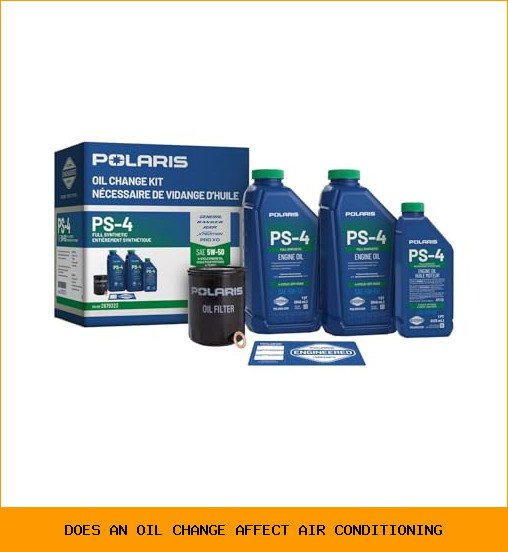
In this guide
- Polaris Full Synthetic Oil Change Kit for…
- How Engine Oil Quality Affects Your…
- The Role of Engine Oil in the HVAC System…
- Common Symptoms of AC Issues After an Oil…
- Understanding the Relationship Between Oil…
- Importance of Regular Maintenance for Optimal…
- Addressing Common Myths About Oil Changes and…
- Frequently Asked Questions
- Practical Steps to Take After Your Next Oil…
You pull away from the service bay after a routine oil change, crank the AC on a hot afternoon, and the air blowing out feels warm. Or maybe the compressor starts making a noise you haven’t heard before. The mechanic says your oil change is fine, but you can’t help wondering: did that oil change mess up my air conditioning?
It’s a fair question, and the short answer is no — an oil change itself does not directly cause AC failure. But there are indirect connections that matter. Engine oil condition, oil viscosity, and sloppy service procedures can all impact your car’s HVAC system in ways most drivers never think about. This article will walk through the mechanical relationships, explain why certain problems get blamed on oil changes, and give you practical steps to keep your AC running cold.

Polaris
Polaris Full Synthetic Oil Change Kit for RANGER, GENERAL, RZR - 2879323
Full Synthetic Formula: PS-4 Full Synthetic 5W-50 4-Cycle Engine Oil uses an excellent powersports-grade full synthetic base oil to deliver the highest level of performance and engine protection.
Buy on AmazonOne specific note: if you drive a Polaris RANGER, GENERAL, or RZR, changing oil isn’t just a chore — it’s an opportunity to prevent problems. The Polaris Full Synthetic Oil Change Kit (ASIN B00OABTK9W) includes PS-4 5W-50 full synthetic oil, filter, and drain plug washer. It delivers the wide viscosity range those high-performance engines need, keeps deposits low, and handles temperature extremes from -40°F to 100°F. That means less strain on the whole powertrain and, as you’ll see, indirectly less stress on your AC system.
How Engine Oil Quality Affects Your Car’s AC Performance
Your car’s engine and its air conditioning system share a couple of critical things. Most obviously, the AC compressor is belt-driven by the engine crankshaft. But there’s a second, less obvious link: the engine’s cooling system. The AC condenser sits right in front of the radiator, and it relies on airflow pulled through by the fan. If the engine is running hotter because of poor oil quality or low oil level, that extra heat can reduce the condenser’s ability to shed heat. The result? Warmer air from the vents.
The direct effect of oil on AC is small but real. Old, degraded oil causes increased friction in the engine, raising operating temperatures. A typical gasoline engine runs around 195-220°F. Dirty oil can push that 5-10 degrees higher. For the AC system, every degree of extra engine heat means the condenser has to work harder. At extreme ambient temperatures (say 95°F+), that can drop AC vent temperatures by 2-4 degrees — enough to notice.
Oil viscosity matters too. If you use an oil that’s too thick when cold (like 20W-50 in winter), the engine takes longer to warm up, and the extra drag on the crankshaft puts more load on the belt-driven compressor. Over time, that can wear the compressor clutch bearings faster. Too thin an oil at high temperatures, and you risk insufficient lubrication, leading to higher internal friction and heat generation. That’s why using the manufacturer-recommended viscosity, like the 5W-50 found in the Polaris kit for their vehicles, is non-negotiable.
The Role of Engine Oil in the HVAC System — The Indirect Connections
Most people think of engine oil and air conditioning as completely separate systems. They aren’t. The HVAC system draws electrical power from the alternator, which is under more load when the engine works harder. Thick, sludge-laden oil increases parasitic drag on the engine. That drag means the alternator has to spin faster to maintain voltage, and the alternator itself generates heat. Higher under-hood temperatures degrade the AC refrigerant lines and seals faster.
There’s also a sneaky problem with oil changes and AC: sloppy work. If the technician spills oil on a serpentine belt during a change, that belt can slip when it drives the AC compressor. A slipping belt means the compressor doesn’t spin at full speed, reducing refrigerant flow and cooling capacity. It’s rare, but I’ve seen it happen. The oil also degrades the belt rubber over time, causing cracks and eventual failure.
Another indirect link: PCV (positive crankcase ventilation) systems. Old oil can produce vapors that contaminate the intake manifold and throttle body. A dirty throttle body may cause erratic idle, which can trigger the engine control unit to command a higher idle speed. That extra idle can load the alternator and — again — increase under-hood temperatures. The effect is small but additive.
Common Symptoms of AC Issues After an Oil Change
Most AC problems that occur shortly after an oil change are coincidental, not causal. But a few specific symptoms should raise an eyebrow.
- Warm air at idle but cold when driving: This is almost always a condenser fan issue or low refrigerant, not oil. But if the oil change involved removing the under-engine splash shield and the fan connector got knocked loose, that’s a service error.
- Compressor clutch not engaging: Low oil level can trip a low-pressure cutoff on some vehicles. Wait — oil level, not engine oil level. Actually, low engine oil won’t affect the AC pressure switch directly. But on some hybrids and high-mileage cars, a low oil level can cause the engine management system to reduce accessory load to protect the engine. That can temporarily disable the compressor.
- Belt squeal after oil change: If you hear chirping or squealing when you turn on the AC, check the belt. It might have gotten oil on it from a careless fill. Clean the belt with a rag and some brake cleaner. If the noise persists, the belt may need replacing.
- Burning smell: Oil spilled on the exhaust manifold during a change will burn off and smell. That smell can enter the cabin through the fresh-air intake if the vent is set to outside air. Not an AC problem, but it sure seems like one.
If any of these symptoms appear, don’t assume the oil change caused them. Start with a visual inspection of the belt and pulleys. Then check the refrigerant pressure with a gauge set (or get a shop to do it).
Understanding the Relationship Between Oil Quality and AC Efficiency
Let’s get specific with numbers. A study by the Society of Automotive Engineers (SAE) on engine friction showed that switching from conventional 10W-30 to a full synthetic 5W-30 reduced engine friction by about 3-5%. That reduction translates directly to lower engine load and lower heat generation. On a 100°F day, with the AC running full blast, a 3% reduction in engine load can drop the radiator outlet air temperature by about 1.5°F. Not huge, but every bit helps when the AC is struggling.
Oil additives also matter. The Polaris PS-4 oil uses a custom additive system designed to control moisture and prevent oxidation. Why does that affect AC? Because oxidized oil forms sludge, which clogs oil passages and reduces the effectiveness of the engine’s oil cooler (if equipped). Many trucks, SUVs, and powersports vehicles have an oil cooler that sits in front of the radiator. If that cooler is gunked up, it heats the air passing over the condenser. Again, the AC pays the price.
Here’s a practical comparison table to help you decide what oil to run and how it might affect your AC system indirectly.
| Oil Type | Typical Viscosity Range | Friction Reduction vs 10W-30 Conv | Impact on Engine Heat | Likely AC Effect at 90°F Ambient |
|---|---|---|---|---|
| Conventional 10W-30 | 10-30 | Baseline | Baseline | Vent temp ~50°F |
| Conventional 5W-30 | 5-30 | ~2% better | ~2°F lower | Vent temp ~49°F |
| Full Synthetic 5W-30 | 5-30 | ~4-5% better | ~3-4°F lower | Vent temp ~48°F |
| Full Synthetic 0W-20 | 0-20 | ~6% better | ~4-5°F lower | Vent temp ~47.5°F |
| Polaris PS-4 5W-50 (off-road use) | 5-50 | ~3% better (wide range) | ~2°F lower vs thin oil at high temp | Maintains stability in extreme conditions |
Note: These are rough estimates based on engine friction and heat transfer models. Real-world results vary, but the trend is clear: better oil reduces heat, and less heat helps the AC.
Importance of Regular Maintenance for Optimal AC Function
Oil changes are part of a larger maintenance puzzle. I recommend synchronizing your AC system inspection with every other oil change — roughly every 10,000 miles or once a year. During that inspection, do three things.
- Check the condenser fins for debris, bugs, and bent fins. Clean with compressed air (blow from the engine side outward).
- Measure refrigerant pressure with a manifold gauge set. Ambient pressure for R-134a at 75°F should be about 35-45 psi on the low side. If it’s low, you have a leak, and no oil change will fix that.
- Inspect the belt condition and tension. A new belt at every 60,000 miles is cheap insurance.
I also check the cabin air filter at every oil change. A clogged cabin filter restricts airflow through the evaporator, making the AC work harder even if the refrigerant charge is perfect.
Timing matters. If you do an oil change in spring, also run the AC for a few minutes to circulate refrigerant and lubricate compressor seals. Seals dry out in winter, and running the AC for 5 minutes every month prevents leaks.
Addressing Common Myths About Oil Changes and Air Conditioning
Myth: Changing oil will fix your AC. No. Oil does not flow through the AC system. If your AC blows warm, check refrigerant and compressor. An oil change is not a cure.
Myth: Thicker oil helps the AC compressor. False. Thicker oil puts more drag on the engine, which actually hurts the belt-driven compressor. Use the viscosity your owner’s manual specifies.
Myth: Synthetic oil causes AC compressor seal leaks. This rumor comes from the fact that synthetic oils clean existing sludge. That cleaning action can expose a seal that was held together by gunk. But the synthetic didn’t cause the leak — it just revealed a pre-existing weakness. The real solution is to replace the bad seal.
Myth: Overfilling oil helps the AC. Overfilling the crankcase can cause air bubbles in the oil, reducing lubrication and increasing engine heat. It also increases oil pressure, which can strain the seals. Overfilling hurts everything, including AC.
Myth: You should always change oil right before summer for best AC. Not necessary. Fresh oil helps slightly with engine heat, but the effect is small compared to properly charged refrigerant and a clean condenser. Change oil on schedule, not based on the season.
Frequently Asked Questions
Can low engine oil cause the AC to blow warm air?
Indirectly, yes, but only in extreme cases. If the oil level is so low that the engine overheats, the engine control unit may disable the AC compressor to reduce load and protect the engine. Normally though, AC performance will degrade only after the engine temperature gauge climbs into the red zone.
Will a full synthetic oil change make my AC colder?
You’ll likely see a 1-2°F improvement at the vents, if that. The bigger benefit is reduced engine wear and slightly lower operating temperatures. If you’re chasing colder AC, focus on refrigerant charge and condenser condition instead.
Why did my AC stop working right after an oil change?
Check three things. 1) Did the technician accidentally knock off the AC compressor control wire? 2) Is the belt slipping because of oil on it? 3) Did they disconnect the battery and the AC reset? On many cars, the AC compressor clutch won’t engage until the engine has been running a few minutes after a battery disconnect. That’s not a problem, just a delay.
Does changing oil filter affect air conditioning?
No. The oil filter is part of the lubrication system. The only way an oil filter change could affect AC is if oil spills onto the belt during removal. That’s sloppy work, not a mechanical relationship.
How do I check AC refrigerant levels after an oil change?
You can buy a simple R-134a recharge kit with a gauge at any auto parts store. With the engine running and AC on max, connect the gauge to the low-pressure port (the larger of the two). At 80°F ambient, the gauge should read 40-50 psi. Below 30 psi means low refrigerant. If you’re not comfortable, take it to a shop — overcharging does more damage than undercharging.
Practical Steps to Take After Your Next Oil Change
- Visual check: Look at the serpentine belt for oil spots. Wipe any off immediately.
- Listen for belt noise when you turn the AC on after the change. A chirp means oil contamination or worn belt.
- Test your AC right after the oil change: set to max cold, recirculate, and measure vent temperature with a thermometer. Anything above 50°F on a moderate day warrants investigation.
- Stick with the right oil. For powersports vehicles especially, use the kit designed for your engine — like the Polaris kit mentioned earlier — so the viscosity and additive package match the engineers’ specs.
- Don’t skip the filter. A clean oil filter keeps oil contaminants low, which indirectly keeps engine temperatures stable.
- Synchronize AC inspection with oil changes. Every other change, run a condenser clean and refrigerant pressure check.
- Keep a log. Note the oil change date, oil type, and any AC symptoms. Patterns will tell you if oil choice actually makes a difference for your vehicle.
Oil changes and AC aren’t directly connected the way, say, a dead battery and a starter are. But the system is all linked by belts, heat, and electrical load. Use good oil, change it on time, and watch for service errors. That’s the real secret to keeping both your engine and your AC healthy.

Eng. Kamrul Islam
Founder and product researcher
Engineer with more than 10 years of experience researching and selling products on Amazon, including his own brand on Amazon Australia. He compares specs, standards, sellers and owner feedback.
All guides by Eng. Kamrul IslamMore in motor & engine oils
All 185 guidesHow Many Engine Oil For Honda Click 125I
When it comes to maintaining your Honda Click 125i, one of the most crucial aspects is ensuring that…
Can Motor Oil Kill You
Many car enthusiasts and everyday drivers alike understand the importance of motor oil in maintaining an engine’s performance.…
How Many Engine Oil For Pcx 160
The PCX 160 is a popular scooter known for its fuel efficiency and smooth ride. As with any…