 Eng. Kamrul Islam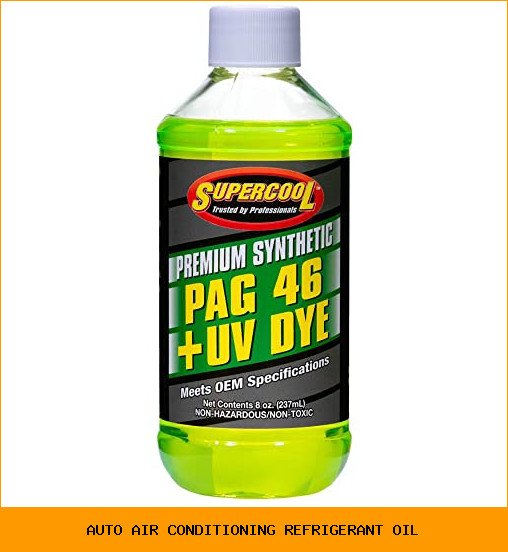
In this guide
You roll down the windows on a 95-degree day, hit the AC button, and get nothing but warm air. The mechanic down the street wants $200 just to look at it. Before you drop the cash, understand this: most AC problems trace back to two things — a refrigerant leak or the wrong oil. The oil lubricates the compressor, seals the O-rings, and carries heat away. Get it wrong and a $50 compressor becomes a $600 job.
This article walks you through exactly what auto air conditioning refrigerant oil does, which viscosity your car needs, and how to add it without making a mess. You’ll learn the difference between PAG 46, PAG 100, and PAG 150, when to use UV dye, and the three mistakes that kill compressors faster than anything else. By the time you finish, you’ll know whether you can tackle the job yourself — and exactly which bottle to grab.

TSI Supercool
TSI Supercool P46-8D PAG Oil 46 Viscosity with UV Dye 8oz 1-Pack
Meets OEM performance specifications
Buy on AmazonOne product that makes this easier is the TSI Supercool P46-8D PAG Oil 46 Viscosity with UV Dye 8oz 1-Pack. It’s a high-performance synthetic PAG oil that meets OEM specs for R134a systems. The built-in UV dye means you don’t have to buy a separate bottle for leak detection — just add it with the oil, run the system, and hit the joints with a UV light. That’s a smart time saver.
What Is Auto Air Conditioning Refrigerant Oil and Why Does It Matter?
Refrigerant oil isn’t like engine oil. It circulates through the AC system mixed with the refrigerant. Its job is to lubricate the compressor’s internal moving parts, keep the expansion valve operating smoothly, and help transfer heat. Without it, metal-on-metal contact destroys the compressor in minutes.
There are three main oil types for automotive AC:
- PAG (Polyalkylene Glycol) – used in most R134a and some R1234yf systems. It’s hygroscopic, meaning it sucks moisture out of the air. Keep the bottle sealed until you use it.
- POE (Polyol Ester) – found in R1234yf systems and some retrofit jobs. It’s also used in electric vehicle compressors.
- Mineral oil – old stuff for R12 systems. You almost never see it anymore unless you’re working on a classic car.
Viscosity is the critical number. For R134a systems, the most common are PAG 46 and PAG 100. PAG 46 flows better in cold weather and is used in smaller compressors. PAG 100 is thicker and goes into larger systems or those with longer line runs. Check the sticker under your hood or your repair manual. The manufacturer chose a specific oil for a reason.
Here’s where people mess up: they think thicker oil means better protection. It doesn’t. Thicker oil can’t flow through the expansion valve fast enough, starving the compressor of lubrication. Stick to the spec.
How to Determine the Right Oil for Your Car
The easy way: look under the hood. Most cars have a decal on the radiator support, the AC line, or the compressor itself. It will say something like ‘PAG 46’ or ‘ND-Oil 8’ (Honda’s special blend). If the decal is missing, check the owner’s manual or call a dealership parts desk — they can look it up by your VIN in about 30 seconds.
Different automakers have preferences. GM typically uses PAG 46 for their R134a compressors. Ford uses PAG 100 in many trucks. Toyota and Honda have their own proprietary oils (ND-Oil 8 and ND-Oil 9), which are essentially PAG 46 with additives. You can substitute a standard PAG 46 in most cases, but I’d stick with the factory stuff for high-mileage cars.
If you’re swapping a compressor, the new unit usually comes with the correct oil charge already installed. But sometimes it’s dry. That’s when you need to add oil — and you must match the viscosity. A dry compressor that gets PAG 100 when it needs PAG 46 will seize within a few months.
Step-by-Step: How to Add Refrigerant Oil to Your AC System
Before you start, put on safety glasses and gloves. PAG oil is a skin irritant, and refrigerant can cause frostbite. Work in a well-ventilated area.
- Recover the refrigerant – You can’t open a charged system. Use a recovery machine or take it to a shop. If the system is already empty from a leak, skip this step.
- Evacuate with a vacuum pump – Run the pump for at least 30 minutes to boil off moisture. PAG oil absorbs water, and water in the system turns to acid. This step is not optional.
- Add oil – You have two methods. For a fully empty system, pour the oil directly into the compressor suction port or the accumulator. For a system with refrigerant still inside, use an oil injector that screws into the low-side service port. Follow the injector’s instructions.
- Rotate the compressor – On new or rebuilt compressors, spin the clutch plate by hand 10-15 times before you bolt it on. This coats the bearings so they don’t start dry.
- Recharge and test – Add the correct refrigerant weight per the under-hood label. Run the AC for 10 minutes, then check for leaks with a UV light. The TSI Supercool oil’s dye will glow green or yellow near any leak.
Pro tip: If you’re adding oil to a system that’s already running, don’t pour in more than 2 ounces at a time. Overfilling drops cooling performance and can damage the compressor.
Comparison of Common PAG Oil Viscosities
| Viscosity Grade | Typical Use | Viscosity (cSt @ 40°C) | Notes |
|---|---|---|---|
| PAG 46 | Most passenger cars (Honda, Toyota, GM, Chrysler) | 46 | Standard for R134a; good all-around oil; works with UV dye |
| PAG 100 | Ford trucks, large commercial systems, some European cars | 100 | Thicker; better for long line runs; may cause drag in small compressors |
| PAG 150 | High-torque compressors (heavy equipment, buses) | 150 | Rare in consumer cars; used in extreme heat conditions |
The table doesn’t cover every specialty oil — like ND-Oil 8 or SP-10 — but 95% of modern cars use either PAG 46 or PAG 100. If your compressor specs call for ‘PAG 46’, don’t buy ‘PAG 46 with UV dye’ that’s actually a different viscosity. Check the label.
Frequently Asked Questions
Can I mix different brands or viscosities of PAG oil?
In a pinch, you can mix same-viscosity PAG oils from different brands — they’re chemically similar. But never mix PAG 46 with PAG 100. The blended viscosity won’t match your system’s needs, and the compressor will run either too stiff (low flow) or too thin (poor lubrication). Drain and refill with the correct oil if you accidentally mix.
How much refrigerant oil should I add after a compressor replacement?
It depends on the system. A typical compressor holds 4 to 8 ounces of oil. If you replace only the compressor, add the amount that drained out of the old one (measure it). If you replace multiple components (compressor, condenser, evaporator), add oil per each component’s spec — usually 1-2 ounces for the condenser, 2-3 for the evaporator. The total system oil capacity is usually between 6 and 12 ounces. Overfilling is a common killer.
Can I use engine oil or transmission fluid in my AC?
No. Engine oil won’t mix with refrigerant, and it doesn’t have the thermal stability needed. It will sludge up the expansion valve and destroy the compressor. Use only PAG, POE, or mineral oil — whatever your system requires. I’ve seen a guy put ATF in his AC because ‘it’s slippery.’ It cost him $1,200.
Do I really need UV dye in my refrigerant oil?
If you’ve ever chased a slow AC leak, you know the answer: yes, UV dye saves hours. Without it, you’re spraying soapy water on every joint and hoping to see bubbles. With UV dye, you just shine a black light and the leak glows. The TSI Supercool P46-8D has the dye already mixed in, which is why I recommend it. If you buy plain PAG oil, get a separate UV dye bottle and add it during charging.
How often should I change the refrigerant oil?
You don’t need scheduled oil changes for AC oil — the system is sealed. The oil only gets replaced when you replace a component (compressor, accumulator, etc.) or if the system was opened for repair. If the system has been running fine for years, leave it alone. If you’re having cooling issues and suspect oil degradation (dark, burnt smell), flush the system and refill with fresh oil.
Practical Takeaways
- Always use the viscosity specified by your vehicle manufacturer — check the under-hood decal or repair manual first.
- Measure oil that drains from old components and add the same amount of new oil. Guessing leads to overfilling.
- Buy PAG oil with UV dye built in, like the TSI Supercool P46-8D, for leak detection without extra steps.
- Keep the oil bottle sealed until you pour it. PAG absorbs moisture from the air in minutes, which can cause internal corrosion.
- Rotate a new compressor’s clutch plate by hand at least 10 times before installation to spread the oil internally.
- Never mix oil viscosities. If in doubt, drain and refill with the correct spec.
- If the system has been open to air for more than a few hours, replace the accumulator (receiver-drier) as well as the oil.

Eng. Kamrul Islam
Founder and product researcher
Engineer with more than 10 years of experience researching and selling products on Amazon, including his own brand on Amazon Australia. He compares specs, standards, sellers and owner feedback.
All guides by Eng. Kamrul IslamMore in ac & compressor oils
All 193 guidesDo Air Conditioners Have Oil
When it comes to maintaining or repairing air conditioning systems, a common question arises: do air conditioners have…
What Can I Put In My Ac To Make My House Smell Good?
Maintaining a fresh and pleasant aroma in your home is essential for creating a welcoming environment. One often…
What Ac Compressor Oil To Use
Choosing the right AC compressor oil is crucial for maintaining the efficiency and longevity of your air conditioning…