 Eng. Kamrul Islam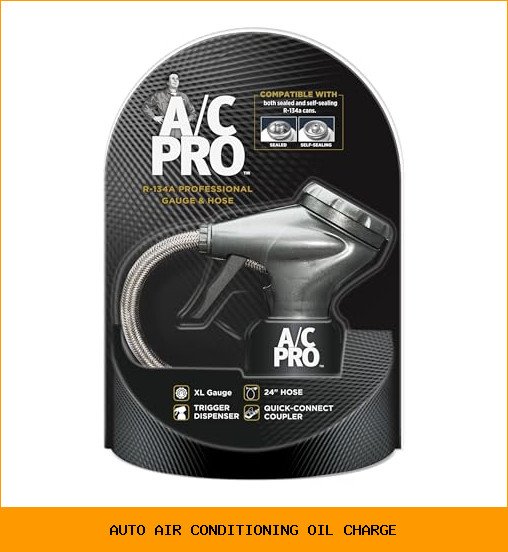
In this guide
You bought a can of refrigerant at the auto parts store. You connected the hose, squeezed the trigger, and your AC blew cold again. For a week. Then the compressor started making a grinding noise and the system quit altogether. Chances are the problem wasn’t the refrigerant — it was the oil.
Most DIY recharge kits contain a small amount of lubricant mixed in with the refrigerant. That tiny dose might keep a fully charged system happy, but it won’t replace the oil you lost during a slow leak or after a component swap. Running an AC compressor low on oil is like running your engine without oil. It seizes, it costs you big money, and it could have been avoided.
This article covers why the oil charge matters, how to figure out the right amount and type, and which tools make the job less frustrating. You’ll walk away knowing exactly how to add oil to your car’s AC system — and when to stop before you make things worse.
One tool that takes the guesswork out of charging is the InterDynamics Car Air Conditioner Gauge and Hose (A/C Pro ACP410-4). It has an oversized gauge that’s actually readable in sunlight, a 24-inch hose that reaches awkward low-side ports without contorting your arm, and a push-on coupler that clicks right onto the Schrader valve. The trigger dispenser gives you real control over flow instead of just blasting the whole can in one go. If you’re doing your own AC service, this is the kind of tool that turns a frustrating hour into a twenty-minute job.
Why the oil charge is the most overlooked part of AC service
The compressor is the heart of your AC system. It compresses refrigerant vapor, pumps it through the condenser and evaporator, and keeps the cooling cycle running. But the compressor also needs lubrication. That job falls to a special oil that circulates with the refrigerant.
Here’s the catch: refrigerant oil doesn’t stay in the compressor. It travels through the entire loop. When you lose refrigerant from a leak, you lose oil with it. A system that’s 30% low on refrigerant might also be 30% low on oil. If you just top off the gas without adding oil, the compressor runs with insufficient lubrication.
I’ve seen compressors fail within a thousand miles after a partial recharge. The noise people describe as a rattle usually starts as a whine, then a knock, then silence. New compressors run $200–600 plus labor. A $10 bottle of the right oil could have prevented that.
Most automotive AC systems use one of three oil types: PAG for R-134a systems, POE (ester) for retrofit applications or some newer R-1234yf systems, and mineral oil for old R-12 systems. Using the wrong type can damage seals, reduce cooling, or destroy the compressor. PAG oil is hygroscopic — it absorbs moisture from the air fast. That’s why you keep the bottle sealed until you’re ready to use it.
How much oil does your car need?
There’s no universal answer. A Honda Civic might take 4 ounces total. A full-size pickup could need 8 ounces. The exact number depends on the compressor model, the type of system, and whether you’ve replaced any major components.
Start by checking the under-hood sticker. Many cars list the refrigerant capacity and oil type right there. If the sticker is missing or faded, look up the service data for your specific make and model. A reliable source is the factory service manual or a subscription to a professional database like Mitchell or AllData.
If you can’t find the exact spec, here are rough guidelines for R-134a systems:
- Compact cars (Civic, Corolla, Focus) – 3 to 5 ounces total oil capacity
- Mid-size sedans (Camry, Accord, Fusion) – 5 to 7 ounces
- Full-size trucks and SUVs (F-150, Tahoe, Explorer) – 6 to 8 ounces
- Luxury or dual-zone systems – may require 8 to 10 ounces
These numbers are for the whole system, not what you add during a recharge. If you’re just topping off after a minor leak, you might add 1 to 2 ounces of oil per pound of refrigerant you put in. A standard 12-ounce can of refrigerant typically contains about 1 ounce of oil. So a single can doesn’t supply enough for a system that’s been leaking for a while.
Three ways to add oil to an AC system
You have options. Each method has trade-offs in accuracy, convenience, and risk.
Method 1: Pour oil directly into the compressor
This only works if the system is open — meaning a component has been removed or the lines are disconnected. You pour the measured oil into the suction port of the compressor while rotating the clutch hub by hand to distribute it. It’s the most accurate method because you know exactly how much went in. But if the system is sealed and under pressure, you can’t use this approach without recovering the refrigerant first.
Method 2: Use an oil injector with a gauge set
An oil injector is a small chamber that connects between your charging hose and the low-side port. You fill it with oil, then open the valve and let the vacuum of the system pull the oil in. This is the method I prefer when the system is already evacuated and holding vacuum. It’s clean, it doesn’t introduce air, and you can add oil in precise amounts.
The A/C Pro gauge and hose set works well here because the trigger dispenser lets you meter the flow. You can crack the valve slightly and watch the gauge to confirm the system is taking the oil without flooding the compressor.
Method 3: Use a pre-mixed refrigerant can with oil
Some cans of R-134a contain a fixed amount of oil — usually around 1 ounce per can. This is fine for a minor top-off if the system is only slightly low. But if you’ve lost a significant amount of refrigerant (more than half the charge), you need more oil than one can provides. Adding multiple cans can overfill the refrigerant side, so you’d need to add oil separately anyway.
Here’s a comparison table to help you decide which approach fits your situation:
| Method | Difficulty | Accuracy | Best For |
|---|---|---|---|
| Direct pour into compressor | Moderate (requires open system) | High | New compressor install or major component replacement |
| Oil injector with gauge set | Moderate (requires vacuum pump and gauge set) | High | System evacuation after repair, adding exact amount |
| Pre-mixed refrigerant can | Easy | Low (fixed oil dose, may be too little) | Minor top-off, no known oil loss |
| A/C Pro gauge with trigger dispenser | Easy to moderate | Medium to high* | DIY recharges where you can control flow |
*Accuracy depends on using a separate oil injector or adding oil to the can; the gauge itself gives pressure feedback to prevent overcharging.
Common mistakes that kill compressors
Adding the wrong oil type is the fastest way to damage an AC system. PAG oil and mineral oil don’t mix. If you add PAG to an old R-12 system that still has mineral oil, the incompatible lubricants can gum up seals and clog the expansion valve. Always flush the system if you’re switching oil types.
Overcharging oil is almost as bad as undercharging. Too much oil reduces the space available for refrigerant, which lowers cooling capacity. It can also cause oil slugs that damage compressor valves. The compressor may run but the vents will blow warm air. You’ll feel the high-side pressure spike on the gauge.
Another mistake: adding oil after the system is already charged. Liquid oil doesn’t mix well with high-pressure refrigerant. You can’t simply pour it into the low-side port while the system is running — you risk hydrolocking the compressor. If you need to add oil after charging, you must recover the refrigerant, add the oil, then recharge from scratch.
One more thing: moisture. PAG oil absorbs water from the air. If you leave the bottle open for thirty minutes, the oil is already contaminated. Moisture inside the AC system reacts with refrigerant to form acid, which eats aluminum parts. Keep the cap on tight.
Questions people actually ask about AC oil charge
Do I need to add oil when recharging my AC?
It depends on why you’re recharging. If you just fixed a leak and the system was empty, then yes — you lost oil with the refrigerant. You need to add the full system oil charge minus whatever oil might be trapped in the old compressor or accumulator. If you’re topping off because the AC is slightly low and you haven’t replaced any parts, you can skip the extra oil. One can of refrigerant with oil is usually enough to keep the compressor happy.
What type of oil does my car’s AC use?
Look at the under-hood sticker first. If it says R-134a, it almost certainly uses PAG oil. The viscosity is usually PA G 46 or PA G 100, depending on the compressor. Some newer R-1234yf systems use POE oil. If your car was originally R-12 and has been retrofitted to R-134a, it should use POE (ester) oil unless the compressor was changed and the system flushed. When in doubt, check the factory service manual.
Can I add too much oil?
Yes, and it causes real problems. Excess oil pools in the evaporator and condenser, reducing heat transfer. The compressor may try to compress liquid oil, which leads to internal damage. A typical symptom is poor cooling even though pressures look normal. The fix involves removing the refrigerant and flushing the system to remove the excess oil — messy and time-consuming.
How do I know how much oil is already in the system?
Unless you drained and measured the oil from the old compressor, you can’t know the exact amount. A shop can recover the refrigerant and measure the oil that comes out, but that requires special equipment. A practical approach: estimate based on system capacity and the amount you’ve added in the past. If you’re replacing the compressor, drain the old one and measure the oil it held (typically 3–5 ounces). Then add that amount to the new compressor, plus the rest of the system’s oil charge.
Can I use a regular refrigerant can with oil or do I need to add separate oil?
You can use a can that has oil already mixed in — most do. But those cans only contain about 1 ounce of oil. If your system holds 6 ounces total and you lost half the refrigerant, you’re short about 2 ounces of oil. You’d need to add a separate oil charge. Best practice: buy a bottle of the correct oil and use an injector or the direct-fill method to add the precise amount.
What to remember the next time you work on your AC
- Always check the required oil type and capacity for your specific vehicle before buying anything.
- Use a gauge set like the InterDynamics A/C Pro to monitor pressures and control refrigerant flow — it prevents overcharging and helps you see if something is wrong.
- Add oil in small increments, not all at once. Start with half the estimated amount, run the system, then check pressures and vent temperature.
- Never mix oil types. Flush the system if you’re switching from one type to another.
- Keep oil containers sealed until you pour them. Moisture contamination is a silent killer.
- If you replace the compressor, always flush the rest of the system and replace the accumulator or receiver-drier. Old debris and acid can destroy a new compressor in weeks.
- When in doubt, pay a shop to evacuate, measure, and recharge. A $200 service beats a $1,200 compressor replacement.

Eng. Kamrul Islam
Founder and product researcher
Engineer with more than 10 years of experience researching and selling products on Amazon, including his own brand on Amazon Australia. He compares specs, standards, sellers and owner feedback.
All guides by Eng. Kamrul IslamMore in ac & compressor oils
All 193 guidesThe 7 Best Air Conditioner Oils of 2026
Upgrade your air conditioning system's performance with the best oils available in 2026. Understanding the necessity of regular…
Will Ac Make A Cough Worse?
As temperatures rise and air conditioning units work overtime to keep us comfortable, many individuals may wonder about…
The 7 Best Air Conditioners for Oil Furnaces of 2026
Selecting the right air conditioner for your oil furnace can significantly enhance your home's comfort and efficiency. **The…