 Eng. Kamrul Islam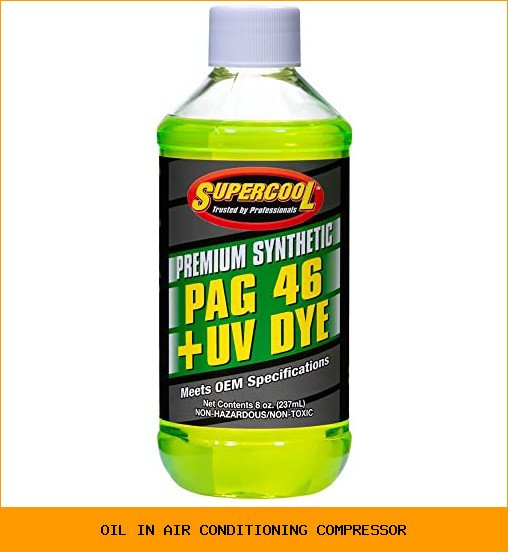
In this guide
You turn on the AC, expecting cold air. Instead, you hear a clatter from under the hood or outside the house. The compressor is struggling, maybe already seized. One of the most common reasons? Wrong oil – or not enough of it. Compressor oil isn’t just a lubricant. It seals the internal clearances, carries heat away, and protects against moisture and wear. Get it wrong, and you’ll be replacing the compressor sooner than you should.
This article covers the real details: what viscosity numbers mean, which oil type matches your refrigerant and compressor, what happens when you mix the wrong fluids, and how to tell if your current oil is causing trouble. I’ll also walk through a product that solves two problems at once – the lubrication itself and leak detection – so you don’t have to add extra dye separately.

TSI Supercool
TSI Supercool P46-8D PAG Oil 46 Viscosity with UV Dye 8oz 1-Pack
Meets OEM performance specifications
Buy on AmazonAfter the introduction, I weave in a specific oil product that many technicians reach for. After that, we go deep into the technical side of oil in air conditioning compressor systems, with numbers, examples, and honest trade-offs.
One product that does both jobs well is the TSI Supercool P46-8D PAG Oil 46 Viscosity with UV Dye 8oz 1-Pack. It’s a synthetic PAG oil formulated for R134a systems. The viscosity is ISO 46, which is the standard for many automotive compressors. It already contains UV dye, so you don’t have to inject a separate leak-detection additive later. The anti-wear agents and antioxidants are blended in from the start – they help prevent sludge formation that can block expansion valves and reduce efficiency. For a one‑and‑done solution when you’re replacing a compressor or adding oil after a repair, it’s a practical choice.
Why the right oil in air conditioning compressor matters – and why viscosity isn’t just a number
Compressor oil does three things. It lubricates moving parts (pistons, scrolls, vanes). It forms a thin film that seals the gap between the cylinder wall and piston or between the scroll wraps. And it absorbs some of the heat generated by compression. Without the right oil, the compressor runs hotter, leaks internally, and wears faster.
Different refrigerants demand different oil chemistries. R134a systems almost always use PAG (polyalkylene glycol) oil. R410a systems use POE (polyolester) oil. Old R12 systems used mineral oil. You can’t swap one for another. PAG and POE are hygroscopic – they suck moisture out of the air. Mineral oil doesn’t. If you put mineral oil into an R134a system, it won’t circulate properly and can cause oil return problems, leading to compressor failure in a matter of months.
Viscosity is the next big variable. Common numbers you’ll see: ISO 46, ISO 100, and ISO 150. The number refers to the oil’s thickness at 40°C. For automotive R134a compressors, ISO 46 is the most common – it’s used in most Sanden, Denso, and Delphi compressors. But some large truck or bus compressors need ISO 100. Your owner’s manual or the compressor label should specify the exact viscosity. Using a thicker oil than needed increases drag and reduces cooling capacity. Using a thinner oil leads to metal‑to‑metal contact and rapid wear.
Here’s a real number: a typical Sanden SD7H15 compressor holds around 150–200 mL of oil in the sump. If you add the wrong viscosity, even a 20% difference in oil thickness can change internal leakage rates by enough to drop system efficiency by 5–10%.
What happens when you use the wrong oil in air conditioning compressor systems
I’ve seen compressors fail within a single season because someone put mineral oil into an R134a system. The oil doesn’t mix with the refrigerant properly. It pools in the evaporator or condenser, starving the compressor of lubrication. The compressor runs dry, scores its cylinders, and seizes.
Another common mistake: mixing different viscosity PAG oils. If your system calls for ISO 46 and you top it off with ISO 100, the blend ends up somewhere around ISO 60–70. That might still work, but it’s not what the compressor was designed for. Internal clearances are tight – typically 10–50 microns between a piston and cylinder. The wrong viscosity changes how much oil seeps past those gaps during each stroke. More seepage means less compressed refrigerant, so the AC blows warm.
Moisture is another hidden problem. PAG oil can absorb water from the air rapidly. An open bottle left on the bench for an hour can pick up enough moisture to cause acid formation inside the system. Acids eat the aluminum and copper components, creating black sludge that clogs the expansion valve. That’s why good PAG oils include antioxidants and why you should always seal the container immediately after use.
One more specific: if you’re retrofitting an old R12 system to run R134a, you need to flush out all the mineral oil and replace it with PAG or POE depending on the conversion kit. But the viscosity matters. Many conversion instructions recommend PAG 100 because the old compressors had wider clearances. Using PAG 46 in that situation can cause oil starvation. Check the retrofit manufacturer’s spec, not just a general rule.
How to choose the right oil – a practical comparison
Selecting the correct oil depends on three things: the refrigerant, the compressor model, and the operating temperature range. The table below covers the most common scenarios you’ll run into.
| Refrigerant | Compressor type | Typical viscosity | Key consideration |
|---|---|---|---|
| R134a | Automotive piston/scroll (Sanden, Denso, Delphi) | ISO 46 (sometimes ISO 100 for large units) | Use PAG oil. Check label – some compressors specify PAG 46 or PAG 100. |
| R134a | Small rotary (pancake type) | ISO 46 | Often cross‑compatible with Sanden specs. |
| R410a | Residential scroll (Copeland, Carrier) | ISO 32 (low-temp) or ISO 68 (standard) | Use POE oil. Never use PAG or mineral oil in a hermetic system. |
| R12 (older) | Automotive (old York, Tecumseh) | Mineral oil, SAE 20 or ISO 68 | If retrofitting to R134a, flush and switch to PAG 100 or specified oil for kit. |
| R1234yf (new vehicles) | Modern automotive (e.g., Denso) | PAG 46 (often with special additives) | Use oil specifically labeled for R1234yf. Do not use standard PAG 46 – it lacks required additives. |
A few caveats. Some aftermarket compressors come pre‑filled with oil. If you’re replacing a compressor, you need to measure how much oil was in the old one (drain and measure) and add that amount to the new one, minus any oil that was already in the new unit. Overfilling by even 50 mL can cause the oil to slug through the compressor and damage the valves.
The TSI Supercool P46-8D mentioned earlier fits the most common scenario: R134a automotive compressors that need ISO 46 PAG oil. It includes UV dye, so you can spot leaks with a UV light after charging the system. That’s a time‑saver for anyone who’s ever spent hours hunting a slow leak with soap bubbles.
Adding oil the right way – procedures and pitfalls
You can add oil to the compressor in three ways: directly into the suction port before installation, through the low‑side service port after the system is assembled, or by using a charging cylinder that mixes oil with refrigerant. The first method is the most accurate because you know exactly how much goes in.
To measure the correct amount, find the compressor’s oil capacity from the manufacturer spec sheet. Write it down. Drain the old compressor and measure the drained oil. If it’s less than the spec, you need to add the difference. If it’s more, something else is wrong – maybe the system was overfilled before, or the compressor is worn and holding extra oil.
One tip: when you add oil through the low‑side port, the compressor must be running and the system must be pulling refrigerant. Pushing liquid oil into a static compressor can cause hydraulic lock and break the reeds. I’ve seen a technician fill a compressor with oil through the high side while it was off – next start broke the discharge valve. Not pretty.
The UV dye in the TSI Supercool oil is an advantage here. You don’t need to inject a separate leak‑detection additive, which saves one step and reduces the chance of contamination. After running the system, shine a UV light on all connections, evaporator coils, and condenser surfaces. A glowing spot means a leak. Fix it before you lose refrigerant and oil.
Can you mix different brands of PAG oil?
Provided they are the same viscosity and both are pure PAG (not a blend), mixing brands is generally safe. But I would not recommend it except in an emergency. Different additive packages may interact. Stick with one brand for the life of the system.
How often should you change the oil in an AC compressor?
For automotive systems, the oil is meant to last the lifetime of the compressor – unless you open the system for repair. If you replace a condenser, dryer, or evaporator, you must add oil because those components trap oil. The typical rule: add 30 mL for a receiver‑drier, 60 mL for an evaporator, and 30 mL for a condenser. If you replace the compressor itself, drain and measure, then follow the procedure above.
Does UV dye harm the system?
UV dye in recommended concentrations (like what’s already in the TSI Supercool oil) does not cause problems. However, some cheap aftermarket dyes can be heavy and settle out, clogging expansion valves. Stick with dyes that come pre‑mixed in OEM‑quality oil. That’s what the TSI oil provides – the dye is already dissolved in the PAG base, so it stays in solution.
Can I use PAG oil in an R12 system that hasn’t been converted?
No. R12 uses mineral oil, which is not miscible with PAG. Putting PAG into an R12 system will cause the oil to separate, block the expansion valve, and ruin the compressor. If you’re converting the system to R134a, you must flush every component thoroughly to remove all mineral oil first, then use the proper retrofit oil.
What happens if I add too much oil to the compressor?
Excess oil circulates with the refrigerant. It coats the inside of the evaporator and condenser, reducing heat transfer efficiency. The compressor has to work harder to pump the oil, increasing power consumption by up to 15%. In severe cases, liquid oil can get trapped in the compressor, causing a hydraulic lock on startup that breaks the reed valves. Always measure, don’t guess.
What to remember about oil in air conditioning compressor systems
- Match the oil chemistry to the refrigerant: PAG for R134a, POE for R410a, mineral for R12.
- Use the correct viscosity – most automotive R134a compressors take ISO 46. Check the label or manual.
- Never mix different oil types (PAG with mineral) or widely different viscosities.
- Measure the oil drained from the old compressor and add the same amount, accounting for components replaced.
- Consider an oil that already contains UV dye, like TSI Supercool P46-8D, to simplify leak detection.
- Seal oil containers immediately after use – PAG and POE absorb moisture fast.
- Overfilling causes more problems than underfilling by a small margin. When in doubt, use the measured amount from the spec sheet.

Eng. Kamrul Islam
Founder and product researcher
Engineer with more than 10 years of experience researching and selling products on Amazon, including his own brand on Amazon Australia. He compares specs, standards, sellers and owner feedback.
All guides by Eng. Kamrul IslamMore in ac & compressor oils
All 193 guides Guide
GuideSlomin’s Home Heating Oil & Air Conditioning Hicksville Reviews: A Homeowner’s Honest Guide
You wake up on a December morning in Hicksville, NY, and the thermostat reads 58°F. The furnace kicked…
 Guide
GuideMineral Oil in Air Conditioning: A Practical Guide for Technicians and DIY Owners
Introduction to Mineral Oil in Air Conditioning You’ve got an older AC unit that still runs on R-12…
The 7 Best Air Conditioning 134a Oils of 2026
Navigating the variety of air conditioning oils available can be daunting, especially in a constantly evolving market. **Air…