 Eng. Kamrul Islam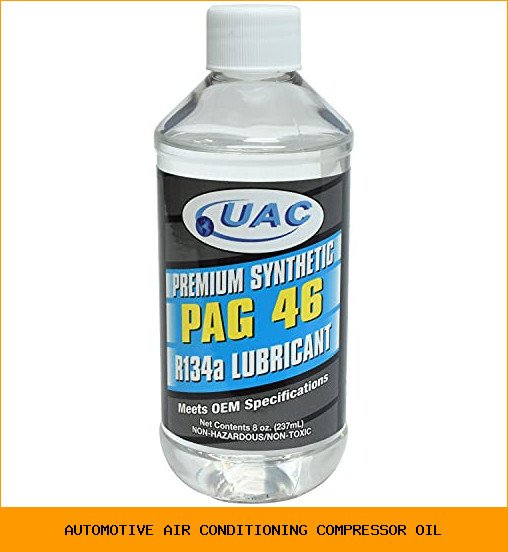
In this guide
You hop in the car on a 95°F afternoon, crank the AC, and all you get is warm air. A friend says it’s probably low on refrigerant. You buy a can from the parts store and charge the system. Still warm. Or worse, the compressor starts rattling. Nine times out of ten, the real problem started with the wrong automotive air conditioning compressor oil – or not enough of it.
Compressor oil is the only thing standing between your AC compressor and a catastrophic seizure. Pick the wrong viscosity, or the wrong chemical type, and you’ll be replacing the compressor inside of a year. This article walks you through what those numbers on the bottle mean, why they matter, and exactly how to pick the right one for your car. No fluff – just the facts a good technician would tell you.

UAC
Universal Air Conditioner RO 0900B Refrigerant Oil
Fit type: Vehicle Specific;Fit Type: vehicle specific
Buy on AmazonYou’ll learn the difference between PAG 46 and PAG 100, why R-1234yf systems need a different oil altogether, and how one bad bottle can cost you a compressor. Let’s get into it.
What Compressor Oil Actually Does (and Why It Matters More Than You Think)
Your AC compressor is a pump that moves refrigerant around the system. But refrigerant alone can’t lubricate the moving parts. That’s the oil’s job. It reduces friction, carries heat away from the compressor, and helps seal the piston rings or scroll plates inside the unit.
Without oil, metal rides on metal. That creates heat, then wear particles, then more heat. Inside of 20 minutes the compressor can seize. I’ve seen it happen on a Saturday job – a guy used mineral oil in an R-134a system because ‘oil is oil’. The compressor locked up on the test drive.
The catch is each refrigerant type demands a specific oil chemistry. R-12 systems (cars before 1994) used mineral oil. R-134a systems (1994–2026 roughly) need PAG oil – polyalkylene glycol. Newer cars with R-1234yf require POE oil – polyol ester. Mix them up and the oil won’t circulate properly. Sludge forms. Seals swell or shrink. You get the picture.
Even within PAG oils there are viscosity grades – ISO 46, 100, and 150 are the most common. A small car with a rotary compressor might want PAG 46. A large SUV with a piston-type compressor may call for PAG 100. Put 150 in a system designed for 46 and the oil is too thick to flow through the expansion valve. The compressor starves.
Viscosity Grades Explained – The Numbers on the Bottle
Viscosity describes how thick the oil is at a given temperature. Higher numbers mean thicker oil. AC systems operate across a big temperature range – from sub-zero on the suction side to 200°F+ inside the compressor. The oil has to stay fluid enough to circulate when cold but thick enough to protect when hot.
| Oil Type | ISO Viscosity Grade | Common Refrigerant | Typical Use | Compatibility Notes |
|---|---|---|---|---|
| PAG 46 | 46 | R-134a | Small cars, rotary compressors | Most common for light-duty R-134a systems |
| PAG 100 | 100 | R-134a | Trucks, SUVs, piston compressors | Thicker – check vehicle spec |
| PAG 150 | 150 | R-134a (rare) | Large commercial AC, some old systems | Very thick – do not guess |
| POE 46 / 100 | 46 or 100 | R-1234yf | Modern vehicles (2026+) | Hydroscopic – keep bottle sealed |
| Mineral oil | Various | R-12 | Classic cars (pre-1994) | DO NOT use with R-134a or R-1234yf |
The safest practice: look at the under-hood decal or the factory service manual. It will tell you exactly what oil and viscosity to use. No decal? Call the dealer parts counter with your VIN. Do not trust a generic auto parts store lookup blindly – I’ve seen them suggest PAG 100 for a Honda Civic that needs PAG 46.
If you’re working on an R-134a system and don’t know the original spec, PAG 46 is a safe bet for most cars built after 2026. For trucks and larger vehicles, PAG 100 is more common. But again – verify.
How to Choose the Right Oil for Your Vehicle – Step by Step
Step 1: Identify the refrigerant type. Check the under-hood label. R-134a is clearly marked. R-1234yf labels usually have a warning about high-pressure service hoses. R-12 labels are older and say ‘R-12’ or ‘Dichlorodifluoromethane’. The oil must match the refrigerant.
Step 2: Find the oil specification. Many manufacturer decals list the oil type and even a PAG number. For example, ‘PAG 46’ or ‘ND-Oil 8’ (which is a Honda-specific PAG 46). If it says ‘PAG SP-10’ or ‘PAG SP-20’, those are specific formulations – use the correct variant.
Step 3: Buy a quality OE-replacement oil. A product like the Universal Air Conditioner RO 0900B Refrigerant Oil is a good starting point. It’s a UAC branded oil designed as a direct OE replacement. The bottle doesn’t state a specific viscosity grade on the label – so you need to confirm your vehicle’s requirements before using it. It fits many systems that call for a general PAG oil, but never assume. Check compatibility with your car’s AC system by cross-referencing the part number or calling the manufacturer’s support line.
Step 4: Measure the amount. Most compressors hold 4 to 6 ounces of oil. The total system charge is typically 6 to 10 ounces. Overfilling is worse than underfilling – too much oil pools in the evaporator and reduces cooling efficiency. Use a graduated cylinder or a special oil injector.
How Much Oil to Add and Where It Goes
If you’re replacing the compressor, drain the old oil from the removed unit and measure it. Add the same amount of new oil to the replacement compressor. If you’re just topping off after a refrigerant recharge, you rarely need more than 1 or 2 ounces. Most AC machines have an oil injection function.
Never add oil directly into the high-side port. The compressor can hydrolock. Instead, add it through the low-side port while the system is running, or pour it directly into the compressor suction port before installation. Some people pour oil into the compressor’s internal sump – that’s fine, but spin the compressor by hand a few times to distribute it before installing.
A quick number to remember: every 100 feet of AC hose holds about 0.3 ounces of oil. If you’re replacing long lines, account for that loss.
5 Real Questions People Ask About AC Compressor Oil
Can I mix PAG and POE oil?
No. They are not chemically compatible. PAG oil is hygroscopic and doesn’t mix well with POE. Mixing them creates a cloudy acidic mixture that can eat seals and damage the compressor. If you accidentally mixed them, flush the entire system and start fresh.
How often should I change the compressor oil?
You don’t change it on a schedule like engine oil. Compressor oil lasts the life of the system unless there’s a leak, a component failure, or the system is opened for service. If you replace the compressor, receiver drier, or any major component, replace the oil then. Otherwise leave it alone.
Does the type of oil affect cooling performance?
Yes, indirectly. Wrong oil viscosity increases drag on the compressor, which makes it work harder and reduces cooling capacity. Too thick oil can also restrict flow through the expansion valve, starving the evaporator. You might notice weak cooling or higher discharge temperatures at the vents.
Can I use engine oil or transmission fluid as a substitute?
Absolutely not. Engine oil does not dissolve in refrigerant like PAG or POE does. It leaves a film on the heat exchanger surfaces that blocks heat transfer. The compressor will seize within hours. I’ve seen this in a rural farm truck – the owner used 10W-30. The compressor locked up in thirty miles.
What happens if I put too much oil in the AC system?
Excess oil collects in the evaporator and condenser, coating the internal surfaces. This reduces heat transfer efficiency. You’ll get weak cooling, higher head pressure, and the compressor may struggle to push the oil slug through the system. Symptoms can mimic a failing expansion valve. Drain and measure to get back in spec.
Things You Can Count On
- Know your refrigerant before you buy oil – R-134a needs PAG, R-1234yf needs POE, R-12 needs mineral oil.
- Check viscosity grade on the under-hood decal or in the service manual. PAG 46 and PAG 100 cover 90% of cars.
- Never mix oil types. Flush the system if contamination happens.
- Measure oil quantity precisely – 4–10 ounces total system, depending on size.
- Use an OE-replacement product like the UAC RO 0900B when you’re certain it matches your spec – verify compatibility before pouring.
- Add oil through the low side or directly into the compressor suction port – never the high side.
- If your AC is blowing warm after a competent recharge, suspect oil issues before blaming the compressor.

Eng. Kamrul Islam
Founder and product researcher
Engineer with more than 10 years of experience researching and selling products on Amazon, including his own brand on Amazon Australia. He compares specs, standards, sellers and owner feedback.
All guides by Eng. Kamrul IslamMore in ac & compressor oils
All 193 guidesAir Conditioner Or Oil Heater
As the seasons change, the need for effective climate control in our homes becomes increasingly important. Whether it’s…
How Often Air Conditioner Recharge
Air conditioners are essential appliances that provide comfort during hot seasons, but maintaining their performance requires understanding several…
How Long Should It Take To Cool A House From 85 To 72?
When the summer heat strikes, many homeowners find themselves cranking up the air conditioning to escape the sweltering…