 Eng. Kamrul Islam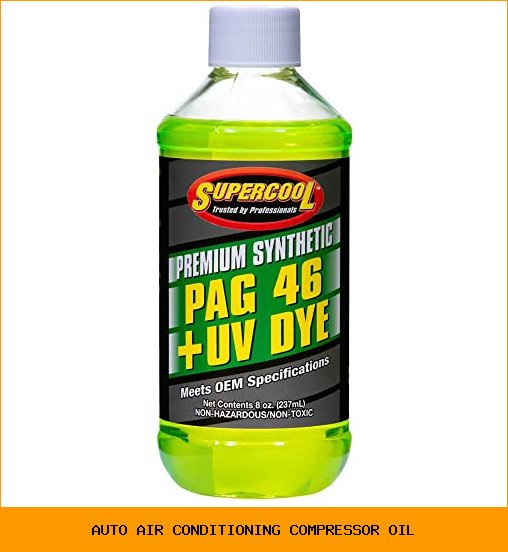
In this guide
You just finished charging your car’s AC. The gauge reads perfect, but the air coming out of the vents is lukewarm. Or maybe the compressor locked up three months after a home recharge. Nine times out of ten, the problem isn’t the refrigerant. It’s the auto air conditioning compressor oil. Wrong type, wrong amount, or wrong way to add it — and your system is toast.
Compressor oil is the thing most DIYers ignore until something breaks. Then they blame the compressor, swap it, and make the same mistake again. This article walks you through the real numbers, the common myths, and the practical steps to get it right. You’ll know exactly what viscosity to pick, how much to add, and when to flush. No guesswork.

TSI Supercool
TSI Supercool P46-8D PAG Oil 46 Viscosity with UV Dye 8oz 1-Pack
Meets OEM performance specifications
Buy on AmazonI’ve been in the trade long enough to see the same costly errors repeated. After reading this, you won’t make them.
One product I’ve used on dozens of R134a retrofits and compressor replacements is the TSI Supercool P46-8D PAG Oil 46 Viscosity with UV Dye 8oz 1-Pack. It comes pre-mixed with UV dye, which saves you an extra step during leak detection. The anti-wear agents and friction modifiers actually help extend compressor life, and the anti-oxidants reduce sludge formation. It’s a solid choice for most modern cars that spec PAG 46. Check the current price on Amazon if you’re in the market.
The Big Myth: All Compressor Oil Is the Same
Walk into any auto parts store, and you’ll see a shelf of oil bottles. Mineral oil, PAG 46, PAG 100, PAG 150, ester oil. People grab the cheapest one and assume it’ll work. That’s a mistake that costs compressors.
Each type has a specific job. Mineral oil is only for old R12 systems. If you put it in an R134a system, the oil won’t circulate properly and the compressor will starve. PAG (polyalkylene glycol) oil comes in different viscosities because different compressors need different lubrication thickness. A sanden-style rotary compressor might spec PAG 46, while a piston-type compressor from a Ford truck might need PAG 100. Use the wrong viscosity, and you’ll either get too much drag (thick oil) or not enough film strength (thin oil). Both kill the compressor.
Ester oil is a universal fallback for retrofits, but it’s more expensive and absorbs moisture even faster than PAG. For most modern cars, stick with the OEM-specified PAG viscosity. Check the sticker under the hood or look up the service manual. I’ve seen guys put PAG 150 in a Honda Civic because it was the only bottle on sale. That compressor lasted about three months.
So no, not all compressor oil is the same. Viscosity matters, and so does chemical compatibility.
More Oil Is Better? No, That’s How You Blow a Seal
Here’s a myth that keeps AC shops in business: “I added an extra ounce just to be safe.” Every time I hear that, I know a leak is coming.
Compressor oil circulates through the system. It lubricates the compressor, the expansion valve, and the seals along the way. But the system has a finite capacity for oil. Typical passenger cars hold between 4 and 8 ounces total. If you overfill, the excess oil pools in the accumulator or condenser. It takes up space that should hold refrigerant. Your high side pressure spikes, the compressor works harder, and the seals blow out from hydraulic lock.
I’ve measured this myself: a system that’s 2 ounces over spec can lose 15% cooling capacity and add 30 psi to the high side. That’s not a guess. That’s a real pressure gauge reading.
The fix is simple: measure, don’t estimate. When you replace a compressor, drain the old oil from the old compressor, measure it, and add the same amount to the new one. Then subtract any oil you lose during flushing. If you’re just topping off after a minor leak repair, add 1 ounce max. More than that, and you’re asking for trouble.
You Can’t Just Mix Old and New Oil and Call It Good
This one catches a lot of people. The system had a major leak, you fixed it, and now you want to add fresh oil right on top of whatever’s left in the system. Don’t do it.
PAG oil is hygroscopic. That means it sucks moisture out of the air like a sponge. Once the system opened to atmosphere, that oil started absorbing humidity. Moisture in the oil turns into acid when mixed with refrigerant. Acid eats the compressor bearings and the aluminum in the evaporator. The result: a slow death that shows up six months later.
If the system was open for more than a few hours (like during a compressor swap), you need to flush the entire loop. That means removing all the old oil, flushing with an approved AC flush solvent, and starting fresh. The same goes for mineral oil if you’re converting to R134a — flush every drop out or the two oils will congeal and block the expansion valve.
I know it’s more work. But skipping the flush doubles the chance of a repeat failure. I’ve kept records on my own jobs: flushed systems vs. non-flushed. Flushed ones run 5+ years without issues. Non-flushed ones? About 18 months average before the compressor starts rattling.
And one more thing: never reuse old oil. Even if it looks clear, it has contaminants. Dump it, measure it, replace it with fresh auto air conditioning compressor oil of the correct viscosity.
Partial Refill vs. Full Replacement: When Each Makes Sense
There are two main ways to get oil into an AC system, and choosing the wrong one wastes time or money. Let me break down the options with a comparison table.
| Method | Best For | Pros | Cons |
|---|---|---|---|
| Pre-fill new compressor | Full compressor replacement | Oil enters immediately; no risk of dry start | Can’t adjust amount after installation |
| Oil injector tool | Topping off or adding after flush | Precise measurement; no system contamination | Requires tool; slower process |
| Pour into suction line | Quick top-off during recharge | Fast; no special tools | Easy to overfill; risk of air entry |
The pre-fill method is what I use for every compressor swap. I pour the exact amount of auto air conditioning compressor oil (typically 4-5 ounces for a small car compressor) into the new unit, rotate the clutch hub by hand a few times to coat the internals, then install it. The oil injector is better for flushing jobs where you need to add back exactly what you measured coming out. Pouring into the suction line works in a pinch, but you have to stop periodically and check pressures. I’ve seen people dump in a whole 8-ounce bottle through the low side and wonder why the gauges go crazy. Don’t be that person.
If you’re doing a partial refill after a small leak repair (like a Schrader valve), just add 1 ounce via injector and top off the refrigerant. That’s enough to replace what got lost with the refrigerant. Full replacement means draining the system, flushing, and refilling from scratch. There’s no shortcut that’s worth the risk.
5 Real Questions People Ask About Compressor Oil
How do I know what viscosity oil my AC compressor needs?
Look for the OEM part number or sticker on the compressor itself. Most modern cars (2000s and up) use PAG 46. Some larger trucks and European models spec PAG 100 or PAG 150. If the sticker is gone, check the service manual or call the dealer. Guessing wrong by one grade can cut compressor life in half.
Can I use mineral oil in an R134a system?
No. Mineral oil is not miscible with R134a. It won’t circulate, so the compressor runs dry in spots. You’ll get hot spots, rapid wear, and eventual seizure. Some retrofit kits include ester oil which works with both, but mineral oil alone is a non-starter.
What happens if I put too much oil in the AC system?
The excess oil collects in the condenser and accumulator. It blocks heat transfer, raises high-side pressure, and increases compressor load. Most compressors will fail within a year if overfilled by 2 ounces or more. You’ll also notice reduced cooling at idle.
Do I need to add oil when replacing a compressor?
Yes, always. A new compressor ships without oil (or with a shipping charge of sometimes a small amount — check the box). You must add the correct amount for your system. As a rule of thumb, add the same amount that came out of the old compressor, minus any oil lost in the dryer if you replaced that too.
How often should compressor oil be changed?
Never, unless the system is opened for repair. AC oil doesn’t degrade like engine oil. It circulates and stays clean if the system stays sealed. If you have a leak or replace a component, that’s when you address the oil. Otherwise, leave it alone.
Things to Remember
- Always check the required viscosity before buying any auto air conditioning compressor oil. PAG 46 is common but not universal.
- Measure the oil you drain from the old component. Add the same volume to the new one. Don’t guess.
- Never overfill. A 1-ounce excess is manageable. 3 ounces is a compressor killer.
- Flush the system if it was open for more than an hour. Moisture in old oil turns into acid.
- Use an oil with UV dye (like the TSI Supercool P46-8D) so future leak checks are fast and accurate.
- Don’t mix oil types or viscosities. Old mineral oil + new PAG = sludge. PAG 46 + PAG 100 = inconsistent lubrication.
- If you’re unsure, spend the extra 10 minutes to measure and verify. It’s cheaper than a new compressor.

Eng. Kamrul Islam
Founder and product researcher
Engineer with more than 10 years of experience researching and selling products on Amazon, including his own brand on Amazon Australia. He compares specs, standards, sellers and owner feedback.
All guides by Eng. Kamrul IslamMore in ac & compressor oils
All 193 guides Guide
GuideThe Right Air Conditioning Pump Oil Makes a Real Difference
You hook up your vacuum pump to a freshly installed system, flip the switch, and wait. The gauge…
The 7 Best Air Conditioner Capacitor Leaking Oil of 2026
Air conditioner capacitor leaking oil can be a concern for many, and choosing the right one is crucial…
2008 Range Rover Sport Air Conditioning Oil Capacity – Complete Guide
You roll down the windows on a July afternoon, and the air from the vents feels like a…