 Eng. Kamrul Islam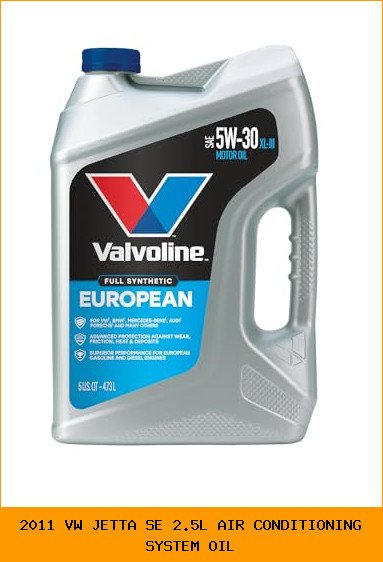
In this guide
- Valvoline European Vehicle Full Synthetic…
- How the A/C System Works on the 2011 Jetta SE…
- Why A/C System Oil Matters More Than You Think
- Types of A/C Compressor Oil for the VW Jetta…
- How to Check A/C System Oil Levels on a 2011…
- Step-by-Step Guide to Recharge the A/C System
- Signs of A/C System Problems Related to Oil
- Troubleshooting Common A/C Issues on the 2011…
- Maintenance Tips for A/C System Longevity
- Frequently Asked Questions
- What to Keep in Mind
You hit the A/C button on a hot July afternoon. The vents blow warm air. Your 2011 VW Jetta SE 2.5L is not cooling. You check the refrigerant pressure – it’s fine. But the compressor sounds different, rough. Chances are the system is low on the one fluid most owners forget: A/C compressor oil.
This article covers everything about the 2011 VW Jetta SE 2.5L air conditioning system oil. You’ll walk away knowing the exact oil type, how to check and add it, how to recharge the system step by step, and what warning signs mean you need to act. I’ll also point to a quality engine oil that keeps the rest of your car running while you sort out the A/C.

Valvoline
Valvoline European Vehicle Full Synthetic 5W-30 XL-III Motor Oil 5 Quart | For European gasoline and diesel engines, advanced protection against wear, friction, heat and deposits
Advanced protection for European gasoline and diesel engines against the four main causes of engine breakdown: wear, friction, heat and deposits
Buy on AmazonSpeaking of engine oil – the 2.5L five-cylinder needs a proper European-spec synthetic. The Valvoline European Vehicle Full Synthetic 5W-30 XL-III Motor Oil 5 Quart is a solid fit. It meets VW 502.00/505.00 specs, and its low-SAPS formula protects the emissions system. Keep a jug in the garage while you work on the A/C; you’ll change the engine oil soon enough.
How the A/C System Works on the 2011 Jetta SE 2.5L
Your car uses R134a refrigerant and a variable-displacement compressor (usually a Sanden or Denso). The compressor pumps refrigerant through the condenser, evaporator, and expansion valve. Oil circulates with the refrigerant to lubricate the compressor seals, bearings, and pistons. Without enough oil, the compressor wears fast – and replacement runs $800-$1200 parts and labor.
A typical 2011 Jetta SE 2.5L A/C system holds about 5.5 to 6.0 ounces of PAG oil total. That is not a lot. Even a slow leak can drop the oil level below safe limits before you notice a drop in cooling performance.
Why A/C System Oil Matters More Than You Think
Most owners top off refrigerant but ignore oil. Bad move. The oil does three things:
- Lubricates the compressor: Without it, metal on metal contact kills the unit in miles, not hours.
- Carries heat away: The oil absorbs heat from compressor internals and helps the refrigerant dissipate it.
- Seals the compressor: A thin oil film helps piston rings and valves maintain compression.
Common mistake: adding refrigerant without knowing how much oil is already in the system. If you overfill oil, the compressor fights to pump it – that can blow seals. Underfill means rapid wear. The margin is narrow.
Types of A/C Compressor Oil for the VW Jetta 2.5L
Not all PAG oils are the same. The 2011 Jetta SE 2.5L uses PAG 46 (ISO 46 viscosity) in most factory compressors. Some aftermarket compressors may specify PAG 100. Always check the sticker on the compressor or the service manual.
| Oil Type | Viscosity | Common Use | Compatibility |
|---|---|---|---|
| PAG 46 | ISO VG 46 | Factory Sanden compressors (2011 Jetta 2.5L) | R134a only |
| PAG 100 | ISO VG 100 | Some Denso or aftermarket compressors | R134a only |
| PAG 150 | ISO VG 150 | Older R12 systems (avoid for R134a) | Not recommended |
| Double-end-capped PAG | 46 or 100 | Electric (hybrid) compressors | Not for this car |
Can you mix different PAG oil viscosities?
No. Mixing 46 and 100 changes the overall viscosity in unpredictable ways. The compressor expects a specific film thickness. Mixing also risks chemical incompatibility between additive packages. Drain and refill with the correct single type.
How to Check A/C System Oil Levels on a 2011 Jetta SE
Checking oil level is not like checking engine oil. You cannot pop a dipstick. The only accurate way is to evacuate the system, remove the compressor, drain the oil into a graduated cylinder, measure it, and refill with fresh oil to spec. That requires an A/C recovery machine and basic knowledge of refrigerant handling.
Quick alternative: if the system is empty from a repair, add the total system oil charge (5.5-6.0 oz) via the suction hose while pulling a vacuum. That ensures the correct amount is in the system from the start.
If you suspect low oil but don’t want to disassemble, listen for a chirping or rattling noise from the compressor when the A/C is on. That is the number one clue the oil level is low.
Step-by-Step Guide to Recharge the A/C System (with Oil)
Before you start: You need a manifold gauge set, a vacuum pump, R134a cans, and the correct PAG oil. Never use R-12 or anything labeled ‘stop leak’. This procedure is for the 2011 VW Jetta SE 2.5L.
- Recover the existing refrigerant. You must use a certified recovery machine. Venting R134a to the atmosphere is illegal – fines up to $37,500 per day under EPA regulations.
- Replace any failed components (compressor, condenser, accumulator) if you are fixing a leak. The new compressor usually comes dry – you must add the full oil charge to the compressor before installation. For a simple recharge, skip this.
- Connect the vacuum pump to the low-side service port. Pull a deep vacuum (below 500 microns) for at least 30 minutes. This boils off moisture and checks for leaks.
- Add PAG oil. With the system still under vacuum, close the vacuum valve. Use a charging hose with a schrader valve depressor on the low side. Attach a graduated oil injector or a syringe filled with PAG 46 oil. Slowly open the valve; vacuum pulls the oil in. Add 1.5-2.0 ounces if you are topping off an otherwise closed system that lost refrigerant. Add the full 5.5-6.0 ounces if you replaced the compressor or drained everything.
- Charge with R134a. Close the oil injector, open the refrigerant can, and let the vacuum pull in the first can. Start the engine, set A/C to max, blower on high. Add the remaining refrigerant while watching pressures. Target low side 25-35 psi, high side 200-250 psi (ambient temperature dependent).
- Test cooling. Vent temperature should drop to 40-50°F. If not, you may have air in the system or the wrong oil amount.
Important caveat: Overcharging refrigerant or oil causes more damage than undercharging. Use a scale to measure refrigerant weight. For the 2011 Jetta SE 2.5L, the full charge is 21-23 ounces (about 1.3-1.4 lbs) of R134a.
Signs of A/C System Problems Related to Oil
- Compressor noise: Chirping, squealing, or grinding when clutch engages. Low oil is the prime suspect.
- Intermittent cooling: Works for a few minutes then blows warm. Could be oil starvation causing internal pressure relief valve to trip.
- Visible oil leaks: Oily residue around compressor shaft seal or hose connections. Oil carries dye – check with UV light.
- High discharge pressure: Overcharged oil reduces heat transfer, causing high side pressures to climb.
- Compressor seizure: Complete lock-up. Usually from prolonged low-oil operation. Requires replacement.
Troubleshooting Common A/C Issues on the 2011 Jetta SE 2.5L
Compressor clutch won’t engage
Check the refrigerant pressure switch first. If pressure is too low (below ~30 psi), the switch prevents clutch engagement to protect the compressor. Add refrigerant or check for a leak. If pressure is fine but clutch still won’t pull in, test the relay and fuse #35 in the engine bay fuse box.
Cold air only on passenger side
This is usually a blend door actuator failure, not an oil problem. The electric motor that controls temperature door fails on these Jettas. Listen for clicking behind the glovebox. Replacement part is about $40.
Musty smell from vents
Moisture in the evaporator case. The A/C drain tube under the car clogs with debris. Clean it with a thin wire. No oil relation, but common.
Compressor cycles on and off rapidly
Low refrigerant charge (and likely low oil). The pressure switch detects low side dropping too fast. Recharge following the step-by-step above.
Maintenance Tips for A/C System Longevity
- Run the A/C at least once a week year-round – even in winter. This circulates oil to keep compressor seals lubricated.
- Replace the cabin air filter every 15,000 miles. A clogged filter reduces airflow and can cause evaporator freeze-up.
- Have the system professionally evacuated and recharged every 3-4 years. Moisture and contaminants accumulate even without a leak.
- When replacing the compressor, always replace the accumulator (receiver-drier) and flush the condenser. Residual oil and debris kill the new compressor.
- Use only PAG 46 oil labeled for R134a. Avoid ‘universal’ oils that claim to work with R-12 and R-134a – they have different viscosity and additives.
Frequently Asked Questions
What type of A/C oil does a 2011 VW Jetta SE 2.5L need?
The factory spec is PAG 46 (ISO viscosity grade 46) for R134a refrigerant. Total system oil capacity is 5.5 to 6.0 ounces. Always confirm the compressor type – aftermarket units may call for PAG 100 – but stock Sanden compressors take PAG 46.
How do I know if my A/C system has enough oil?
Without disassembly, the best clue is compressor noise. A low-oil compressor chirps or rattles. The only precise method is to recover the refrigerant, remove the compressor, drain the oil, and measure it. If the system is empty from a repair, add the full spec charge (5.5-6.0 oz) during vacuum.
Can I mix different PAG oils?
No. PAG 46 and PAG 100 have different viscosities and additive packages. Mixing them changes lubrication properties and can cause foaming or seal swelling. Drain and refill with the correct single viscosity.
How often should I change A/C system oil?
There is no scheduled oil change interval. Oil lasts the life of the sealed system unless a component fails. If you replace the compressor, accumulator, or condenser, you must add fresh oil equal to the amount removed plus what remains in the old parts. In practice, a full system evacuation and recharge every 3-4 years removes moisture and contaminants that eventually degrade the oil.
What happens if I use the wrong oil viscosity?
Using thicker oil (PAG 100 instead of 46) forces the compressor to work harder. It can increase discharge pressure, reduce cooling efficiency, and cause premature bearing wear. Thinner oil (PAG 46 in a compressor spec’d for 100) leads to metal-on-metal contact and rapid compressor failure. Stick to the spec on the compressor label.
What to Keep in Mind
- Your 2011 Jetta SE 2.5L A/C system takes PAG 46 oil, not engine oil or universal stuff. Total capacity is about 6 ounces.
- Check compressor noise first – chirping means low oil, not just low refrigerant.
- Always add oil when you add refrigerant. Use a graduated injector or a syringe during vacuum.
- Never vent R134a to the air. Recover it with a machine or take the car to a shop.
- If you replace the compressor, flush the condenser and replace the accumulator. Budget an extra $50 for fresh oil and a new drier.
- Run the A/C weekly even in winter. That 10-minute run keeps the shaft seal wet and prevents leaks.
- The Valvoline 5W-30 European synthetic mentioned earlier is a good engine oil pick, but keep it out of the A/C system – different circuit entirely.

Eng. Kamrul Islam
Founder and product researcher
Engineer with more than 10 years of experience researching and selling products on Amazon, including his own brand on Amazon Australia. He compares specs, standards, sellers and owner feedback.
All guides by Eng. Kamrul IslamMore in ac & compressor oils
All 193 guidesWhat Is The Old Lady’S Smell Called?
Have you ever stepped into an older home and noticed a musty, somewhat stale odor lingering in the…
Air Conditioner Oil Leak
Air conditioning systems are essential for maintaining comfort in homes and businesses, especially during hot summer months. However,…
Do Air Conditioners Use Oil
Air conditioners are an essential component of modern comfort, especially during hot weather. While most people are familiar…